Showing posts with label Buddha. Show all posts

Monday, December 22, 2014

Two Nostrils

Ferdinand the Bull


So worked up
lucky he has two nostrils
~ Korean figure (or aphorism)
translated by W. S. Merwin


I've been working my way through W. S. Merwins book East Window: The Asian Translations and the section on figures or aphorisms is quite telling. Since the aphorisms, more often than not, refer to the foibles of humans, how Ferdinand came into all this I'm not sure. But, there you are or, more precisely, here you go: 


in the great bronze
Buddha's nose chirping...
sparrow babies
Issa
translated by David G. Lanoue


After a month of nearly no internet connectivity (thanks, Verizon), Facebook trashing the original Lilliput Review account (here's the new one for those so inclined), I hope to be posting a little more regularly. There will be a Wednesday Haiku posting this week. Thanks for your patience.

Yes, without those two nostrils, my head would have exploded. Now I'm just smelling the flowers.
 

best,
Don

PS  Click to learn how to contribute to Wednesday Haiku

Sunday, June 29, 2014

Issa's Sunday Service, #190: Sufjan Stevens, O'Connor, Springsteen, and Robert Bly


 In case of wonky widget, click here

There have been any number of songs with the title "A Good Man is Hard to Find," many that have no association with the writer, Flannery O'Connor.

Sufjan Stevens's version is definitely not one of them:
  

A Good Man is Hard to Find

Once in the backyard
She was once like me, she was once like me
Twice when I killed them
They were once at peace, 
they were once like me

Hold to your gun, man 
and put off all your peace
Put off all the beast
Paid a full of these, I wait for it, 
but someone's once like me
She was once like me

I once was better
I put off all my grief, I put off all my grief
And so I go to hell, I wait for it
But someone's left me creased 
and someone's left me creased

Bruce Springsteen has also expressed great admiration for the writer Flannery O'Connor, who was just last week referenced in a William Stafford poem. For all the details of the Springsteen connection, check out this article at Dappled Things entitled "Naming Sin: Flannery O'Connor's Mark on Bruce Springsteen." 

Here's the Boss with a live rendition of "A Good Man is Hard to Find," performed right here in Pittsburgh


A Good Man Is Hard to Find  (Pittsburgh)

It's cloudy out in Pittsburgh, it's raining in Saigon
Snow's fallin' all across the Michigan line
Well she sits by the lights of her Christmas tree
With the radio softly on
Thinkin' how a good man is so hard to find

Well once she had a fella
Once she was somebody's girl
And she gave all she had that one last time
Now there's a little girl asleep in the back room
She's gonna have to tell about the meanness in this world
And how a good man is so hard to find

Well there's pictures on the table by her bed
Him in his dress greens and her in her wedding white
She remembers how the world was the day he left
And now how that world is dead
And a good man is so hard to find

She ain't got no time now for Casanovas
Yeah those days are gone
She don't want that anymore, she's made up her mind
Just somebody to hold her as the night gets on
When a good man is so hard to find

Well she shuts off the TV and without a word
And into bed she climbs
Well she thinks how it was all so wasted
And how expendable their dreams all were
When a good man was so hard to find

Well it's cloudy out in Pittsburgh


As you may have noticed, the song has a sub or alternate title: "Pittsburgh." It seems that, beyond the title and its appearance as a line in the song, there is little here that relates to O'Connor except perhaps tone. At a Springsteen lyrics site (Lebanese!), Bruce is quoted about the song and he mentions the first time he met Ron Kovic, the author of "Born on the Fourth of July." 

If you haven't read the original, it's here - for how long, who knows.

------------

I ran across this Robert Bly poem this morning in his collection Talking into the Ear of a Donkey - this is my 3rd or 4th time reading the book over the last 3 years or so and it just gets better and better. 

At first there didn't seem to be a connection to the above song, then I started to think more closely about the original story and it seems my mind is, as usual, making connections that on surface I'm not immediately aware.

It's life and life only:

Keeping Quiet

A friend of mine says that every war
Is some violence in childhood coming closer.
Those whoppings in the shed weren't a joke.
On the whole, it didn't turn out well.

This has been going on for thousands
Of years! It doesn't change.  Something
Happened to me, and I can't tell
Anyone, so it will happen to you.
Robert Bly

Photo by Danny Hammontree via fotor

----------------


swatting a fly
but hitting
the Buddha

Issa
translated by David G. Lanoue


best,
Don

PS  Click to learn how to contribute to Wednesday Haiku.


Wednesday, October 31, 2012

Ed Baker & Lisa Espenmiller: Wednesday Haiku, #88


frog on lily-pad
reflecting
frog on lily-pad
Ed Baker


From 100 Aspects of the Moon by Tsukioka Yoshitoshi


in the gallery
art on Summer walls
outside - the moon
Lisa Espenmiller


the little Buddha's head
a launch pad too...
frogs
Issa
translated by David G. Lanoue


best,
Don 

Send a single haiku for the Wednesday Haiku feature. Here's how.

Go to the LitRock web site for a list of all 141 songs

Sunday, September 23, 2012

Long Hard Book: Issa's Sunday Service, #136


If this doesn't work, click this:


Pavement is one of the great bands who the hipsters know, a band who went the independent route and, though without any mainstream success, certainly made life in the 90s more livable. The lead singer and creative force behind the band, Stephen Malkmus, still delivers the goods with his band the Jinks.

When it comes to Litrock, we are all staring down the spine of that one long hard book. This little chestnut may be the proverbial tough one to crack - there is more here than it may seem. Written by one of the great 20th century authors who is certainly not my cup of meat, the book is write under our noses.

So, identify the author and title of the "Long Hard Book" in the comments section below (first correct answer is the winner) and a free 6 issue subscription to Lilliput Review is yours.

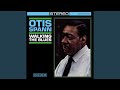
By the way, the album from which "Long Hard Book" is Mirror Traffic, pictured above, is some fine work. If you like Pavement, you'll love this.  


Long Hard Book
   I can't see you through these wandering eyes
   I'm a one-trick pony and I can't survive
   See me flagging, something's wrong, you see
   Rope director, won't you bury me?
   There's a long hard book that needs reading
   So do what you must, but don't touch
   I'm ever so frightened
   Come around, baby, take a look
   No excuses for what you might do
   I'm seeing, lady, things you'll never know
   Run around, rabbit, won't you run run run?
   There's a long hard book that needs reading
   So do what you must, but don't touch
   I'm ever so silent


If this is your cup of tea, and there might not be all that many of you, then there is this, "All Over Gently," also from Mirror Traffic ...


-----------------------


first snow--
making a Buddha of you
is hard too
Issa
translated by David G. Lanoue


best,
Don 

Send a single haiku for the Wednesday Haiku feature. Here's how.

Go to the LitRock web site for a list of all 136 songs

Wednesday, March 28, 2012

M. S. Rooney & Edgar W. Hopper: Wednesday Haiku, Week 60

Great Bronze Buddha at Kamakura


morning snow flurries
have covered the bronze Buddha
hidden reflections
M. S. Rooney 


old photograph
i smile
at my mother's smile
Edgar W. Hopper


in the great bronze
Buddha's nose chirping...
sparrow babies
     Issa
     translated by David G. Lanoue


best,
Don


Send a single haiku for the Wednesday Haiku feature. Here's how.

Go to the LitRock web site for a list of all 129 songs

Wednesday, May 25, 2011

Wednesday Haiku, Week #18: William Sorlien

Autumn Buddha: photo by Jake Barnes


Wednesday Haiku, Week #17


regretful
hanging up her beret
she slips into autumn
William Sorlien


not knowing that
autumn's begun, puppy
Buddha!

Issa
translated by David G. Lanoue


best,
Don

PS Really happy I got through the whole post and didn't mention the other thing. 


Send a single haiku for the Wednesday Haiku feature.  Here's how.

Go to the LitRock web site for a list of all 103 songs

Saturday, May 2, 2009

Party!


Just learned today is Buddha's birthday:


Buddha amid birthday flowers--
even the moon
deigns to rise
Issa
translated by David Lanoue


Party time ...

Don

Wednesday, December 3, 2008

Dave Church: In Memory

On his blog, Ron Silliman is reporting the death of long-time small press poet Dave Church. The article Ron has linked to is an overview of Dave's career; I have no further details on Dave's passing.

Dave published a couple of works in Lillie over the years. Recently, we had corresponded back and forth over some poems he had sent, sparred a bit, actually, and we had come to a friendly understanding. Once you got past the gruff, he was a generous guy. He knew what he was about and made sure you did, too. I'll miss his straight shooting approach.


--------------------------------------------------------


I think I'm mad
like I thought
my father was mad.

He used to float around the house at night
calling out for those long dead

I do the same thing now

only in reverse.
Dave Church
from Lilliput Review, #91 Sept. 1997


Mirrorspeak

I'm off Buddha's eight-fold path.
No God's speak to me. Past a blur.
Future
bone
black -
ashes in mountain air.
Dave Church
from Lilliput Review, #129, March 2003


--------------------------------------------------------

UPDATE: Ed Baker has sent along some along some additional information on Dave, which may be found on Bukowski.net. He evidently died behind the wheel of his taxicab on Thanksgiving.


best,
Don

Thursday, October 2, 2008

Tapping the Barometer, Why Buddha Sat Under the Tree, and Joe Pesci in Pittsburgh


The sad news of recent days is that the death of Hayden Carruth is reverberating through various poetic communities (no, I don't think there is only one, in practice or theory). Ed Baker was kind enough to send along notice, and point to a poem well worth sharing.


Agenda At 74
Tap barometer, burn trash,
put out seed for birds, tap
barometer, go to market
for doughnuts and Dutch
Masters, feed cat, write
President, tap barometer,
take baby aspirin, write
congressman, nap, watch
Bills vs. Patriots, tap
barometer, go to post
office and ask Diane if
it's cold enough for her,
go to diner and say "hi,
babe" to Mazie, go to
barber shop and read

Sports Illustrated, go
home, take a load off,
tap barometer, go to
liquor store for jug
(Gallo chablis), go
home, pee, etc., sweep
cellar stairs (be careful!),
write letter to editor,
count dimes, count quarters,
tap the fucking barometer ...
Hayden Carruth


This so perfectly captures a day in the life of an aging poet that it almost takes the breathe away with its understated quality and matter-of-fact resonance.

Beautiful.

Yesterday's poetry appreciation session went well, though not quite as I expected. Part of an overall package of programs for lifelong learners, the general attendance had been between 15 and 17; yesterday, there were 9. So it was cozy and comfortable. After a half hour intro, we got into the poems and folks didn't quite respond to the questions I'd prepared to stimulate discussion, so the session transmuted into more traditional class, with me riding herd all the way. Folks were much more comfortable with this and, as I pointed out various aspects of the poems (in a declarative rather than inquisitive manner), they began to respond and responded very well. Since I noticed three faces from last year, I didn't want to repeat poems I'd covered then so asked them where to start. One person wanted to hear the Ted Kooser poem ("For You, Friend"), so I told them I had two poems to lead into it and proceeded to show them how one poem directly and indirectly influenced the other. They were taken with the similarity of imagery (which the relationships are built on) and we just took off from there. They were enthused enough with the three poems ("Donal Og - Broken Vows," "Funeral Blues" by Auden, and "For You, Friend), that I decided to stretch it and go for the Shakespeare "Shall I compare thee to a summer's day"), which really spun out well from the Kooser. They loved it, particularly when I read Howard Moss's poem of the same name:


Shall I compare thee to a summer's day?
Who says you're like one of the dog days?
You're nicer. And better.
Even in May, the weather can be gray,
And a summer sub-let doesn't last forever.
Sometimes the suns too hot;
Sometime it is not.
Who can stay young forever?
People break their necks or just drop dead!
But you? Never!
If there's just one condensed reader left
Who can figure out the abridged alphabet,
-----After you're dead and gone,
-----In this poem you'll live on!


I did this in my best "drop dead" Jersey accent and they loved it - when I heard the unrestrained laughter, I knew they were enjoying poetry and, so, I'd accomplished what I came for.

One of the more enlightening moments for me came during the questions that were asked as we were wrapping things up. One person in particular asked why is it that many times when she hears poets read, on places like the NewsHour, they just sound so flat and they drone on and on. As I paused to answer, everyone in the room was either vocally assenting or nodding their heads at this observation and I realized poets are very often their own worst enemies. My response was that I'd chosen works I love and greatly admire and those kinds of works for me contain a great deal of emotion that needs to be conveyed. They are works I believe in.

Everyone seems to lament the fact that no one reads poetry anymore and yet, when we have the opportunity to put our best faces forward, we drone on and on and on. And it is not just a matter of entertainment, though this too is a factor. A woman I ran into at the library an hour after class stopped me to say how much she enjoyed the session and how moved she always is by Auden's "Funeral Blues," to the point she has difficulty listening to it, yet finds it immensely powerful even in the extreme emotion it invokes. She noted how she could never have expressed those emotions in words yet the poet had gotten it perfectly. I told her the old adage was true: we look to our poets to speak for us, they give us our own voice.

That, friends, is poetry, to be touched deeply, to be moved permanently.

If you write something, you better believe in it. And if you believe in it, when you read it spin it like the bottle you want to land on just the right spot ...

In other news, the Basho Haiku Challenge entries will be accepted up until midnight this evening. The response has been quite amazing and I'm very pleased. I finished up David Landis Barnhill's translations, Bashō's Haiku, and had intended to report on that today but am running out of space and time, so I'll postpone it until next week. Suffice to say that of the over 700 haiku, I marked 35 that grabbed me.

Eventually, when I run out of back issues to feature, I've got a couple of ideas about featuring different work here on a weekly basis. One of the ideas I mentioned previously is to showcase work from the books on the Near Perfect list (157 and counting). Though I'm not going to begin that now, I ran across a video of one of the poets on the list, the amazing and powerful and moving Etheridge Knight. Here is a video rendition of his poem, "The Idea of Ancestry."


This week's featured back issue is a special one, issue #75, from January 1996. As a milestone number, I came up with the idea to solicit poems, all to be entitled "Why Did Buddha Sit Under the Tree." I received lots of work and featured 14 poems in the issue, 13 entitled "Why Did Buddha Sit Under the Tree" (the 14th was called "The Joke" - and that's another story). So, here's a handful of the best, including the "Winner":


Why Did Buddha Sit Under the Tree
there is no tree
no Buddha
& no contest.

please go home.
C Ra McGuirt
"Winning"poem


Why Did Buddha Sit Under the Tree
Because.
Because he is.
Because he is waiting.
Because he is waiting for you.
Evans Burn


Why Did Buddha Sit Under the Tree
To learn that
the words of
the prophets are
written on
subway walls.
Alan Catlin


Why Did Buddha Sit Under the Tree
When you read Nazi books
why do you always turn
straight to the pictures?
Noelle Kocot


Why Did Buddha Sit Under the Tree
Buddha did not sit
under the tree.
The tree stood
next to Buddha.
Laura Kim


Why Did Buddha Sit Under the Tree
When two or more are gathered in my name
Marty Campbell


Best of luck and thanks to everyone participating in the Basho Haiku Contest,

Don

Sunday, June 22, 2008

Buddha Beat: Snyder, Kerouac, and the End of the Beginning of the End


Two Beat items of interest: 1) the reemergence of the Beatnik Questionnaire and 2) a short but very deep interview with Gary Snyder, entitled The Koan Ranger. I first saw item 1 in a posting by the glorious Bookslut and then had it forwarded by a friend giving me a gentle nudge, the second comes courtesy of the Poetry Foundation.

The Snyder interview is more Buddha than Beat: no, wait, that's the same thing or maybe not.

No, wait, that's Zen: is that Buddha and Beat or Buddha or Beat or Buddha or Beat or what?

Yeah, or what.

Ok, so there is a third Beat related item: one of my favorite sites since forever is Lit Kicks, which has morphed over the years and is now the Literary Kicks blog. It is always at least interesting and frequently much more. Check it out.

Yes, as you probably already suspected, there is a fourth thing Beat: since it ain't a poetry blog if there ain't no poems, here are a couple of haikus from one of the Near Perfect Books of Poetry. I decided to open Kerouac's Book of Haikus at random and here are three of the eight haikus on facing pages (now I lost the page and can't find it again to let you know - can you beat that?):


------------------------------------------------------------------------

Just woke up
-----afternoon pines
Playing the wind


Ah the birds
--at dawn,
my mother and father


You paid yr homage
--to the moon,
And she sank


------------------------------------------------------------------------

Right, four Buddha related items, three Buddha related poems. Not too shabby, and that's Beat thing number five.


best,
Don


Note: If you would like to receive the two current issues of Lilliput 
Review free (or have your current subscription extended two issues),
just make a suggestion of a title or titles for the Near Perfect Books
page, either in a comment to this post, in email to lilliput review at
gmail dot com, or in snail mail to the address on the homepage.

PS pp. 146-147 ... I found it.