Showing posts with label Rubáiyát of Omar Khayyám. Show all posts

Sunday, July 29, 2012

Empty Glass: Issa's Sunday Service #133


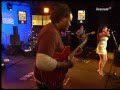
Original promo video


Empty Glass
Why was I born today
Life is useless like Ecclesiastes say
I never had a chance
But opportunity's now in my hands

I stand with my guitar
All I need's a mirror
Then I'm a star
I'm so sick of dud TV
Next time you switch on
You might see me...oh.what a thrill for you

I've been there and gone there
I've lived there and bummed there
I've spinned there, I gave there
I drank there and I slaved there

I've had enough of the way things been done
Every man on a razors edge
Someone has used us to kill with the same gun
Killing each other by driving a wedge

My life's a mess I wait for you to pass
I stand here at the bar, I hold an empty glass


Why was I born today
Life is useless like Ecclesiastes say
I didn't get a chance
Opportunity's in my hand

I stand with my guitar
All I need's a mirror
Then I'm a star
I'm so sick of dud TV
Next time you switch on
You might see me...

I've been there and gone there
I've lived there and bummed there
I've spinned there, I gave there
I drank there and I slaved there

I've had enough of the way things have been done
Every man on a razor's edge
Someone has used us to shoot with the same gun
We where killing each other by driving a wedge

My life's a mess I wait for you to pass
I stand here at the bar, I hold an empty glass

Don't worry smile and dance
You just can work life out
Don't let down moods entrance you
Take the wine and shout

My life's a mess I wait for you to pass
I stand here at the bar, I hold an empty glass


Where to begin with this pure gem of rock, ambition, and spiritual questing?  Pete Townshend has always been at the forefront of the quest, as literary a rock writer as, say, Lou Reed, with a little wider focus and less pretense.  In "Empty Glass" there is a lot to chew over.

First, there is the Bible - the allusion to the always upbeat Ecclesiastes.  It's the Good News translation that specifically gives us "Life is useless" - many of the others, including the King James provides the more standard "Vanity of vanities, all is vanity."  In any case, point well taken.

Then, there is the slightly more subtle "every man on a razor's edge," an allusion to the Katha Upanishad, possibly by way of Somerset Maugham's popular novel, The Razor's Edge:

Get up! Wake up! Seek the guidance of an
Illumined teacher and realize the Self.
Sharp like a razor's edge is the path,
The sages say, difficult to traverse.
                       Katha Upanishad – 1.3.14

Townshend was at on time (and perhaps still is) a disciple of Meher Baba.  In many religions, including Christianity, the idea of making oneself an empty vessel to receive teaching/enlightenment is familiar.  Townshend also struggled with alcoholism and that is alluded to in the image.  The line "Take the wine and shout," however, might also be seen as part of the spiritual ecstatic approach, Omar Khayyam being a well-known proponent of this approach to living and dying.

The irony of "vanity of vanities" and "all I need's a mirror and I'm a star" certainly isn't lost on Townshend.  Watch how he preens and alters the timbre of his vocal while singing the lines in the video above.  It's a lot to jam into one simple pop song; come to think of it, it's not so simple after all, a real litrock classic


------------


useless me
useless weeds...
the cuckoo's opinion
Issa
translated by David G. Lanoue


best,
Don

PS.Get 2 free issues. Get 2 more free issues


Send a single haiku for the Wednesday Haiku feature. Here's how.
Go to the LitRock web site for a list of all 133 songs

Tuesday, March 10, 2009

"Youth's Sweet-Scented Manuscript:" The Rubáiyát, Part III:


This is part 3 of a look at the Rubáiyát of Omar Khayyám. To see where all this started, here's part 1 and part 2.

The response up to this point has been, well, nil, but sometimes you just have to do what you've have to do. Mercifully, this post will wrap up this recent fixation: some things you just have to get out of your system. Just as with Japanese and Chinese poetry, I will always have an affinity for the Rubáiyát. The lyric tone and style is antiquated, to be sure. The philosophy, though, is close to my lapsed agnostic heart.

Spill that wine, take that pearl ...


53
But in vain down on the stubborn floor
Of Earth, and up to Heav'n's unopening Door
---You gaze To-day while You are You—how then
Tomorrow, when You shall be You no more?


56
For "Is" and "Is-Not" though with Rule and Line
And "Up-and-Down" by Logic I define,
---Of all that shall care to fathom, I
Was never deep in anything but—Wine.


63
Oh threats of Hell and Hopes of Paradise!
One thing is certain—This Life flies;
---One thing is certain and the rest is Lies;
The Flower that once has blown for ever Dies.


64
Strange, is it not? that of the myriads who
Before us pass'd the door of Darkness through,
---Not one returns to tell us of the Road
Which to discover we must travel too.


65
The Revelations of Devout and Learn'd
Who rose before us, and as the Prophets burn'd,
---Are all but stories, which, awoke from Sleep
They told their comrades and to Sleep return'd.


66
I sent my Soul through the Invisible,
Some letter of the After—life to spell:
---And by and by my Soul return'd to me,
And answered "I myself are Heav'n and Hell:"


67
Heav'n but the Vision of fulfill'd Desire,
And Hell the Shadow from a Soul on fire,
---Cast on the Darkness into which Ourselves,
So late emerged from, shall so soon expire.


71
The Moving Finger writes and having writ,
Moves on: nor all your Piety nor Wit
---Shall lure it back to cancel half a Line,
Nor all your Tears wash out a Word of it.


72
And that inverted Bowl they call the Sky,
Whereunder crawling coop'd we live and die,
---Lift not your hands to It for help—for It
As impotently moves as you or I.


74
Yesterday This day's madness did prepare;
Tomorrow's Silence, Triumph, or Despair:
---Drink, for you know not whence you came, nor why:
Drink for you know not why you go, nor where.


96
Yet Ah, that Spring should vanish with the Rose!
That Youth's sweet-scented manuscript shall close!
---The Nightingale that in the branches sang,
Ah, whence, and whither flown, who knows?


Cover by David Shabee


This week's trip to the Back Issue Archive of Lilliput Review continues to go way down the alley: August 1993. Here are a few select nuggets from back then: enjoy.


brow to brow
mountain
and thunderhead

William Hart


You Taught
You taught
me woman things
with your smooth words and way;
how is it you taught me how to
leave you?
Terria Tucker Smith


Heads Or Tales
We live in a time where
childhood is a lie
tomorrow is a fantasy
and today is duck duck
goose
Cheryl Townsend


Elegiac Feast
-----"ramma ramma, katzenjamma"

---------------rise up gypsies, dancers, mountebanks,
troubadours, lost souls, poets, painters, ghost
of starving, teeth-gnashing Van Gogh, penniless
and drunk, staring at the stars in the rain,
actors, itinerant players, the irregulars, feast
in a world out of joint and biting our ass, drink
up rogue gypsy gala, dance till morning, oh Judy,
Judy, Judy, sing on, sing on, the singing soul
of our crying hearts.

T. Kilgore Splake


Oh, and one little last something, live, because we can:


best,
Don

Tuesday, February 17, 2009

"I come like Water, and like Wind I go"


Today is the anniversary of the passing of Thelonious Monk, on February 17th, 1982, arguably the single most creative keyboard composer and player in the history of jazz. I'm not exactly sure who might argue with that: devotees of Art Tatum, Oscar Peterson, Fats Waller and a handful (or two) others no doubt.

For me, however, he's the one. Let's see - Monk on piano, Mingus on bass, Jones on drums, Ornette on alto, Trane on soprano/tenor, Miles on trumpet, composing duties shared equally - that should cover it. Away with the fantasy, however: here's the real deal.


I promised, or perhaps threatened, more highlights from the Rubáiyát of Omar Khayyám, which I was much taken with in a recent reading. Background highlights may be found in the previous post. For now, here's a thick, lyrical stew of death, booze, ennui, and love, not necessarily in that order.

Please use your hands.


And we, that now make merry in the Room
They left, and Summer dresses in new bloom,
---Ourselves must we beneath the Couch of Earth
Descend—ourselves to make a Couch—for whom?


Alright, maybe the annotating isn't quite over. Notice the words that he capitalizes. That capitalization is not largely gratuitous. Particularly, in this quatrain: Room, Summer, Couch, and Earth. And, also, what is not capitalized: we and whom.

Ok, I'll try to refrain from refraining.


24.

Ah, make the most of what we may spend,
Before we, too, into the Dust descend;
---Dust into Dust, and under Dust to lie,
Sans Wine, sans Song, sans Singer, and—sans End!


25.

Alike for those who for To-day prepare,
And those that after some To-morrow stare,
---A Muzzeín from the Tower of Darkness cries,
"Fools, your reward is neither Here nor There!"


26.

Why, all the Saints and Sages who discuss'd
Of the Two Worlds so wisely—they are thrust
---Like foolish Prophets forth; their Words to Scorn
Are scatter'd, and their Mouths are stopt with Dust.


27.

Myself when young did eagerly frequent
Doctor and Saint, and heard great argument
---About it and about: but evermore
Came out by the same door that I went in.


28.

With them the seed of Wisdom did I sow,
And with mine own hand wrought to make it grow;
---And this was all the Harvest that I reap'd—
"I come like Water, and like Wind I go."


29.

Into this Universe, and Why not knowing
Nor Whence, like Water willy-nilly flowing;
---And out of it, as Wind along the Waste,
I know not Whither, willy-nilly blowing.


30.

What, without asking, hither Whence?
And, without asking, Whither hurried hence?
---Oh, many a Cup of this forbidden Wine
Must drown the memory of that insolence.


Well, it seems there must be a part three, because I could go on forever, but Omar says no! Since it is a little early for a Cup of Wine (No, again!), it seems it's time to turn to the Lilliput archival selections. This week's selection comes from December 1993, 15 plus years ago. Whatever were we up to then, eh?


Cover by Guy Beining


dead poem, #8

when the poets talk of flowers
I want them placed on their banal graves

big bloody hearts
hanging from a copperhead's mouth

a SASE
attached
Bill Shields


Early Robins

Orange breasted buddhas
test their beaks
against
the frozen earth
Bart Solarczyk


In A Time of Human Savagery

Woman in a blue car
holds a white flower
to her pink face

She breathes the flower,
eyes closed,
waiting to make her turn

Leaves open their arms
and fly wild onto the wind

Nothing can stop the world.
christien gholson


Becoming
white blossoms
& cranberry glass
the night more wild
than the red blood
of Egypt
each leaf
is not
what it
seems
Gina Bergamino


from Interweavings II
geovoidl
Richard Kostelanetz


Turner's Song

The player dances his keys
with pale tarantula hands.
His music moves into
the night where its staves melt
in the madness of the rain.
Gordon Grice


January 29th 1986

Winter is like losing
your luggage in Newark
Arthur Winfield Knight


Desacralizing
----sacralizing
Time into the serpentine
weaving of Café Latté
saxophone Kanishiwa
one month away
from
Spring
Hugh Fox


Finally, something of an update: I've printed the Basho Haiku Challenge chapbooks. This coming weekend, I hope to put a good dent into cutting, folding, collating, and stapling the contributors run of 50 or so. The new issues, 167 and 168, are also coming along nicely and all should begin to go out on time (well, that's a rescheduled on time) around March 1st.

And, then, perhaps daffodils.


spring begins--
sparrows at my gate
with healthy faces
Issa
translated by David Lanoue


best,
Don

Tuesday, February 10, 2009

"Better a live Sparrow than a stuffed Eagle": The Rubáiyát of Omar Khayyám


In life, death informs all things. Think of it as the booby prize of cognizance. This is as true for those who choose to repress it, perhaps even more so. It's the primary reason Freud got to have what has euphemistically come to be known as a consulting room (check out Ernst Becker's groundbreaking The Denial of Death to let all this sink in, long and hard).

For those who might like their answer in a more timely, lyrical fashion, there is the Rubáiyát of Omar Khayyám as translated by Edward FitzGerald. I was recently reminded of the Rubáiyát by an article in the Times Literary Supplement (January 9, 2009) entitled "The Angry Omar," though it might more appropriately been titled "The Wine-Soaked Omar." It is a fine article written by Daniel Karlin, fine enough to prompt me back to the Rubáiyat, which I've haven't visited in many a year.

Two points Karlin makes are of particular editorial importance. The first:


In the Persian text the rubáiyat are independent poems, grouped according to custom by end-rhyme. FitzGerald saw how some of these separate poems might be linked to form a narrative and argumentative sequence, by analogy with the classiccal Greek or Latin "ecolgue."


The second:


(FitzGerald's) attitude to translation is summed up in a phrase that has become the rallying cry of "free" translators against their literalist opponents: "Better a live Sparrow than a stuffed Eagle."


There were five different editions of the Rubáiyat in FitzGerald's lifetime and, since they are all relatively brief, being composed of anywhere from 73 quatrains to just over 100, frequently all 5 are published in the same volume. The verses I've chosen to highlight all come from the final 5th edition. Enjoy.


7.

Come, fill the Cup, and in the Fire of Spring
The Winter Garment of Repentence fling:
---The Bird of Time has but a little way
To fly—and Lo! the Bird is on the Wing.


8.

And look—a thousand Blossoms with the Day
Woke—and a thousand scatter'd into Clay:
---And this first Summer Month that brings the Rose
Shall take Jamshýd and Kaikobád away. ----


15.

And those that husbanded the Golden Grain,
And those who flung it to the Winds like Rain,
---Alike to no such aureate Earth are turn'd
As buried once, Men want dug up again.


16.

Think in this batter'd Carnavanserai
Whose doorways are alternate Night and Day,
---How Sultán after Sultán with his pomp
Abode his hour or two and went his way.


19.

And this delightful Herb whose tender Green
Fledges the River's Lip on which we lean—
---Ah, lean upon it lightly, for who knows
From what once lovely Lip it springs unseen. ---------

(Think Isaiah: all Flesh is Grass)


20.

Ah, my Belovéd, fill the Cup that clears
To-day of past regrets and future Fears—
---To-morrow? Why, To-morrow I may be
Myself with Yesterdays Sev'n Thousand Years.


21.

Lo, some we loved, the loveliest and best
That Time and Fate of all their Vintage prest,
---Have drunk their Cup a Round or two before
And one by one crept silently to Rest.


22.

And we that make make merry in the Room
They left, and Summer dresses in new Bloom,
---Ourselves must we beneath the Couch of Earth
Descend ourselves to make a Couch—for whom?


Well there is a little taste, of both sweet and bitter wine. I'll try to delve into more verses in a future post.

Speaking of second parts, in last week's archival posting of Lilliput Review poems, I promised a second dip into the double size issue, #53, from February 1994. Here it is.


Cherry blossoms swirling
--------------in the wind:
---------------------one thousand little poets

--------Jamie Sweeney


a hilltop puddle
choked
with clouds
Bill Hart


¶trees turned to fence
sky to window,
ocean to the drowning ground

Scarecrow


Snow Chimes The End Of The Human War

Snowgrains strike
the rust-iron train trestle
above the frozen creek.
They clang loud as bell towers
in the world inside the dove's eye.
In our world,
they barely make any sound at all.
christien gholson


Sigmund Freud On Coming To Terms
-------------With His Father
--------(Based on Freud's Revolutionary Dream)

"I stood on the railway platform
waving good-bye to a blind man."

D. B. McCoy


/ modern /
everyone's a masochist.
who hasn't shaved, bled?
those who grow hair free i'm sure
have refused butter on their toast?
turned off tv and yawned through a book?
altered their chemical makeup
just to stint the truth?

the candle that burns twice as bright
burns half as long i guess we burn
twice as long, we sad dim fuckers.
tolek


6:57 P.M.

wearing your
purple
sunglasses

I just can't
care

anymore
C. Ra McGuirt


Well, those were different times, indeed. Here's a little something that sums up change nicely.


the sky colors
of dawn have changed
to summer clothes
Issa
translated by David Lanoue


best,
Don