Showing posts with label Dennis Maloney. Show all posts

Friday, September 30, 2011

Beano Gee and the Mystery Poetry Art

Artwork by Beano Gee

Well, here's a Friday conundrum for ya. An artist buddy of mine told me he found a piece he had done awhile back that was based on a poem, only it had been so long he completely forgot what poem it was. So, he came to me, me being the at work poetry guy. I puzzled and searched and guessed and struggled and came up with zilch.

A few days later, his addled brain pan spit back up the obscure bit of info, which wasn't all that obscure once he remembered it. That got me to thinking - I wonder if anybody else would know?

So, poetry mavens, here's the challenge: what poem is this piece of art based on?

To spice the pot (and get your own addled brain pan sizzling), I'll throw in a 15 issue subscription (or an extension to your current subscription) to Lilliput Review for anyone who can guess the poem or the first line (a bit tricky, that part, and something of a hint) AND the poet, or a 6 issue subscription for anyone who simply guesses the poet.

Reply either in the comments section below or directly to me via email (lilliput review AT gmail DOT org).

--------------------------------

Recently, Curtis Dunlap (30 haiku by Curtis - just hit "next") over at Blogging Along Tobacco road did a nice introduction to haiku and senryu that is most definitely worth checking out. Though I don't agree with everything he says - put two haiku poets in a waiting room and they will find something to disagree about except their sly attentiveness to that ceiling fly - give it a look see. It is very worthwhile.

--------------------------------

Anyone who follows this blog with regularity knows how very enthralled I am with the work of John Martone, one of the finest poets writing the short poem today. Here is a recent book by John, microscope field, in all its 96 page glory. It is full of wonder. A tip o' the hat to Scott Watson for pointing me toward it.


--------------------------------

Finally, today's archival selection comes from Lilliput Review #178 and it is a beauty. Enjoy.


Hearing a flute song
The monk's hand pauses
Copying the sutra.
Furrowed brows, you are
Too young for such a look
Yosano Akiko
translated by Dennis Maloney


wafting through trees
a beggar's flute
a nightingale

Issa
translated by David G. Lanoue


best,
Don


Send a single haiku for the Wednesday Haiku feature. Here's how.

Go to the LitRock web site for a list of all 120 songs

Friday, August 5, 2011

White Pine Press and Some Rare Poetic Gems


Dennis Maloney of White Pine asked me to pass along the following info ... a big sale of incredibly rare poetic gems from his personal collection, all to support one of America's finest small presses.  Here's his notice:

White Pine Press founder Dennis Maloney is selling off his forty year collection of signed and first editions of poetry and more to raise funds to support White Pine Press. The sale includes significant collections of several poets including Gary Snyder, Robert Bly, Tomas Transtromer, Michael McClure, Philip Whalen, Pablo Neruda, Wendell Berry, a selection of early work by Native American poets and smaller selections of many other authors.

White Pine Press, is a non-profit organization, and sales of material donated to a library or other institution or purchased for above the fair market value of the items will be eligible for a tax deduction. For additional information, questions, or purchases please email Dennis Maloney at dennismaloney@yahoo.com.
A list of titles maybe found at
http://www.whitepine.org/booksale.php


---------------------------------------------


I'm sure you've noted that the last two weeks have been a little light @ The Hut.  In keeping with this approach a while longer, I'd like to share this live performance, which is as good if not better than the original (and that is saying something), of an early rock classic by San Francisco's We Five:


There is something about this tune that has always reminded me of "Walk Right In" by the Rooftop Singers, so, hey why not:


If you can ever point to a handful of cuts that bridged the folk revival of the late 50s to the burgeoning rock and roll scene of the 60s, this certainly is one.

By the way, I just love these YouTube folks who show a 45 playing for the duration of the song.  One thing that can be said, the sound of this one is certainly HQ.

Finally, since there won't be a Sunday Service this week, I can't resist slipping in another song, one I happen to be listening to right now:


As to why things have been a tad on the lightweight side, I hope to be addressing that in full in the coming week or two, so stay tuned.

------------------------------

This week's dip into the archive is from March 2009, Lilliput Review, #168, and finds us at that most magic of moments, when all the best poems are written, all the great thoughts conjured, all the greatest loves declared, and all the passing on of things noted: twilight.  Enjoy.


We meet :: when the poem turns dusk
           Grant Hackett


now I watch
with careful attention...
autumn dusk
Issa
translated by David G. Lanoue


best,
Don


Send a single haiku for the Wednesday Haiku feature.  Here's how.

Go to the LitRock web site for a list of all 113 songs

Friday, April 15, 2011

Hyakunin Isshu: 100 Poems by 100 Poets (Unicorn Press)

The term of "print on demand" has radically changed in recent years (or should I say months) and the idea that it has revolutionized publishing has been proudly touted and summarily decried from cubicles and garrets all over the world.  Not surprisingly, what might be thought of as the original idea of print on demand has taken something of a backseat.

Looking back at that original idea might just be instructive for the future of publishing, particularly poetry publishing.

All of this is by way of an intro to a new translation of the Japanese classic waka anthology, Hyakunin Isshu: 100 Poems by 100 Poets, by Dennis Maloney and Hide Oshiro, published by Unicorn Press. In the introduction, Dennis mentions that through the years there have been a dozen or so English translations, most of them being woefully out of date.  He also notes that, along with this new translation, there are also two others of recent vintage to compare and enjoy.

The story of this truly classic anthology is well-known.  It was compiled by Fujiwara no Teika and consists of one hundred waka by one hundred different poets.  The poems are in a rough chronological order, from the 8th to the 12th century, and as such represent something of a snapshot of Japanese court poetry.  It is one of the most famous anthologies of poetry of all time and Maloney and Hideo Oshiro have brought their considerable skills to task in this slim volume.

As you may see from the illustrations above and below, each copy of this title is handmade, handmade as in the original print on demand handmade, and Dennis Maloney tells me that they are produced a few at a time and no two are exactly the same.  If you look closely at the back cover, you'll see the backing used in the "production" of this copy is the cover of an Amy's vegetarian meal.

Unicorn Press recycles.

In fact, Unicorn Press is famous in American small press history.  Longhouse  has a catalogue of many of their famed items for sale, some of them now quite pricey.  This is a catalogue of Unicorn titles through the years via a ISBN finder website.  The following is a brief interview with Alan Brilliant of Unicorn Press:


For a wonderful, in-depth interview with Brilliant, which will fill in some of the history of the small press in America, check out Farrago's Wainscot.

I have a serious bias when it comes to this book and I'll state it plainly: two of the volumes in the Modest Proposal Chapbook series are thematic selections that Dennis made from the manuscript before publishing the collection in its entirety with Unicorn: Unending Night: Japanese Love Poems & The Turning Year: Japanese Nature Poems.   

That being said, it was real pleasure to receive this wonderful little item in the mail and to sit down with all 100 poems in a new translation for the first time.  Here is a small selection of a few of my favorites .


The mountain pheasant's tail
trails long behind
- longer still
my loneliness 
in the endless night.
Kakinomoto no Hitomaro


Like the wild swirling patterns
dyed into cloth from the north, 
my love thoughts
are becoming tangled
because of you.
Kawara no Sadaijin


My heart is torn
since I've not seen you.
Like the tidemark in Osaka Bay
I measure my life
waiting to meet you again.
Prince Motoyoshi


The people of my native village
have changed after many years,
but at the gate
the fragrance
of plum blossoms remains.
Ki no Tsurayuki


My sleeves never dry,
like the rocks
beneath the sea
never seen,
even at low tide.
Lady Nijo


If you'd like to get a unique copy of your very own, here is the info you need.  The price is $12.50 (+ 2.50 shipping) to be mailed to: 


Unicorn Press, Inc.
1206 Grove Street
Greensboro, NC 27403-3410


The poetry is timeless and the craftsmanship unique.  I'm sure you'll enjoy it.


------------------------


This week's selection from the archives comes from Lilliput Review, #148 and is by the very fine poet of the short form Dorothy McLaughlin, whose work has graced the pages of Lillie many times over the years.  Here is one of her little beauties:


leaving home
leaving the shadow
of home
Dorothy McLaughlin


at your house
the sparrow, too
makes a home
Issa
translated by David G. Lanoue


best,
Don


Send a single haiku for the Wednesday Haiku feature.  Here's how.

Go to the LitRock web site for a list of all 98 songs
Hear 'em all at once on the the LitRock Jukebox

Friday, March 18, 2011

Some Thoughts of R. H. Blyth

 Monkey by Tōhaku


It's been over three years since I speculated that it would take me awhile to read and report back on the 4 volume colletion of Haiku by R. H. Blyth and it seems I was right.

That's some delay.

Over those years, volume 1 has sat next to my bed, moving up and down the immediate pile of books to be read, occasionally picked up, dipped into, and very much enjoyed.  Lately, I've been reading a section on haiga and haiku.  Having to lead two groups over the last two weeks through appreciation of haiku sessions, I was particularly attentive to the following:

What Bashō wanted to do, however, was to condense without heaviness, to refine without dilettantism, to philosophize without intellection.  This he could find done in pictures already.

When you are working on trying to communicate a cogent definition of haiku to folks new to the form, you pay attention when you run across a statement like this.  Further on, as Blyth sums up his thoughts on haiga and haiku,  he notes that roughness and humor are two admirable qualities of haiga.  He continues:

The insistence on the fact that humour is to be seen everywhere, under all circumstances, which is the special virtue of haiku, is also the distinguishing quality of haiga, and one which keeps it most closely connected with this world and this life.  Art comes down to earth; we are not transported into some fairy, unreal world of pure aesthetic pleasure.  The roughness gives it that peculiar quality of sabi (Ed. note: B's emphasis, not mine) without age; unfinished pictures, half-built houses, broken statuary tell the same story.  It corresponds in poetry to the fact that what we wish to say is just that which escapes the words.  Haiku and haiga therefore do not try to express it, and succeed in doing what they have not attempted.


Here are two of  Bashō's poems, as translated by Blyth, from volume 1 of his Haiku:


        Yield to the willow
All the loathing, all the desire
        of your heart.


         In the midst of the plain,
Sings the skylark,
         Free of all things.


---------------------------------------------


We all sit and wait and pray over developments in Japan.  There will be another post from Scott Watson in Sendai tomorrow. 

For now, this week's featured poem comes from Lilliput Review #143, June 2005.  It is a translation of a Japanese classic.

We wait and hope.


A spring day
filled with tranquil light.
Cherry blossoms,
why are you
falling so restlessly.
Ki-no Tomonori
translated by Dennis Maloney and Hide Oshiro


without you--
how vast
the cherry blossom grove
Issa
translated by David G. Lanoue


best,
Don


Send a single haiku for the Wednesday Haiku feature.  Here's how.

Go to the LitRock web site for a list of all 94 songs
Hear 'em all at once on the the LitRock Jukebox

Friday, August 6, 2010

On the Scented Breeze: Yosano Akiko


"Modest Proposal Chapbook" #21 is just out. It is a selection of the work of Japanese poet Yosano Akiko, entitled On the Scented Breeze, translated by Dennis Maloney and Hide Oshiro. For those unfamiliar with this marvelous poet, here is info from Dennis:


Yosano Akiko (1878-1942) is admired as the greatest woman poet and tanka poet of modern Japan. Akiko infused her poems with an erotic and imaginative passion at a time when traditional poetry had grown lifeless and conventional.

In addition to Midaregami or Tangled Hair, from which this selection of poems is taken, Akiko published over 75 books including over 20 of original poetry, as well as novels, essays, fairy tales, children’s stories, an autobiography, and translations. She was a leader and strong supporter of the women’s rights movement in Japan.

Yosano Akiko transformed tanka poetry, instilling life in what had become a relatively stilted, tired form. Many well known translators have rendered her work, including Kenneth Rexroth, Sanford Goldstein, and Sam Hamill. On the Scented Breeze is a modest selection of 29 of some of her most moving, powerful tanka, translated in a clear precise lyrical manner that heightens this power. Here is a selection of 5 poems from this excellent collection:


Did we part
yesterday
or a thousand years ago?
Even now I feel
Your hand on my shoulder.


Goodbye my love
For a night at Fuzan spring
I was your wife.
Now until the end of the world
I demand that you forget me.


Spring so short,
In what can we
Find immortality?
I let his hands fondle
My vigorous breasts.


Poet, sing of this night
Alive with lights and
The wine served.
Our beauty pales
next to the peony.


God of fate, echo of my life.
This last world of mine
Please listen to
The notes of my koto
Played with an ax.


As with all "Modest Proposal Chapbooks," On a Scented Breeze is a $3.00, including shipping. If you'd like a copy, details to send along payment may be found here.


-------------------------------------------------------------------


This week's Lilliput archive poems, a pair, come from issue #141, January 2005, and are seemingly two sides of that same old coin:


bright red tulips
almost touch his name
spring rain
Joyce Austin Gilbert


May morning ...
sunlight fitting itself
around each blade of grass
Dorothy McLaughlin


blades of grass--
swallows start arriving
so pretty
Issa
translated by David G. Lanoue


best,
Don

Friday, July 16, 2010

Santoka: Some Further Translations


Last month, I did a post for which Scott Watson allowed me to share some of his thoughts on translation, along with 5 of his excellent renderings of the work of Santoka. In response, in order to prompt to continued thought and, perhaps, even talk on the subject, Charlie Trumbull sent along some translations of the same poems from his ongoing Haiku Database project. I asked him for more info on the project and he sent it, kindly granting permission to reprint the overview here:


The Haiku Database Project


A

while ago I was in the library looking for the text of a certain poem and was grateful for those anthologies that featured a first-line index of the contents. I had the thought that it would be wonderful to have a first-line or subject index of the best English-language haiku. But then, I continued, since haiku are so short, why not a full-text index? And while we’re at it, since we’re effectively talking only about 40 years of English haiku activity, why not a comprehensive, inclusive database?

The Haiku Database in an attempt to do just that: to put into a searchable, sortable, electronic database all important haiku that have appeared in English. I began working on the project in September 1998 and so far (end of June 2010) have captured almost 220,000 haiku. An unscientific guess is that the total number of English haiku published in the journals, anthologies, and individual collections is about twice that number. The Database grows at a rate of more than 20,000 haiku a year.

I began — because it was easy — by copying materials from on-line haiku sites and journals, including Dogwood Blossoms (the first Internet haiku journal), the Shiki Internet Haiku Salon biweekly kukai, Dhugal Lindsay’s Web site (which includes a few issues of Futoh), the wonderful sites constructed by Jane Reichhold, ai li, Elizabeth St Jacques, Randy Brooks, John Hudak, and others. Next, I targeted the major English-language anthologies, and have so far included Cor van den Heuvel’s The Haiku Anthology (all three editions), Bruce Ross’s Haiku Moment, Jim Kacian’s annual Red Moon Anthologies (1996–2008) and the first five volumes in the New Resonance series (1999–2007), the San Francisco, Canadian, Australian, and two New Zealand anthologies, the British Haiku Hundred and Iron Book of Haiku, Zoe Savina’s huge international anthology, and many others.

Journals and individual collections are next. I have finished entering systematically the full runs of a few journals including American Haiku, Haiku West, Haiku Quarterly (Arizona), Woodnotes, Black Bough, South by Southeast, Acorn, Still, and Frogpond, and have begun working on Modern Haiku, Cicada, Dragonfly, Blithe Spirit, and Brussels Sprout. As for Internet sources, the Database includes Reflections, Haiku Light, The Heron’s Nest, Tinywords, Roadrunner, and Simply Haiku as well as much material from the English-language haiku columns in Japanese newspapers such as Mainichi and Asahi.

The Database focuses on haiku in English, but translations into English are also included. The Database now includes the contents of first three volumes of R.H. Blyth’s Haiku, as well as all of his two-volume History of Haiku. All the Peter Pauper haiku books have been extracted, as has the first volume of Toshiharu Oseko’s Bashô’s Haiku and many other translations into English of Japanese haiku. David Lanoue’s astonishing online database of Issa’s work was added at the end of 2007. Important individual collections are being captured as well, including Jane Reichhold’s massive Dictionary of Haiku (both the print and on-line editions; more than 4,800 haiku), Richard Wright’s Haiku: This Other World, and Jack Kerouac’s Book of Haikus.

Criteria for inclusion of a haiku are basically that it should have appeared in print (or in an online journal) in English. A few haiku in other languages are included, some translated, some not; these may form the core of a non-English haiku database some time in the future. Verses included as part of haiga or haibun are included if, in our opinion, they can stand alone as independent haiku. Except for the hokku, verses of renku are generally not included, nor generally are rengay, tanka, cinquains, and the like. In the case of concrete poems and short verses of haiku length, we generally try to be inclusive rather than exclusive. Children’s haiku are included, but gathering them is a low priority.

Data collected for each haiku include the text (including as much of the formatting as possible), the author, publication history, date of composition (or, more commonly, date of first publication), and notes. For haiku translated from languages other than English, notably Japanese, the original text (in the original orthography and in a romanized version, if applicable), the name of the translator, and date of translation are also included. These data permit searches on specific kigo and comparisons of various translations of a haiku by, say, Bashô, even when the English texts are very different. Other fields in the database assist in sorting by season, season words, attributes (e.g., rhyme), etc.

The purpose of The Haiku Database is to make it easier for serious students to locate and study haiku — i.e., it is a finding tool. So far the database has proved useful to poets wishing to check the originality of their own work and in a few cases has helped identify cases of plagiarism in haiku contests. It has been useful for authors writing about haiku, preparing newspaper columns or journal articles, and compiling anthologies to have at hand large selection of examples, together with original publication information.

Clearly, any sort of commercial use or making the database freely available—e.g., on the Web—is out of the question, and I will not publish any raw search data. I would, however, like to make the existence of this resource known and make the search capability available to others in the haiku community. Please let me know if you are looking for a specific haiku or want to know what use has been made of, for example, “pampas grass” or “Christmas” in haiku. Within reason, I’ll be happy to run a search for you.


The poems that follow are in the order of the original post as translated by Scott Watson. I haven't reproduced Scott's renderings again as it isn't a question, in my mind (nor, I believe, Charlie's either), which one is better or worse etc. It is simply a further glimpse into the mind of the original poet, Santoka; more takes on his language, imagery, and thought. It is a way to expand our understanding and further the conversation. As Cid Corman said


Poetry is that
conversation we could not
otherwise have had.
Cid Corman
Lilliput Review, #103


落ち葉ふる奥深く御仏をみる
ochiba furu oku fukaku Mihotoke o miru

Dead leaves fall, in the depth, I see the Buddha

Hiroaki Sato, Cicada 2:3 (1978)


Fallen leaves
Deep in the forest
I see a Buddha.

John Stevens, Santôka, Mountain Tasting #223; different format with translator not given, in Simply Haiku [Web] 3:3 (autumn 2005)


空襲警報るいるいとして柿あかし
kûshû keihô ruirui to shite kaki akashi

The air-raid alarm
Screaming, screaming;
Red persimmons.

John Stevens, Santôka, Mountain Tasting #160; different format with translator not given, in Simply Haiku [Web] 3:3 (autumn 2005)


死人とりまく人々に雲もなきそらや
shinin torimaku hito-bito ni kumo mo naki sora ya

no other translations


うれしいたよりもかなしいたよりも春の雪ふる
ureshii tayori mo kanashii tayori mo haru no yuki furu

Good news,
Bad news;
Spring snow falls.

John Stevens, Santôka, Mountain Tasting #215


しぐるるや死なないでゐる
shigururu ya shinu naide iru

Cold winter rain;
I am still alive.

R.H. Blyth, Blyth, History of Haiku II:181


Downpour, dead I’m not

Hiroaki Sato, Cicada 2:1 (1978)


Winter shower I'm still not dead

Hiroaki Sato, Santôka, Grass and Tree Cairn, 7


late autumn rain;
not yet dying

and

late autumn rain;
yet not dying

Stephen Wolfe, Wolfe, "Wreath of Weeds," 219


It’s drizzling,
Here I am,
Still alive.

Hisashi Miura and James Green, Selected Haiku from Sômokutô


For further info on the Haiku Database Project, you may contact Charles Trumbull at:


trumbullc AT comcast DOT net (all one phrase, with AT standing in for @ and DOT standing in for .)


----------------------------------------------------------------------------------------


This week's featured poem comes from Lilliput Review, #145 and, since this post has been about translation, what can be more fitting than this little tanka, from the seminal 100 Poems by 100 Poets collection (a full translation of which may be found here):


The mountain pheasant's tail
trails long behind
–longer still
is my loneliness
in the unendingly long night.
Kakinomoto-no Hitomaro
translated by Dennis Maloney & Hide Oshiro


completing
the green mountain
a pheasant cries
Issa
translated by David G. Lanoue


best,
Don

Friday, April 30, 2010

Ryokan, translated by Dennis Maloney


Bob and Susan Arnold of Longhouse Publishers have been issuing a delightful series of accordion-style fold out mini-booklets for quite sometime now, some of which I've taken a look at here at The Hut. Dennis Maloney, of White Pine Press fame, is a longtime Lilliput contributor, whose 4th chapbook in the Modest Proposal Chapbook series, a volume of Yosano Akiko translations, will be coming out sometime in June (along with 4 delayed issues of Lilliput Review). Previous chapbooks were Dusk Lingers: Haiku of Issa, The Unending Night: Japanese Love Poems, and The Turning Year: Japanese Nature Poems, the later two of which come from the famed 100 Poems by 100 Poets classic volume of Japanese poetry.

So it is with some delight that Dennis's volume of Ryōkan poems has arrived from Longhouse. And who was Ryōkan you might ask? According to the "New World Encyclopedia" site:


Ryōkan (良寛) (1758-1831) was a Zen Buddhist monk of the Edo period (Tokugawa shogunate 1603-1864), who lived in Niigata, Japan. He was renowned as a poet and calligrapher. He soon left the monastery, where the practice of Buddhism was frequently lax, and lived as a hermit until he was very old and had to move into the house of one of his supporters. His poetry is often very simple and inspired by nature. He was a lover of children, and sometimes forgot to go on his alms rounds to get food because he was playing with the children of the nearby village. Ryōkan was extremely humble and refused to accept any official position as a priest or even as a "poet." In the tradition of Zen, his quotes and poems show that he had a good sense of humor and didn't take himself too seriously. His poetry gives illuminating insights into the practice of Zen. He is one of the most popular Zen Buddhists today.


Over at Wikipedia, there is a bit of a dust up over the Buddhist monk part, but no doubt it isn't anything the poet himself would be much concerned about. There are, after all, poems to write, sake to drink, and life to be lived.

The Longhouse booklet, consisting of 2 minutely folded sheets contains an astounding 47 tankas, is divided into the four seasons. Ryōkan's simple message shines through poem after poem in translations with a direct clarity that mirror that basic philosophy. Here is a couple of samples to tempt you over to the Longhouse site for this tasty little booklet and lots more besides:


In the garden – just us
a plum tree
in full blossom
and this old man
long in years.


I'm sure there is more but what I think of first is how the old man's years seem so very like the plum tree's blossoms.


What shall remain
as my legacy?
The spring flowers,
the cuckoo in summer
the autumn leaves.


At once in this beautiful tanka, there is the Buddhist sense of oneness and perhaps a touch of the fact that we are all reincarnated a bit in what's is all about us. At least that's what I'm hoping when some of my ashes end up in the garden, some more in the river, and most of the last bit in the bay back home.


Ryōkan too
will fade like
the morning glories.
But his heart
will remain behind.


See previous comment ...


Deep snow outside
bundled up
in my solitary hut
I even feel my soul
slip away as dusk gathers.


The quiet beauty of these verses pervades one's spirit as the experiencing nature does. Not much exegesis, though perhaps there could be some, but let it rest: let me take in the rose rather than pluck its petals.


------------------------------------------


This week's feature Lilliput Review broadside is #80, from June 1996, entitled spectacles of poverty by scarecrow.


what is meant to be seen and heard
will be seen and heard
the blue of the sky
through a fly's wing
walking on my window
into a cloud.
in the shape of constant sorrow


how much the poem cannot carry
when you're the only one
there
to witness the pine cone falling.


the camera composed of metal taken from the ore
taken from the stone
beneath the grass
in the meadow
where the lion once slept
in the picture.
scarecrow


now begins
the Future Buddha's reign...
spring pines

Issa
translated by David G. Lanoue


best,
Don

PS Ed Baker has tipped us to an interview with Dennis Maloney which is a delight so I'll append it after the fact. All thanks to the bard of Takoma Park.

Thursday, February 11, 2010

Dennis Maloney: Just Enough


I've just finished reading Dennis Maloney's Just Enough, a collection of 64 tanka, for the 2nd time in its entirety. The first time was a couple of months ago and, as I often do, I marked favorites with post-its on which I scribble a thought or two if I'm lucky enough to have one. What struck me this time is how many of the poems I hadn't highlighted during this reading.

Who said procrastination is a bad thing?

According to the cover copy, the poems are a linked collection "written in the voice of a contemporary hermit-poet living in the Higashiyama region of Kyoto." As Dennis notes in the Afterword, he has visited Kyoto many times since 1973 and that many "of the poems are drawn from experiences in Kyoto or inspired by it."

The tanka themselves are a loose collection of poems exploring the self and its relation to the outside world, the stuff of classic Eastern verse. This beautifully designed little volume, published by Palisade Press, with Bashô's hut pictured on the cover, fits neatly into the hand (4 x 7") or back pocket.

As with the best Eastern verse, there is a subtle, understated quality that may be deceptive in its simplicity. Here there is less erudite allusion or a sophisticated style than a simple, pure philosophic outlook. There are no simple answers, however; what there is is the constant everyday working toward the light, if you will, the light as in enlightenment.


Don't give me the whole truth,
but sea for thirst, sky for light.
Give me a glint,
as birds bear water drops
from bathing.


There are no sure answers; we are human, after all. There is contradiction, in the best Whitmanesque sense. First, the poem from which the title is derived, also the first poem in the collection:


How hard it is
to take
what is given
and say yes,
just enough.


And then 28 poems later:


You didn't ask to be born,
but here you are living
in the everyday world.
There is so much,
one life is not enough.


Both of these poems are, in their individual ways, glorious celebrations of life. Whatever the goal or the Buddhist principle, the truth will out, as it does in both poems that on the surface seem contradictory but in reality work together as the wings of young sparrow.

One of my favorite poems here is about poetry, a weakness of mine that is obvious to anyone who knows my finer editorial peccadilloes, yet still it manages to be about, and evoke so very much more, than that in a mere 21 words:


A good poem
should smell of tea,
earth or newly split wood.
A few words woven together
to make a home.


Notice the economy and precision here: the poem should "smell of tea," not "like tea." And three simple elements here - tea, earth, and wood - make up not just the poem but what any good home may be comprised of.

Art and life, perfectly dovetailed as one.

The quest, of course, is never ending, the journey is the destination, otherwise we all could have stopped writing (and drawing and singing) a long time ago.


On the mountain trails
of the self
-hot summer sweat
step after step uphill,
no destination in sight.


And life is conjured in all its glory and ambivalence and wonder, internal and external:


Some days the pond
has utter clarity
-a distant mirror.
Other days
it is clouded by rain.


The mirror appears again, this time in its symbolic guise, resonating back and forth:


Years spent in
meditation halls
wandering from teacher to teacher
polishing, polishing the mirror
-now break it!


Maloney has adopted certain principles, certain archetypes, be they Zen, lyric, or otherwise, and made them his own. His vocabulary is basic; he puts the words he chooses, and ones he doesn't, to great use. Here is another about a teacher and the lesson, which I glossed over in my first reading:


In the old days
the teacher said
find a need and fill it.
What is that need?
Only the road will till you.


However you view that road, be it literal or symbolic, the point I originally missed is that it is external. It is "a need" not, "your need," (italics mine) and it is outside yourself you will find it. As another contemporary nature poet asked, "What will you do with this one wild and precious life?" Again, "this one wild and precious life", not "your wild and precious life" (again, italics are mine).

This is a beautiful little book for appreciators and practitioners of tanka, those with an interest in Eastern philosophy, and anyone generally enamored of the short poem. Here's one final reason this volume deserves to find an attentive audience:


If you're kin to the pine
you'll live long,
glisten in the rain,
be lively in autumn,
beautiful in snow.


***********************************


The featured broadside this week is Lilliput Review #125, entitled Only: a patch of Cid Corman. Cid was a giant in 20th century poetry. His work, as illustrated below, is focused in the now; in the shortest verse each and every word bears its own weight. He slows you down, makes you look now at the realities of life. In addition, I can personally say he was a poet of unflinching generosity to even the smallest of presses, Lilliput certainly falling, both literally and figuratively, into that category. The notes he wrote, the poems he sent, the spirit he shared, all were an immense lift to me and, as a result, the magazine. He showed me hope, he showed me heart, and he made me see things, literally and lyrically, in a different way. I was lucky enough to publish 2 broadsides and 2 chapbooks of his work. I believe Now/Now, "Modest Proposal Chapbook #12, was the last collection of his to appear in his lifetime; it arrived just before he entered hospital in December 2003. The broadsides and chapbooks are all still in print and still available.


DYINGLIVING

To feel what it is
was to be or have been this
only this moment.


Nobody survives
except as a form of no
thing - is what this is.


SAGE
BRUSH


We like to think we
think and that we mean something
by thinking we do.


There are reasons for
reasons excuses excuse
and there you are - here.


Cid also loved the classic haiku poets, Issa included. Here are two poems by a master poet I believe he would have loved:


butterfly dances
'round the arrow
in a dying deer


dying to the beat
of the prayer to Buddha...
one leaf falls
Issa
translated by Daniel G. Lanoue


best,
Don

Thursday, December 3, 2009

2nd Annual Bashô Haiku Challenge Winner


After weeks of working through nearly 500 haiku from 99 poets, I've made a final selection of 56 poems to be published in the 2010 2nd Annual Bashô Haiku Challenge chapbook. Though I received 3 times as many entries as last year, the task seemed a thousand times more daunting. I set no particular limit or had no particular length in mind for the chapbook, so the final selection represents only the highest quality of work I received. Last year's chapbook contained 25 haiku, making this year's over double the size. I would have been happy to publish another chap of the same size, but the quality of entries demanded a weightier book and I am even happier to oblige with that.


The winning poem comes from William Appel of Japan:


Leaf
falling off
the mountain
William Appel


I will let William's poem speak for itself, only saying that to evoke the entire macrocosm via one of its smallest components, in just 5 words, is a daunting accomplishment and the stuff of great haiku, indeed.

The five runner-up poems, each of which will receive a book from Jim Kacian's red moon press (page down a bit at this link for the titles), plus a 6 issue subscription to Lilliput Review and two copies of the chapbook upon publication, are as follows:


waiting for you --
the window changes
into a mirror
Jacek Margolak


Up the river –
a boat splits
the Milky Way
Eduard Tara


in and out
of the ambulance's wail
birdsong
Terry Ann Carter


standing among the aspens just one of the grove
Peter Newton


a cloudy night
only croaking of the tree frog
gives shape to the bush
Dubravko Korbus


Choosing these 6 poems among the 56 selected overall proved to be quite a challenge, so the title, Bashô Haiku Challenge, swings both ways, for the editor as well as the poets. I'd like to thank everyone who participated this year and say sincerely that, though the task was massive, it was well worth the effort. The work brought great joy, sadness, and the myriad gamut of emotions that move between.

Part 2 of the "daunting task" begins with the shipping out of the 6 prizes and 6 issue subscriptions to all 50 plus poets whose work will be included in the forthcoming chapbook. I anticipate publication of the 2nd Annual chap to be sometime mid-year 2010. I sincerely hope to get all of the new subscriptions out in the mail over the next 4 weeks. Since this happens to dovetail with the new issues going out to current subscribers, I'm not quite sure how I'm going to pull it all off. Bear with me, folks - all good things are worth the wait, as the cliché goes.

One last note for the moment about the contest; I'd like to particularly thank the online haiku community for embracing and promoting the challenge. The amount of international submissions I received (and accepted for the chapbook) was truly amazing. Thanks particularly to haiku societies in Australia, Canada, Croatia, and Great Britain and, I'm sure, others I wasn't even aware of that sent out notices about the challenge. Thanks, too, of course to all who submitted and the stateside folks, such as Jim Kacian at red moon press, that really gave the whole idea a nice lift. I'm sure I've forgotten someone but you get the idea: I am grateful, indeed.


************************


The new issues, #'s 171 and 172, begin going out this week, contributors having just received their copies. With an additional 50+ copies to be printed, collated, folded, and stapled (see above), it will be awhile before they all get in the mail. I'm hoping to post the majority of them over the next 4 weeks, but chances are it may take a bit longer.

Ah, the price of success of a one-person operation.

This week's featured issue is #169, from July 2009. With next week's feature, almost all of the anthology issues from the last 20 years will have made been highlighted on the blog over the years. I've been thinking about what direction to go in future posts. More about that soon. Meanwhile, enjoy these highlights in their attempt to counter the darkness of the coming season:


A good poem
Should smell of tea,
earth or newly split wood.
A few words piled together
To make something of a hut.
Dennis Maloney


there was a time
when thinking of sunflowers
sunflowers appeared
Constance Campbell


My childhood flowered :: with a color I can't finish
Grant Hackett


Oh

rose
that blew
apart
Stephanie Hiteshaw


And the master's final word:


in autumn frost
lushly blooming again
roses of Sharon
Issa
translated by David G. Lanoue


best,
Don

Wednesday, September 30, 2009

2nd Annual Bashō Haiku Challenge


Well, folks, it's that time: this year I will be reading for the 2nd Annual Bashō Haiku Challenge beginning today and continuing through the entire month of October. With a couple of slight adjustments from last year (i.e. a different 1st prize), here are the instructions as outlined last year:

So, here's the deal: for the next four weeks, send along up to
5 haiku to lilliput review at gmail dot com (spelled out
to fend off pesky bots) and the best haiku wins a copy of
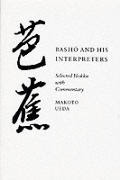
Bashō and His Interpreters: Selected Hokku with
Commentary, edited by Makoto Ueda. Minimally, I will
need your name and email
to contact you with the
results. In the subject line of your email, please put
"2nd Annual Bashō Haiku Challenge" so I can easily
differentiate it from the scads of other things that come my
way. The final date for submissions will be October 31st and
the winner will be announced in either November 18th or
December 2nd postings. My definition of haiku is about as
liberal as you can get: I follow no one particular method,
school or theory and there is no seasonal requirement.
Your haiku can be 1, 2, or 3 lines (over 5 would be a bit
much, folks, but I will keep an open mind for
experimenters). The one restriction would be that it be
in the spirit of haiku (I've always liked the definition of
English haiku as lasting the length of one breath, in and
out and pause, but that's just me - and, oh yeah, I'm the
judge, but, again, it's the spirit of the thing that counts)
and that the haiku be previously unpublished in either
paper or electronic form (ok, that's two requirements).

In addition, the winning poet will receive a 15 issue
subscription to Lilliput Review (or have their current
subscription extended by 15 issues), plus two copies of
the 2nd Annual chapbook, to be published sometime in
2010. Other poets whose work is selected for inclusion
will receive 2 copies of the chapbook plus a 6 issue
subscription.

That's it. This is an electronic submission contest only; it is my way of giving back to the online community that has been so vibrant and encouraging since I started actively blogging in July 2007.

Some of you may remember the genesis of this contest, some may have come along since then. In brief, I was contacted last year by Tomoe Sumi of Kodansha America Press, who had been following an ongoing series of posts and discussions about the work Matsuo Bashô. At that time, she offered a reviewer's copy of their fine new volume, Bashō: The Complete Haiku, translated by Jane Reichhold, to throw into the discussion mix. Since I'd already purchased it for myself, I politely declined and she offered to send it anyway, suggesting I give it away. And so the contest was born.

To continue in the tradition of a volume of Bashō as first prize, I've decided this year to purchase and give away the selected work, with critical commentary, as listed above. Again, I own a personal copy; it is a fine selection of Bashō, accompanied with criticism from a wide variety of sources, historical context, and scholarly discussion. For the novice, it may be read as a selected poems. For the more experienced or simply curious, it is a rich rewarding journey into the essence of haiku in general and Bashō in particular. It is a high quality, pricey trade paperback that will make a fine addition to anyone's Eastern poetry collection. Makoto Ueda is one of the finest authorities on the work of Bashō and his 1970 biography (link is to google books and is a perfect illustration of what can go horribly wrong there) is considered essential reading for those delving deep into the work of the haiku master. You can get a glimpse into Bashō and His Interpreters at the link above to google books, where there is nice little preview.

Spread the word and let the games begin!


**********************************************


This week's featured issue is #160, from November 2007. If you are so inclined, you may literally (after a virtual fashion) flip through the entire issue here. Enjoy.


#213
Only a wisp
Of cloud above,
But like a
Sacred Song
It pointed the way
Yosano Akiko
translated by Dennis Maloney


Autumn wind,
nudging me down the mountain,
quivers a grass seed
that clings to my skirt.
Suzanne Freeman


rail cars
stacked with wood
slowly pass the living-
i whisper to them
kaddish
Donna Fleischer


And a little seasonal thought, from the master:


wildflowers--
all we say or speak about
is autumn wind
Issa
translated by David G. Lanoue


best,
Don

Wednesday, August 19, 2009

René Daumal: Memorables


Longhouse Publishers & Booksellers has been putting out some of the finest publications of poetry, particularly in the short form, for many years. Their little accordion booklet series (4¼ x 11, folded 3 times) has always been a source of wonder and great delight for me. One of their latest publications is a new translation by Louise Landes Levi of René Daumal's 1939 work Memorables.

Memorables is, as translated, a prose poem of 18 individual verses of intermittent length. Each of the individual verses stand on their own, yet the entire work is very much a piece, with a powerful cumulative effect. Each verse opens with the injunction to remember:

Remember your first insult ...

Remember the evenings of terror ...

Remember your accomplices and deceits ...

Remember the day when you split open the web ...

Remember the beautiful mirage of concepts ...

Remember you have to pay for everything ...


At first, it can almost seem as though the speaker is gently reminding her/himself to remember certain incidents, certain pivotal moments. As the poem builds, however, it feels to me that the speaker is using direct address and that the tone is not so gentle.

Of course, perhaps, it is both simultaneously.

Sometimes the instances remembered seem literal, at others metaphoric to the point of being surreal. In any case, each seems to a be a piece of a larger whole, resulting in a fragmented yet lyrical of the collective unconscious.

Remember: your mother and your father, and your first lie, the
indiscrete odor of which crawls in your memory.

Remember magics, fish and tenacious dreams - you wanted to
see, you stopped up your two eyes in order to see, without knowing
how to open the other.

Ultimately the poem is the mystery of existence; the details are real, with the aforementioned cumulative effect just beyond understanding, no matter how focused one's awareness. It is a beautiful, at times frightening piece, finely translated and beautifully produced. I suspect each reader will be moved by different particular verses. These two touch something deep within, a remembrance of a shared dream, true for all, just as ephemeral, yet as real as the setting sun, as the rising moon.

Remember that you have to pay for everything, remember your
happiness but when your heart was run over, it was too late to
pay in advance.

But remember that love is of no one, that in your heart of
flesh is no one, that the sun is no one, blush seeing the
swamp in your heart.


In a recent post at the excellent Longhouse Birdhouse blog, here is the booklet in its entirety. They describe the Daumal booklet thus:

Three color foldout booklet of one long poem Memorables translated by Louise Landes Levi tucked into sky blue papers with signed and unsigned wrap around band. Unsigned $8.95 / signed $12.95.


The signature, of course, is that of the translator as Daumal died back in 1944. Why buy the booklet when you can read it in its entirety at the website? Why, indeed. Well, it seems to me the Arnolds know the answer to that question and the answer is the reason they published it electronically. Holding it now in my hands, I know the answer.

Hold it in your own and you will, too.


***************************************


For those who might be interested, I recently posted "Why Anne Sexton Matters" over at the Eleventh Stack blog. I've spent the better part of this summer rereading the complete poems of Anne Sexton for the first time in 20 years and am even more moved, amazed, and saddened than I was first time round.

Finally, here's a selection from an issue so recent it hasn't made it into the Back Issue Archive. Issue #167 was published in March 2009. Enjoy.


#134
I recall myself
As I was in the spring
Of my twentieth year
A peony-pale outside
But crimson inside.
Yosano Akiko
translated by Dennis Maloney


this
stream
bed's

my
spine
too
John Martone


Mountain River

In the mountains run
--the hieroglyphics of trout
Read them if you will; they will
--nonetheless draw you down into their water.
Jeffrey Skeate


Chrysanthemums slow
to bloom I find
no joy in autumn.
The west wind heartless
Blowing my gray hair.
Dennis Maloney


the emaciated chrysanthemum
totters
into bloom
Issa
translated by David G. Lanoue


best,
Don