Showing posts with label Basho. Show all posts

Friday, June 11, 2010

Scott Watson: On Translating


I am privileged to be on a list of email recipents of the thoughts, poems, and translations of Scott Watson. Back in Lilliput issues numbering in the 120's and 130's, I published a number of Scott's renderings of haiku masters Taneda Santoka and Basho. In a recent mailing, Scott shared his thoughts on the art of translation. I was struck by them and thought you might be, too, so I requested permission to post his musings here. He graciously acceded to my request and, in addition, has allowed me to reprint the 5 translations of Santoka that were published in Lillie. I hope you enjoy this and the translations; I'm happy to say that I will be publishing two more Santoka renderings by Scott in a future issue.


*********************************

Translator’s Words

Ten years ago I wrote: “There is neither rhyme nor
reason to my method here. Just that each poem I take
--from wherever I take it--one at a time and follow
wherever it takes me, and if feels like it is two lines I
put it in two lines; if it feels like two words, two words
are what it is. Some go to four lines, some three. It
depends on how I sense each poem with, as, and in my
life-and-death, my breath, words.”

Ten years later all that can be added is that continuing
along with Santoka the poems his poems start in me at
times feel as if there is a trickling as with the flow of a
brook only downward. A small and gentle waterfall.

Others seem to call for a single ink brush stroke across
the page. These are the ones with what I call the Zen
grammar, which is a label I use for lack of a better one
to describe his poems that use a possessive to modify
a possessive to modify a possessive and how such a
poem retraces itself to a beginningless beginning.

Some choose to call this simple ungrammaticality that
may be a result of Santoka being a lubricated with drink
when composingor editing his work, but I think not.
Drunk or sober, the challenge is to respond to those
poems as my own wordlife. That requires letting go of
whatever protocol or accepted language behavior one
may have picked up over the years at home or at schools.
One must be uninhibited. One has to go with the flow.

Back in the USA sisters Clara Wright and Marsha Benson
at elementary school class parties used to complain that
white boys can’t dance. But they’d dance with me. It’s not
just a matter of knowing the right steps. The words
eventually appear and feel to me as if they are the ones
needed, the words that seem to best respond as Santoka’s
poem lives through me. Dance to the music beyond
measure.

Much is intuition. A sense of things that comes out of the
blue. Though I can live, sense things, through the Japanese
language I can’t say that I’m an official expert. No
certificates adorn my walls. At times I need a dictionary
and at times, with Santoka, even a dictionary does not help.
I ask Morie. Sometimes she can help, other times she can't.
I’m not out to make versions that are grammatically or
technically correct. If Santoka’s original has a present
progressive verb form it doesn’t mean my version will.
Anyway no linguist to my knowledge has ever proved that
a progressive verb in Japanese is exactly the same as a
progressive verb in English. They’re just labels anyway.

English is not Japanese, Japanese is not English. I am not
Santoka, Santoka is not me. I don’t accept translation in
the sense that this is equivalent to that. I do what I can.

Scott Watson
Sendai, Japan
June 3, 2010


*********************************


5 poems by Taneda Santoka as rendered by Scott Watson


falling leaves
deep deep seeing
Buddha


air raid sirens
one after another
persimmons are red


with the crowd around
a dead body
a sky without clouds


no matter news is
good or bad
spring snow


drizzling.
undying.


*********************************


For some further thoughts on Santoka, check out my review Mountain Tasting here. And now, one from a third master, Issa:


dying to the beat
of the prayer to Buddha...
one leaf falls
Issa
translated by David G. Lanoue


best,
Don

Saturday, October 24, 2009

2nd Annual Bashô Haiku Challenge: Reminder, with Poems


Seven full days to the deadline for the 2nd Annual Bashô Haiku Challenge. 11:59 pm, Saturday, October 31st will be the final postmark.

Much good luck to all!


Don't imitate me;
it's as boring
as the two halves of a melon.
Matsuo Bashô
translated by Robert Hass


a farting contest
under the moonflower trellis...
cool air

Issa
translated by David G. Lanoue


best,
Don

Wednesday, September 30, 2009

2nd Annual Bashō Haiku Challenge


Well, folks, it's that time: this year I will be reading for the 2nd Annual Bashō Haiku Challenge beginning today and continuing through the entire month of October. With a couple of slight adjustments from last year (i.e. a different 1st prize), here are the instructions as outlined last year:

So, here's the deal: for the next four weeks, send along up to
5 haiku to lilliput review at gmail dot com (spelled out
to fend off pesky bots) and the best haiku wins a copy of
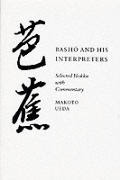
Bashō and His Interpreters: Selected Hokku with
Commentary, edited by Makoto Ueda. Minimally, I will
need your name and email
to contact you with the
results. In the subject line of your email, please put
"2nd Annual Bashō Haiku Challenge" so I can easily
differentiate it from the scads of other things that come my
way. The final date for submissions will be October 31st and
the winner will be announced in either November 18th or
December 2nd postings. My definition of haiku is about as
liberal as you can get: I follow no one particular method,
school or theory and there is no seasonal requirement.
Your haiku can be 1, 2, or 3 lines (over 5 would be a bit
much, folks, but I will keep an open mind for
experimenters). The one restriction would be that it be
in the spirit of haiku (I've always liked the definition of
English haiku as lasting the length of one breath, in and
out and pause, but that's just me - and, oh yeah, I'm the
judge, but, again, it's the spirit of the thing that counts)
and that the haiku be previously unpublished in either
paper or electronic form (ok, that's two requirements).

In addition, the winning poet will receive a 15 issue
subscription to Lilliput Review (or have their current
subscription extended by 15 issues), plus two copies of
the 2nd Annual chapbook, to be published sometime in
2010. Other poets whose work is selected for inclusion
will receive 2 copies of the chapbook plus a 6 issue
subscription.

That's it. This is an electronic submission contest only; it is my way of giving back to the online community that has been so vibrant and encouraging since I started actively blogging in July 2007.

Some of you may remember the genesis of this contest, some may have come along since then. In brief, I was contacted last year by Tomoe Sumi of Kodansha America Press, who had been following an ongoing series of posts and discussions about the work Matsuo Bashô. At that time, she offered a reviewer's copy of their fine new volume, Bashō: The Complete Haiku, translated by Jane Reichhold, to throw into the discussion mix. Since I'd already purchased it for myself, I politely declined and she offered to send it anyway, suggesting I give it away. And so the contest was born.

To continue in the tradition of a volume of Bashō as first prize, I've decided this year to purchase and give away the selected work, with critical commentary, as listed above. Again, I own a personal copy; it is a fine selection of Bashō, accompanied with criticism from a wide variety of sources, historical context, and scholarly discussion. For the novice, it may be read as a selected poems. For the more experienced or simply curious, it is a rich rewarding journey into the essence of haiku in general and Bashō in particular. It is a high quality, pricey trade paperback that will make a fine addition to anyone's Eastern poetry collection. Makoto Ueda is one of the finest authorities on the work of Bashō and his 1970 biography (link is to google books and is a perfect illustration of what can go horribly wrong there) is considered essential reading for those delving deep into the work of the haiku master. You can get a glimpse into Bashō and His Interpreters at the link above to google books, where there is nice little preview.

Spread the word and let the games begin!


**********************************************


This week's featured issue is #160, from November 2007. If you are so inclined, you may literally (after a virtual fashion) flip through the entire issue here. Enjoy.


#213
Only a wisp
Of cloud above,
But like a
Sacred Song
It pointed the way
Yosano Akiko
translated by Dennis Maloney


Autumn wind,
nudging me down the mountain,
quivers a grass seed
that clings to my skirt.
Suzanne Freeman


rail cars
stacked with wood
slowly pass the living-
i whisper to them
kaddish
Donna Fleischer


And a little seasonal thought, from the master:


wildflowers--
all we say or speak about
is autumn wind
Issa
translated by David G. Lanoue


best,
Don

Wednesday, February 4, 2009

Bashô On the Road


Although, it goes back a full year to February 2008, this is an interesting article with fantastic photographs on Bashô in National Geographic. Click on the above photo to see the full gallery of pictures.

Here's the fine article by the writer Howard Norman, author of The Bird Artist and other novels, who followed in the footsteps of Basho's 1200 mile journey, with accompanying photos by Michael Yamashita.

With all the various Bashô translations that I've looked at here in The Hut, I never fail to be amazed and delighted when I stumble across another fresh interpretation. The following, from the Norman article, perfectly captures Bashô's ennui and spiritual doubts.


Tired of cherry,
Tired of this whole world,
I sit facing muddy sake
and black rice.
Matsuo Bashô


Don't miss Norman's last line in the article. Worth it's weight in haiku ...


best,

Don

Thursday, January 8, 2009

Blyth's Zen Background of Haiku


Cover, replete with tea stain


Early on in the first volume of R. H. Blyth's 4 volume Haiku, he traces the origins of haiku to, among other sources, Zen. He sees it in a number of poems by Bashô, one of which is new to me, in the sense that Blyth's translation makes something I've read totally unfamiliar:


------Yield to the willow
All the loathing, all the desire
------Of your heart.
-----------------Bashô


The seeming contradiction here is consummately Zen, its underpinnings firmly grounded in nature where there is no contradiction. This translation shot to the top of the list of my favorite Bashô poems instantly.

Blyth points to a number of other Zen poems in the early history of haiku.


------The cherry blossoms having fallen,
Enjoji Temple
------Is quiet once more.
----------------------Onitsura


The irony here is the tourist crowd throngs to the the temple to see the cherry blossoms, then disappears as soon as they've fallen, leaving the temple empty. And what exactly was cherry blossom viewing supposed to remind them of, one might ask?

Buson gives another view:

-----
------The cherry blossoms having fallen,
The temple
------Through the branches.
--------------------------Buson


Blyth follows these poems with a selection of 73 poems that illustrate the path Zen traveled through poetry to arrive at the Japanese haiku. Here are a handful of my favorites, which frequently feel more like maxims than actual poems. They are unattributed:


The raindrops patter on the bashô leaf, but these
--are not tears of grief;
This is only the anguish of him who is listening
--to them.


In the vast inane there is no back or front;
The path of the bird annihilates East and West.


The water a cow drinks turns to milk;
The water a snake drinks turns to poison.


The old pine-tree speaks divine wisdom;
The secret bird manifests eternal truth.


Seeing, they see not;
Hearing, they hear not.


What is written is of ages long ago,
But the heart knows all the gain and loss.


There is no place to seek the mind;
It is like the footprints of the birds in the sky.


If you do not believe, look at September, look at October,
How the yellow leaves fall, and fill mountain and river.


Curtis Dunlap of Blogging Along Tobacco Road sent along this amazing reenactment of scenes from Bashô's journal. The first part is done with pen and ink drawings but the second part is live action film, with high production values. The live action film depicts an incident in Bashô's life that many have found very disturbing, including myself. Curtis received permission to post this response to that incident, which is well considered and worth reading. It gives us pause, not only in the life of this master poet, but in our own. Many thanks to Curtis for sharing this.


This week's trip down memory lane in the Lilliput Review archive takes us to August 1994, issue #59. Hope you find something that grabs you.


Memory

You are a dark space
in which a circle
of tiny turquoise stones
revolves endlessly.
Albert Huffstickler


Nourishment

Familiar knives carve me into
chunks served up for family dinner.
From the scraps and bones
I make a broth and feed myself.
Ruth Daigon


I Left My Future

in his car wedged between the
cushions with the seat belt-----where
it slid when neither of us were
looking or paying any attention
it is there now as I try to lie
my way out of this poem.
Cheryl Townsend


He crept in
like mildew.
Suzanne Bowers


Tried and True

1. Find out where it is.
2. Clean it, cook it, & eat it.
3. Sleep under its bones until you're awake.
4. Find another one.
bill kaul


best,
Don


PS The regular weekly archival posting will be moving to Tuesday from Thursday next week (or the week after, if this cold gets the best of me) as my evening work schedule has changed.

Wednesday, January 7, 2009

Dave Church Remembered by George Held


George Held recently posted a fine tribute to small press giant Dave Church at the NYQ Poets site. It begins:


Opening the envelope containing the October 2008 Barbaric Yawp, I first took a look at its newsletter, "From the Marrow," and my eyes lit upon the phrase "the late Dave Church" as a contributor to Free Verse. I was shocked and needed confirmation. Before looking for the editor's phone number, I first checked out the bio notes in the Yawp and saw an editorial insertion in Dave's bio note, saying he'd died of a heart attack on Thanksgiving Day. Then I checked the last letter he'd written me, and saw that it's dated November 17, 2008--ten days before Thanksgiving. ... (for the rest of the post, follow here - & scroll down a bit, it's there)


In closing his tribute, George quotes one of Dave's poems to be published in a forthcoming Barbaric Yawp. He says of the poem:


This brief lyric speaks for no school, except maybe the ancient one of Basho, whose classical simplicity it recalls.


As many of you know, I've spent a lot of time reflecting on the work of Basho at this blog over the last year and, I have to say, I couldn't agree with George's assessment more. Here's the poem:


Dark sunrise.
Last night's fog and rain,
Lingering.
Dave Church


Thanks, Dave.


best,
Don

Sunday, January 4, 2009

Two Reviews: Basho and Mary Oliver


Matsuo Bashô


I ran across two reviews today that I thought are of particular interest. The first is by Curtis Dunlap from Blogging Along Tobacco Road of Bashô: the Complete Haiku, edited by Jane Reichhold and featured here in a previous post. Here is the opening of the review:


My haiku journey has been one of cultivating a growing awareness of my surroundings. Through study, trial, and error, I have learned to preserve moments in my life and, occasionally, share them through haiku. I likely would have ignored such opportunities for composing poems had I not studied the works of other poets. I have had the pleasure of meeting and talking with a number of people who have inspired me through their friendship, advice, and poems. Such encounters have always fueled my haiku engine... (the review continues here)


The second review is of A Poetry Handbook by Mary Oliver and comes from the A Poetic Matter blog. It begins as follows:


I have this fascination with poetry handbooks. I think it started after receiving my rejection letter to the MFA program at Colorado State. Looking back, the portfolio I submitted was atrocious, but I was still heartbroken. I’ve loved writing since the third grade when I wrote a story and totally ripped off the ending of Roald Dahl’s The BFG. Why do so many children love the “it was all a dream” ending? Anyways, after getting rejected I didn’t do any creative writing for about 6 months. I don’t know why I took it so personally, but I was defeated. Eventually, I decided to try and figure out what was wrong with my poems– ... (continue reading here)


Both of these reviews manage to balance the personal and the professional, the subjective and objective, in just the right proportions to simultaneously engage and inform the reader. The first book I've read and found Curtis's review brought that experience into sharp focus and added some fine detail to that reading. The second I haven't read but will read now; I didn't imagine that this would be a title for me but the reviewer for A Poetic Matter was able to communicate very well why I it most certainly is.

Ironically, Oliver prefaces her Introduction to A Poetry Handbook with a poem by Bashô, creating one of those finely ringing, synchronous moments that, well, make life worth living:


The temple bell stops-
but the sound keeps coming
out of the flowers.
Basho, translated by Robert Bly


And, oh, yeah, there's that Bly guy.

Hmn. Is there an echo in here?


best,
Don

Wednesday, December 31, 2008

Top 5 Poetry Books of 2008


----------------------------------------------------------------------------------------


Top Five Poetry Books of 2008


The Door by Margaret Atwood

On Love and Barley: the Haiku of Basho, translated by Lucien Stryk

Shattered Sonnets, Love Cards, and Other Off and Back Handed Importunities, by Olena Kalytiak Davis

One Secret Thing by Sharon Olds

At Blackwater Pond: Mary Oliver Reads Mary Oliver (audiobook)


----------------------------------------------------------------------------------------


Above is a list of the top five poetry books I read in 2008, culled from a list about 8 times the size. Only 1 of the 5 were published in 2008, but that's really not surprising, at least to me. The Basho title is an obvious offshoot from the Basho Haiku Challenge, instituted here this year. And the Mary Oliver title comes from my research for the 3 Poems Discussion group I moderate at work. The complete Emily Dickinson would have made this list if I'd finished it instead of hunting and pecking my way through. A book called West Wind by Oliver, which I'm currently reading, most certainly would have been in the running as it may be her best print collection I've read so far. The audio book At Blackwater Pond, which I listened to since there is no companion print volume, is in fact her best collection overall. It was particularly interesting to me that the poems she selected from various volumes were not necessarily included in either of her collections of selected poems, sending the message that perhaps she might have selected differently if she'd had her druthers (or maybe she just changed her mind). I probably should say I read quite a few Basho and Oliver titles that did not make the list.

The Sharon Olds' title made it on the strength of its final third. The poems that open the collection are not quite up to her usual excellent standards but the poems in the final section, dealing with her mother's death, have the devastating power of her very best work.

Here's to a peaceful, happy, and decidedly more lyrical new year,


best,
Don

Friday, December 26, 2008

R. H. Blyth's Haiku


Last night I wandered from my previously stated purpose of mining R. H. Blyth for more Shiki translations and sat down with the 1st volume of R. H. Blyth's 4 volume Haiku, opening it up to the preface and beginning to read. I was positively knocked out; it is, simply, transcendent. I've plumbed these 4 volumes over the years for many of the hundreds and hundreds of poems by acknowledged Japanese masters of the haiku, by poet and by season (the later being the general schema of the volumes). Let me let Blyth speak for himself:

-----
The history of mankind, as a history of the human spirit, may be thought of as consisting of two elements: an escape from this world to another; and a return to it. Chronologically speaking, these two movements, the rise and fall, represent the whole of human history; and the two take place microcosmically many times in peoples and nations. But they may be thought of as taking place simultaneously or rather, beyond time, and then they form an ontological description of human nature.

-----There seems to me no necessity, however, to make a Spenglerian attempt to show from historical examples how there has been a movement towards ideas, ideas, abstractions; and a corresponding revulsion from them. In our own individual lives, and in the larger movements of the human spirit these two contradictory tendencies are more or less visible always, everywhere. There is a quite noticeable flow towards religion in the early world, and in the early life of almost every person,-and a later ebb from it, using the word "religion" here in the sense of a means of escape from this life.

-----The Japanese, by an accident of geography, and because of something in their national character, took part in the developments of this "return to nature," which in the Far East began (to give them a local habitation and a name) with Enô, the 6th Chinese Patriarch of Zen, 637-713 A. D. The Chinese, again because of their geography perhaps, have always had a strong tendency in poetry and philosophy towards the vast and vague, the general and sententious. It was left, therefore, to the Japanese to undertake this "return to things" in haiku, but it must be clearly understood that what we return to is never the same as what we once left, for we have ourselves changed in the meantime. So we go back to the old savage animism, and superstition, and common life of man and spirits and trees and stones,-and yet there is a difference. Things have taken on something of the tenuous nature of the abstractions they turned into. Again, spring and autumn, for example, non-existant, arbitrary distinctions, have attained a body and palpability they never before had. We also, we are the things,-and yet we are ourselves, in a perpetual limbo of heaven and hell.

-----It was necessary for us to prostrate ourselves before the Buddha, to spend nine long years wall-gazing, to be born in the Western Paradise. But now, no more. Now we have to come back from Nirvana to this world, the only one. We have to live, not with Christ in glory, but with Jesus and his mother and father and brothers and sisters. We return to the friends of our childhood, the rain on the window-pane; the long silent roads of night, the waves of the shore that never cease to fall; the moon, so near and yet so far; all the sensations of texture, timbre, weight and shape, those precious treasures and inexhaustible riches of every-day life.

-----Haiku may well seem at first sight a poor substitute for the glowing visions of Heaven and Paradise seen of pale-lipped asceties. As Arnold says:

----------Long fed on boundless hopes, O race of man,
----------How angrily thou spurn'st all simpler fare!

Haiku have a simplicity that is deceptive both with regard to their depth of content and to their origins, and it is the aim of this and succeeding volumes to show that haiku require our purest and most profound spiritual appreciation, for they represent a whole world, the Eastern World, of religious and poetic experience. Haiku is the final flower of all Eastern culture; it is also a way of living.


There are some deep, even ticklish and, occasionally, seemingly nonsensical waters to navigate here. Be that as it may, my thought is sit at the feet of a master and learn. If there is anyway for someone from the West to understand what haiku actually means in Japanese culture, this is it. No matter whether you agree or disagree with Blyth; there is just too much here not to revel in. Admittedly, this is the beginning of a potentially long, four volume journey but I'm hoping to see it through in '09. I have a feeling I'm going to need a good deal more of pluck than lucky, but I'll just have to see. And I'll report back.

Here's a couple of poems I came across this week worth a gander:


Mary Oliver's Morning Poem
Jane Kenyon's Taking Down the Tree


The Oliver poem is an outgrowth of all the reading I've been doing for the 3 Poems discussion group; it is a good one, really representative of all her work. If ever there was a poet constantly working and reworking the same territory, it is Mary Oliver and, despite what many critics have to say, this is just why she should be cherished. She points to nature in its myriad manifestations and takes from it a solid, spiritual, all-encompassing world view.

Not too shabby.

For more on Oliver, check out my post on Eleventh Stack dealing with her best collection, the audiobook entitled At Blackwater Pond: Mary Oliver Reads Mary Oliver.

The Kenyon poem nails what many of us will be doing over the coming days and weeks, taking down the tree. In this piece, Kenyon harkens back to the pre-Christian tradition of the solistice tree and its original purpose, something we all know and feel on an instinctual level but rarely articulate. Darkness, be damned.

Right now, I'm reading poetry volumes by Richard Brautigan, Robert Bly, and James Wright in preparation for featuring work that has been selected for the Near Perfect Books of Poetry list (183 and counting - will we make to 200?). Three poems from the Wright volume, The Branch Will Not Break, have already posted. In addition, I'm reading From the Other World: Poems in Memory of James Wright from Lost Hills Books for a future print and possibly blog review. Like so much tree tinsel, the Blyth volume has distracted me from Matsuo Basho: The Master Haiku Poet by Makoto Ueda, which I will be getting back to I hope.

If I'm not careful, I'm gonna run out of bookmarks.

This week's dip into the Lilliput archive comes from October 1994, with a nifty, if slightly faded cover by the irrepressible Wayne Hogan. Hope something grabs you here.


Cover art by Wayne Hogan


As This Morning

we have forgotten so much:
how afternoon light
will warm us. the
way our bodies are.
how fingers will move
into a shadow so
slight, there is
hardly room for
the world.
Mike James


After Sex

I watch her getting dressed.
She dips her head slowly,
her hair flops away
from the crown
in a swirling semaphore
of golden petals.
Clothes float up from the floor
like butterflies.
John Grey


Monoepic

Wonder.

Richard Kostelanetz


and O
------how he loved is tenderness
-------------when he touched her
John Elsberg


November Sunday Madonna

curls into herself,
the last leaf
on the maple
wind blown
and twitching
still holding on
Lyn Lifshin


¶writing is motionless
-when I am done.
-my shadow
-on the path of the path.
Scarecrow


best,
Don

Sunday, December 21, 2008

Sunday Frolic from the City to the Country
Straight to Hell


An amazing little video created for the 25th anniversary of 4th Estate, an imprint of HarperCollins. Sure, it's a pitch, but it is a city of books ...


And if you want something to actually read, here's a full translation of Basho's Narrow Road to the Deep North I stumbled on.

Finally, for all you gamers out there, it's time for the final destination: Dante's Inferno:


best,
Don

Friday, December 5, 2008

Chad Sweeney's 33 Translations Basho's Frog Plus 30 Classic Versions


What better way to face another Friday than with infinite variations of Basho's famed frog / splash poem? Chad Sweeney has delivered 33 highly interpretative versions of the same. How else does one explain pear trees and dragons and mathematical equations from one teeny little poem?

Take a look see at his 33 "translations."

If you need something more down-to-earth, here is the original poem, plus 30 more traditional translations from all the heavy hitters, provided by the Bureau of Public Secrets: Cid Corman, William J. Higginson, D. T. Suzuki, Lafcadio Hearn, Alan Watts, R. H. Blyth, Kenneth Rexroth, Harold Henderson, Donald Keene, Ginsberg, Stryk, Hass ... I could go on and on.

Ed Baker has supplied a few previously to this blog in the comments section of a previous post (just toggle down to see) and I have a feeling he may have a few more to share.

My favorite of Mr. Sweeney's?


thesis
antithesis
--------synthesis


And my favorite of the 30 "classic" translations? Well, I can't really decide, most of the variations are so very close. I like Sam Hamill's


At the ancient pond
a frog plunges into
the sound of water


And in the "slightly different" category there is Dick Bakken's


dark old pond
:
a frog plunks in


As a minimalist's minimalist publisher, how could I not love James Kirkup's 3 word extravaganza?


pond
---frog
------plop!


Finally, I would be remiss if I didn't mention the version of Ross Figgins, a poet I've had the pleasure to publish in the past in Lilliput. His version has a nice little twist (back one-and-a-half somersaults, tuck, Mr. Frog?):


old pond
a frog leaps in —
a moment after, silence


best,
Don

Monday, December 1, 2008

Bob Arnold: Back Road Chalkies


Bob Arnold, one of the creative forces behind Longhouse Publications and an occasional Lilliput poet, has published on his website a project he calls Back Road Chalkies, the first of which is pictured above. I'll let him explain:


With chalk in hand, Back Road Chalkies is a landscape anthology I selected and gathered up over one year from 2007-2008. The chalkboard stanchion took a day to build and move on a wheelbarrow to its perch. Built from old lumber I took apart from an outdoor bookstall I had designed years earlier. The chalkboard was bought from a family of home schoolers for $5. The father of the brood asked, ‘What are you going to do with that?’ I said to drive by the house sometime and take a look. Maybe he has. All our neighbors have, but only two who liked to move on-foot ever said a word about it — smiled and said they looked forward to it. For awhile I was chalking up poems or sayings once a day, once a week, every few weeks, and over the long winter maybe just Thoreau would hold the fort. Jack London soon with him. A friend might write and tuck in a poem of their own and I’d share it immediately, or something in the world called for a line or two on the chalkboard, or the season asked for a poem, or the slant of light. Some of my own poems I just left unsigned, floating in the breeze. Nothing was planned, the day lay ahead. A poet visited and we welcomed him into a photograph with a lone, sturdy line of his poem already on the board. Then came some puppets, followed by a turtle. Maybe a dozen vehicles passed by on a winter day, double that for summer — neighbors, joggers, septic truck, log truck, plow, grader, tractor, one old farmer with an ATV, bicyclists, scooter, UPS, Fed Ex, convertible, horse & rider. Susan Arnold often took the photographs. And the tall and graceful tamarack I planted 35 years ago provided all the shade.


What you'll find here in this pdf document is 75 delightful pages, put together as described above as only Bob Arnold can. And for those who have been following the ongoing Basho posts here, the nod in Bob's title (as well as the first chalkie) is clear. Thanks once again to Ron Silliman for pointing it out.

This is a perfect example of why I love the net.


Here is a transcription of the above photo, in case the prints too small.


born of a dream
What can we know
of the real
Basho translated by Cid Corman


Hope you enjoy it.


best,
Don

Wednesday, November 26, 2008

Recommended Net Reading (& Listening)

Here's some recommended reading (& listening) from around the net:

Mary Karr highlights two Kabir translations by Robert Bly

An absolutely brilliant article by Jeanette Winterson on the importance of poetry

Kay Ryan interviewed, with James Billington, by Charlie Rose (now Charlie, if you'd only stop referring to her in the 3rd person as if she wasn't there ...)


Nikki Giovanni reading her epic "Ego Tripping"


best,
Don


Tuesday, November 11, 2008

Basho's New Robe


Bart


Via snail mail, one of my favorite small press poets, Bart Solarczyk, shared one his favorite Basho haiku


In my new robe
this morning --
someone else.
Basho translated by Lucien Stryk


Basho


Too good not to share ... thanks, Bart.

Oh, and about that family resemblance ...


best,
Don

Thursday, October 30, 2008

Basho: The Complete Haiku


The unofficial two month Basho push came to end this week when I finished Basho: The Complete Haiku, translated with intro, bio and notes by Jane Reichhold. All this began some time back when I was contacted by Tomoe Sumi of Kodansha America in response to postings I'd been doing about various editions of Basho I'd been reading (in preparation for a future Modest Proposal Chapbook). At the time, she offered me a reading copy of Basho: The Complete Haiku. Because I already had it, I declined but Tomoe suggested she could send a copy along in any case and I could give it away to a reader.

And the Basho Haiku Challenge was born. The to-be-published anthology from challenge submissions would never have happened without her generosity and I want to thank her again.

I'm happy to say that Basho: The Complete Haiku is everything one would anticipate and more. For the dedicated reader and fan of Basho, it's all here: 1011 haiku, the complete output of a relatively taciturn haiku master (in comparison, Issa wrote over 20,000 haiku), all with accompanying notes, from a few words to paragraph length explications. The presentation method is chronological, as it should be, and divided up into 7 phases (as opposed to the standard 5 phases: see Makoto Ueda's Matsuo Basho) and each section is preceded by biographical info important to the given period. I found this method extremely helpful. To have presented the entire biography in the forward matter would have removed an immediacy that deepens understanding and necessitated much flipping back and forth. The appendices and back matter are a real bonus, including sections on haiku techniques, a chronology of Basho's life, a glossary of literary terms and a selected, succinct bibliography. For biographical detail, Reichhold seems to lean heavily on Makoto Ueda's seminal biography (which I'm reading now - ok, so the push isn't entirely over) but that's to be expected.

Down to the crux, however: the poems themselves. These translations veer away from the often disasterous academic all-inclusive approach. The translations are unique, lyrical, and eminently readable without dumbing down for the English reader. In general, there is a stripped down, less is more approach, somewhat reminiscent of the translation work of Lucien Styrk and Robert Hass. One thing this collection solidified for me, the non-academic reader as opposed to Japanese literary scholar, is how much I don't know and never really will about the original intent of what I feel to be a majority of these poems (and by extension, any translations from any of the haiku masters, including beloved Issa). The notes of both this Reichhold edition and of the Landis Barnhill edition I reviewed previously are what really brought this important point home and made me think long and hard about myself as reader.

The conclusion I've drawn from all this "thunking" is simply that the poems that connect, the ones that get through to a novice like myself, are those that have a universal appeal that transcends translation, technique, and cultural idiosyncrasies. I'm talking the spirit of haiku here and perhaps the universal impetus to write haiku in the first place. A speaking to the human condition, who we are, and what we do (oh, Gauguin, bless you for your question mark). But wait, aren't haiku supposed to be objective not subjective, speaking to nature and leaving out the personal? Well, yes, this transcendent spirit I'm speaking of includes that and more. This concentration on nature is the where of the who and what we do: our place in the world, who we are being defined by what we are.

Ah, but enough of my personal revelation. On to the poems or, to paraphrase the incandescently beautiful Joe Strummer, how about some music now, eh?

Of the 1000 plus haiku, I marked 45 or so that grabbed me, held me down, and said, ok, what (or, more precisely, how) do you think now? Previously, I'd selected 35 for further review from the 700 plus Barnhill Landis edition, so the proportion is consistent, realizing that he was being selective (i.e. picking the best). The Reichhold edition confirms for me that the later work was the finest, Basho getting better and better with time. Here are a few of those 45. When possible, I've tried to select haiku not highlighted in previous postings from other editions in order to give a fuller portrait of the poet.


-------------------------------------------------------------------------------


autumn night
dashed into bits
in conversation


pine and cedar
to admire the wind
smell the sound


pine wind
needles falling on the water's
cool sound


already bent
the bamboo waits for snow
what a sight


glistening dew
not spilling from bush clover
still it sways


a morning glory
this also is not
my friend


a traveler's heart
it also should look like
chinquapin flowers


leave aside
literary talents
tree peony


year after year
the cherry tree nourished by
fallen blossoms


path of the sun
the hollyhock leans into
early summer rain


-------------------------------------------------------------------------------


A couple of other things of note this week, via the always informative, encyclopedic Ron Silliman blog: first, Bill Knott's take on a lesser known Wordsworth sonnet (a distinctly un-haiku like experience, actually very different for Wordsworth, who sometimes has a very Eastern flavor and remains my favorite of Romantic poets) and, second, the fact that a huge chunk of the Outlaw Bible of American Poetry is available via google books (don't tell anybody, pass it on). If you wish your wherewithal tested or your game raised to another level (without the pain of academia), I highly recommend Bill Knott's not poetry blog. Bill also offers almost all of his poetry for free pdf download, an amazingly generous and prescient idea.


Cover by Peter Magliocco


Today's Lilliput issue from the back archives is #69 from June, 1995. The further back we go in time, the, er, odder the experience for me. Perhaps more on this later. For now, enjoy.


-------------------------------------------------------------------------------


After rum and cola

While walking inconspicuously
through this shabby cliché,
I am brushed back
by a long
black
metaphor
that splashed mud
onto my haptic shoes
and chases me back to Technicolor.
Thomas Brand


-------------------------------------------------------------------------------


Now, at break of day,
A cliché coldly peers out
From behind mountains.
Travis Gray


-------------------------------------------------------------------------------


Midnight Footnote to Lovemaking

The snail's path across
our bedroom windowpane wakes
us with its shrieking.
Michael Newell


-------------------------------------------------------------------------------


Sleep

Sleep happens outside
this window where
white groping fingers
of a dream grasp
and are as still as
frozen beaks of birds
pinned to earth,
tugging at words
beneath the worms
Alan Catlin


-------------------------------------------------------------------------------


in the mortar
of the city's
walls,
flute & whips
sing their song
Norman Schiffman


-------------------------------------------------------------------------------


Crucifixion Revision

Father, forgive them
even though they know exactly
what they damn well do.
David Denny


-------------------------------------------------------------------------------


¶no matter how many prayer flags
-they go out and hang upon the face of it
-it still be the beast.
Scarecrow


-------------------------------------------------------------------------------


¶a friend hands me a book
-more shit to carry when we go into exile.
Scarecrow


-------------------------------------------------------------------------------

Finally, contributor copies of the new issues, #'s 165 and 166, went out the beginning of this week. Subscriber copies will begin to go out in two weeks and will take about 6 weeks all in all to get to everyone. There is a new Modest Proposal Chapbook to talk about also, so, no fear, I have yet to run out of things to blab about.


till next time,
Don

Thursday, October 23, 2008

E. E. Cummings vs. e. e. cummings vs. the universe (The Universe)


Cover by Harland Ristau


Michael Dylan Welch, a fine haiku poet and contributing editor to Spring, the journal of the E. E. Cummings Society, has appended a comment to a recent post on E. E. Cummings' birthday that seemed both interesting and important enough to pass along.


Just a quick note to suggest that E. E. Cummings' name be treated with the normal capitals. The lowercasing of his name was just something that his book designers did -- not Cummings himself. The policy and practice of the E. E. Cummings Society (I'm a longtime contributing editor to its journal
Spring), Liveright (Cummings' publisher), and George Firmage (Cummings' literary executor, although recently deceased himself) is to treat the poet's name with initial capitals. Despite popular practice and perception, lowercasing his name is simply incorrect. For more information, please visit the definitive articles on the subject at http://www.gvsu.edu/english/cummings/caps.htm and http://www.gvsu.edu/english/cummings/caps2.html.


The myth of lowercasing E. E. Cummings' name is not unlike the myth of 5-7-5 syllables for English-language haiku. Too many people, even well-meaning poets and textbooks, have borrowed the number without thinking about what the number is counting. Yet people cling to their beliefs in odd ways, and perhaps lowercasing Cummings' name is similar. Or in some cases, they simply have heard anything to counter their beliefs. Please give the two essays I linked to a good read and give them a chance to shift your world just a little bit.


Michael Dylan Welch


I'd like to thank Michael for sending this along. Cummings was one of the first poets that "spoke to me" as a teen, one of the first that motivated me to make a life of reading and writing (and editing) poetry. This is the first I've heard this, though that is not surprising since I'm hardly a scholar and have never read a full-length biography. The fact that this misnomer is so culturally all pervasive is truly amazing. I've followed and read Michael's links in their entirety and would urge others to do so if you need convincing.

It should be mentioned that probably what added to the confusion is that Cummings occasionally did use the lower case spelling but I think it is very clear that, overall, it was his desire that his name be capped in standard fashion.

The intrepid Ed Baker has followed Michael's comments with a link he sent along to a Wikipedia article, that has some interesting links of it's own, and links to the articles Michael cites above. Ed also posits the opinion that Cummings probably just went along with the publisher's whim when the lower case spelling was used and that's how the whole thing got legs.

This week I read a slim volume of poems from the Chinese Tang dynasty entitled In Love With the Way and ran across a poem that reminded me of what is becoming my favorite Basho haiku (after reading it in so many different translations over the last few months). First, the Tang poem:


----------------------------------------------------------

Grasses of the Ancient Plain

Tender grasses across the plain
Every year wither and grow back.
The wildfires fail to put an end to them,
With the breath of spring, they are reborn.

With their fragrances, they perfume the ancient way,
Emerald sheaves in the ancient ruins.
Agitated and quivering with nostalgia,

they bid farewell to the departing lord.
Bo Juyi

------------------------------------------------------------


Here's Lucien Stryk's take on the Basho poem that came to mind:


------------------------------------------------------------


Summer grasses,
all that remains
of soldiers' dreams.
Basho


------------------------------------------------------------


I've linked up to some more Bo Juyi (or Bai Juyi) poems above, but here's another I ran across in a Witter Bynner translation:


A Suggestion to My Friend Liu

There's a gleam of green in an old bottle,
There's a stir of red in the quiet stove,
There's a feeling of snow in the dusk outside -
What about a cup of wine inside?


I've been busy this past week getting over a nasty cold and contacting folks about the Basho Haiku Challenge. Because I lost some time to the former, I'm still busy with the later but hope to be getting to it over the next 10 or so days.

Here's a bit of interesting news from the Japanese paper The Mainichi Daily News for those with a fondness for ancient Japanese poetry, specifically the Manyoshu. Also a great notice from the New York Times on a new film by one my favorite counterculture heroes, Patti Smith. And finally, for fans of Albert Huffstickler, Nerve Cowboy has posted the poems Huff published there from 1996 to 2002.

Johnny Baranski's Pencil Flowers is one of the books from the Near Perfect Books of Poetry list and tiny words (if you click their link, you'll see a fine haiku by the Basho Challenge winner, Roberta Beary) has posted a couple of his haiku. Here's one:


New Year's morning--
old haiku linked together
with cobwebs


I hope to be regularly posting samples from books selected for the Near Perfect list in the regular Thursday postings when time and space allow (almost slipped into a Star Trek episode there), sometimes with samples from the Back Issue archive and sometimes alone.

This week's back issue is #71, from August 1995. Full of many flights of fancy, we are all brought down to earth from lyrically ethereal realms by the ever insightful (balloon: here, pin: here) Wayne Hogan. Enjoy.


----------------------------------------------------


your body

each piece a shining eye
examining
the rest of the explosion.
scarecrow


----------------------------------------------------


Air served at room temperature reverberates until we snow.
Sheila E. Murphy


----------------------------------------------------


late summer rain
one droplet among many
catches my eye, trickles down the glass
thoughts of you
so different from all the rest
Cathy Drinkwater Better


----------------------------------------------------


the dead spider's web
holds the morning catch --
opaque beads of dew
Dorothy McLaughlin


----------------------------------------------------


New And Collected Poems

-----------I.
Sun's branches leap
from the fingers across town
a one-way sign.

----------II.
Talk Walks on
the wild side, spokes spin
too fast to be.

----------III.
Silence squiggles and
creeps upstream, history
giggles.
Wayne Hogan


----------------------------------------------------


Perhaps, we should end it all with the man himself, EEC, having the last word in a poem ya just don't see everyday:


--
----Seeker of Truth
seeker of truth

follow no path
all paths lead where

truth is here


Till next time,

Don

Sunday, October 12, 2008

Bill Higginson

A giant of the haiku world, Bill Higginson, has died. I received word from Curtis Dunlap at Blogging Along Tobacco Road and could not put it any better than he does in his most recent post:

We have lost a friend and pioneer in English language haiku and Japanese poetic forms. Please join me in expressing our sincere condolences to Penny, family, and friends of William J. Higginson.

Perhaps the best form of tribute I can offer is a link to Butterfly Dreams: The Seasons Through Haiku and Photographs, with 25 examples of translations by Bill of the haiku masters, photographs by Michael Lustbader.

Here is Bill's translation of a haiku I've read at least five different versions of in recent weeks, none anywhere even near satisfactory, until I read this gem by Bill this morning:


-----------------------------------


you a butterfly?
and I Chuang-tzu?
my dreaming heart
Basho


-----------------------------------


Thank you, Bill, literally for everything.

best,
Don