Showing posts with label Robert Hass. Show all posts

Saturday, January 18, 2014

Rumi & Issa: Across Cultures, Across Worlds

Art by Gustave Dore


Recently, in my day job, the poetry group I moderate had a session on the mystic poet Rumi. It was the second best attended meeting, after our session on haiku.

I read lots of Rumi in preparation since, though I appreciated what I'd come across of his work randomly, I hadn't delved deeply. I learned a lot, including the controversy over the 'Americanization,' or New Age approach, to translating his works, which de-emphasizes certain specific religious aspects for a more general spiritual approach. 

While doing some background work, I ran across the following intriguing brief poem, or quatrain:


O my God, what irony it is
That we are at the bottom of hell,
And yet are afraid of
of immortality.
              Rumi 
              translated by Nevit Oguz Ergin


Which immediately called to mind this:


           In this world
we walk on the roof of hell,
          gazing at flowers.
                    Issa
                    translated by Robert Hass


Could it be that, at the core of both these poems, from markedly different cultures, there is a single message? 

Could they be about our lack of attention to what is, both invisible and visible?

Of course even between two brief poems, there may be much that is dissimilar. Still, what is more important: the common ground or the disparities?


Art by Gustave Dore

~~~~~~~~~~~ 


so is haiku hell
over that-a-way...
mountain cuckoo?
Issa
translated by David G. Lanoue


best,
Don

Send a single haiku for the Wednesday Haiku feature. Here's how.

Go to the LitRock web site for a list of all 184 songs

Sunday, December 15, 2013

Gayle Elen Harvey: In Memory of a Small Press Poet


As a publisher in the business for some 25 odd years, I get lots of bounced mail. With the advent of the digital age, I've been able to locate quite a few poets who have moved on with a variety of online resources, managing to get contributor copies and subscriber issues connected up with their owners, something that had been previously nigh impossible.

So, when the above bit of mail bounced back, I put it aside for further investigation with a number of others. Before I got a chance, however, I received bad news from long time correspondent and poet, David Chorlton.

Gayle Elen Harvey had died in a traffic accident nearly a year ago.

As David noted, "We can't assume that news travels," even this technology-laden time.

David had heard of Gayle's death from another poet/long-time correspondent, Alan Catlin, awhile back. When he saw Gayle's poem in #190, enclosed in the envelope above, he got in touch with me to pass on the sad news. 

Over the years, a number of small press poets I've known have passed on and I'm often shocked at how little is out there about some poets (you will find a list in the sidebar towards the bottom of this page). So, I'm gathering here, in this spot, the six poems I published by Gayle over the years, including the latest, just out in #190 of Lilliput Review. 

As you might imagine, Lillie has evolved, as have I, over the years, and now has a more minimalistic, Eastern bent than it did in the early days. Gayle's poems reflect that change of style - on my part, not hers. The poem published in #20, Because, way back in March 1990, stands fairly well, arm in arm, in tone, style, & subject, with Still Hungry, published in the Autumn of 2013.

The poem from #49, Where once they lined up, was from an all-women issue of Lilliput, and can be seen as heightening an ongoing thread this work of what might be described as a chronicle of the constant struggle in relationships.  

Because, from #20, was selected as one of the best poems of the first 49 issues and so appeared in #50, which was a best of issue of those early years.

When I began public reading again a few years back, I read a selection of Lillie poems, reflecting my lack of confidence at that time in my own work. Because was one of the poems I read. It is still one of my favorite poems published in the magazine.

Though I found a poem or two here and there by Gayle and a mention in contributor notes searching the net, there seemed to be little of substance. One gem I finally did locate, however, courtesy of google books, is the introduction by Gayle herself to her collection Greatest Hits, 1976-2001, the Greatest Hits series being one originally put out by Pudding House Press and since taken over by Kattywompus Press. This gives something of a sense of the poet herself and is at once straightforward and poignant.

Finally, following Gayle's poems, which are presented in reverse chronological order, is a poem by David Chorlton in memory of Gayle. 

~~~~~~~~~~~~~~~~~~~~~

Still Hungry

   for memories, he continues to love her
   with deception
   and atonal flatteries.
   Devotee of serial urges, they’re his own
   dark parentheses.

   Fakir in worn corduroy, he surrounds
   himself
   with the kudzu and weeds of his sex
   as he scurries by, leaving
   messages trailing
   scars.                                    #190


Dreaming (for Paul)

   Memory's suckled
   with memory.  The mossy foreheads
   of stones are dripping
   with moonlight.
   Nothing is
   lost.  Reef after reef, all these sleep-shapes
   under our eye-lids
   as cranes ablaze
   in their arrogant fringes, pattern
   the blackness.                           #61


As if spring had not gone away

   and what you said would never be safe
   with anyone.  Always, starting over,
   unconnected to everything else
   as if the balance of things
   has been changed in the middle
   of what is happening.
   And you wake, finding nothing
   but her shadow
   on the last page.                       #57


Where once they lined up

   according to size, your words come
   muzzled, rushing straight out of
   colonial history, Master 

   and slave.                                         #49


Thinking it has nothing to do

   with the women you love signaling
   from a thousand windows,
   you are still running in the dim light, moved,
   as if by obedience, by one passion
   which is denial
   of everything.                           #39


Because

  you are tired because I thirst for
  salt, we turn to each other.   
  You are barefoot.  It is winter.
  This is going to be a difficult story.    

                                                  #50, #20   
~~~~~~~~~~~~~~~~~~~~~
  
Line Breaks
                          In memoriam Gayle Elen Harvey

Whoever lives by the line
knows how to take a switchback turn to reach
the meaning

promised in the phrases
that carry one thought into another, until
there is light in the language.
Each word

is ordinary before
the one that follows
transforms it.
Paper

could be snow
falling by the ream, or apples
become the scent of rain; always there is

an element of surprise
transforming what we think to the gold

the alchemist long dreamed of
but finding lead
would always be lead
gave up his kitchen to the poet

who knew better
how to stretch the words we use routinely

across the page
until they are luminous.


David Chorlton
~~~~~~~~~~~~~~~~~~~~~

Photo by Vmenkov


    Even  in Kyoto—
hearing the cuckoo's cry—
       I long for Kyoto.
Bashō
translated by Robert Hass


best,
Don

Send a single haiku for the Wednesday Haiku feature. Here's how.

Go to the LitRock web site for a list of all 183 songs

Sunday, September 22, 2013

Walking on Hell's Roof: Issa's Sunday Service, #177

The Waco Brothers
 
Hell's Roof by The Waco Brothers on Grooveshark 
 In case of wonky widget, click here


I never imagined that one of the rock song's featured on Issa's Sunday Service would be, well, based on an Issa poem, but here you go. The Waco Brothers have co-opted the title from a poem by the venerated Master Issa, though the spirit may not be quite the same. The lyrics provided tell the tale.

Still, hail the Waco Brothers! Something is decidedly better than nothing, particularly in a world where we are, indeed, walking on hell's roof gazing at flowers.


Walking on Hell's Roof

History is written by the winner
This is a loser’s song
I took this job in the summer
Never saw the winter rollin’ on
Never thought it would end in a second
A burned out smoking wreck
Expectations & ambitions
Were just a rope around my neck
Broke my back to earn a crust
Saw my dreams die in the dust
Now I’m walking on hell’s roof looking at the flowers

All in bloom, red yellow & blue
So sweet & true, nothing better to do
I’m not hiding come and find me
What am I doing, there’s no need to remind me
I’m walking on hell’s roof looking at the flowers
In the A to B & the miles per hour
Keeping out of reach of that higher power
Where the bees are buzzing in the April showers

The spoils belong to the victor
This is a consolation song
Your life is science fiction
A flash of light & you’ll be gone
No more trials & no more trouble
Bad luck & bursting bubbles
Walking on hell’s roof looking at the flowers x2

We’re not hiding come & find us
What are we doing there’s no need to remind us
Walking on hell’s roof…. (repeat) 


---------------

Photo by Marco Vianna


      In this world
we walk on the roof of hell,
      gazing at flowers. 

Issa
translated by Robert Hass 


best,
Don


Send a single haiku for the Wednesday Haiku feature. Here's how.


Go to the LitRock web site for a list of all 177 songs

Friday, May 31, 2013

I Love the Internet: Small Press Friday

Photo by Tjflex2


The small press comes in many different varieties. I like to think of certain websites as small electronic presses and in the forefront I'd place "Moving Poems."

In this edition, the poet Kevin Barrington is bringing it with a humor as sly and wry as his knowing little smile. Of course, this originally appeared on the not-so-small-press Rachel Maddow blog (still, Moving Poems is drilling down to those of us crouching in corners, across the room from the keyboard, without cable, scratching the backs off mirrors - so it's new to you), so many of you might have seen it already. But on the off chance you didn't, here you go, with text to follow for the Gaeliclly challenged.


I Love The Internet -  Kevin Barrington
Opium to DeQuincy
Sin to Milton
Congo to Conrad
Aran to Synge
I love the internet
Castles to Shakespeare
Deceit to LeCarre
Dublin to Joyce
Marketplace to Chaucer
Did we say
‘Daffodils to Wordsworth?’
We couldn’t forget that.
Or mounted jihad to Tennyson
Or the weird wild wonder
of the whole g** damn show
to Dylan
I love the internet
Wild, lewd, bawdy, bullying, smelling of cats.
Cranks, crank, meth, conspiracy, snipers, knoll.
Fascists made cartoon on ripe digital soil.
Erudite waltzing with trite.
In eternal ballroom
Dedicated skiers on seas of trivial loon.
Self help soma screaming thinnin tv hair repair.
And always the smiles of the filippino brides
And promises of untold nigerian riches.
Flashing wheel spinning ace poker squared
You Have Been Chosen
But
Shhhhhhh
Somewhere down there in the fly fishing section
the first faint whispers
(If ears are right)
of hushed talk
of
bold revolution.
I love the internet
The sheer
dull
scintillating
infantile
anarchy
of
it
all.
Boisterous Brughel medieval market.
Futuristic Middle Ages
Directed
by
Friar Tuck.
And offset, whispers
of
Robin
lurking
in
wood.
I love the internet.
Cos it’s ours.

------------------------


Photo by lylevincent


Seen
through a telescope:
ten cents worth of fog
Issa
translated by Robert Hass


best,
Don   
 

Send a single haiku for the Wednesday Haiku feature. Here's how.

Go to the LitRock web site for a list of all 166 songs
 

Friday, May 3, 2013

On Losing a Teacher Losing a Friend: Norbert Blei (1935-2013) - Small Press Friday


Recently, sad news came down the pike: the passing of journalist/writer/poet/small press legend, Norbert Blei. I got to know Norb late in his career, via the magic of the interwebs. The natural intersection of Lilliput/Issa's Untidy Hut with Norb came via his website, Bashō's Road. Norb often featured Lillie there and, through his 'promotion,' gathered many a new subscriber. Over the years he expressed a desire to do a full blown piece on the mag and blog but, as noted by Paula Kosin below, it was just one more thing on a perpetually long list of unfinished things to do.

And what an honor it was and, in a very real sense, is to be on that unfinished list.

Below is a poem and reminiscence by Paula Kosin recently posted in memory of Norb which I asked permission to share with blog readers and which she so graciously granted. In addition to this reminiscence, I'd just like to add a note of thanks to Monsieur K of Outlaw Poetry Network for his tireless efforts to get Norb's words and thoughts out to the world. Here is K's to the essence post on Norb.

For another, hometown perspective on Norbert Blei click through. 


----------------------


Paula Kosin
On Losing a Teacher, Losing a Friend
Norbert Blei (1935-2013)

Your coop in the woods,
so like you,
stacked floor to ceiling
precious books
unfinished manuscripts
correspondence from friends
a million compelling projects.
You had a bucket list
decades long,
driven by intense urgency.
So many things to do,
to learn to write to teach
and, always, to challenge.
So many conversations to savor,
seasons to welcome,
seasons to weather
in your beloved Door.
You used to wish me:
Nazdar! Be well!
Now I pledge to you:
Na shledanou!
Until we see each other again.
I knew Norb through his articles in the Chicago Tribune during the late 60's and early 70's. I was in high school and college, and this man's writing made that kind of impact on me. I had always wondered what happened to him, since his byline disappeared from the paper. (Of course, that's when he moved up to Door County.) In 2003, in preparation for my first trip to the Door, I eventually came to The Clearing's website. Scanning the list of classes, I clicked on Writing Workshop -- and there was Norb!  I immediately emailed him, asking if he was available to meet with me to discuss my possibility of attending his class that next summer. That weekend we met over a beer, and talked of both his class and of "the old neighborhood." You see, my grandparents and parents - and large extended family - are from Cicero, Illinois, the ethnic Czech/Bohemian/Polish culture so beautifully captured in Norb's Tribune articles and book, Neighborhood. Since then, I have had the opportunity to be in several of his classes and a couple of weekend workshops up on Washington Island. I knew from the minute I saw his picture on that Clearing website, I had been given a second chance. And I took it.

To leave this world with a perpetually unfinished long list of things you still want to do -- and no unfinished business with the people in your life...well, I think that's the way to go.


Norbert Blei | August 23, 1935 – April 23, 2013 Stories at birth, before birth, every moment of our lives to the end. We breathe telling tales. And then what happened? The story ends? The story never ends. We are immortal. We are myth. We remember. — Norbert Blei 


-------------------- 


A bath when you're born
a bath when you die -
how stupid
Issa
translated by Robert Hass 


best,
Don   

Send a single haiku for the Wednesday Haiku feature. Here's how.

Go to the LitRock web site for a list of all 164 songs

Wednesday, March 13, 2013

Kirsten Cliff & Angele Ellis: Wednesday Haiku, #106

Photo by Edgar Barany


heartsick . . .
the foxgloves of my childhood
out of reach

Kirsten Cliff


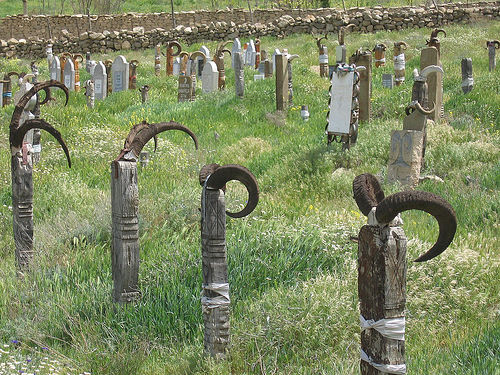
Nokhur graveyard - photo by Carpetblogger


country graveyard—
sheep-like stones
herded by farmhouse shadows

Angele Ellis


Photo by zilverbat


Visiting the graves
the old dog
leads the way
Issa
translated by Robert Hass


best,

Don   

Send a single haiku for the Wednesday Haiku feature. Here's how.

Go to the LitRock web site for a list of all 160 songs

Sunday, January 20, 2013

One Inch Rock: Issa's Sunday Service, #154


One Inch Rock by T. Rex on Grooveshark 
In case of wonky widget, Drink Me

 
What could be more natural for the Sunday Service and Lilliput Review than "The One Inch Rock?"  Hard to believe I've been doing this all these years and have missed it until now. It would seem that the moral of this tale is don't mess with the Liquid Poetess: 
 

The One Inch Rock
 
Met a woman she's spouting prose
She's got luggage eyes and a roman nose
Her body is slung from side to side
Need a lift she said much obliged
I'm riding piggy-back
Then I come to her shack
We go inside the place is a mess
She said my name's the Liquid Poetess
She unties her mouth
And her buckskin dress
She drinks from a bottle
labeled tenderness
I'm in one hand in the other's a can
She puts me in the can
And smiles through the wall
I got the horror's cos I'm one inch tall
Next thing I know's a girl by my side
Dressed in a bayleaf she's trying to hide
I asked her name she said Germaine
Do the rock do the one inch rock.


This naturally put me in mind of a couple of things, first being The Incredible Shrinking Man. Here's a montage of clips from the fantastic film version of Richard Matheson's novel, kind of oddly set to the song "No New Tale to Tell" by Love and Rockets. 


And here's some more shrinking (and growing) from the 1903 version of Alice in Wonderland, oddly set once more this time to the tune of a Django Reinhart's "Improvisation." 


Finally, of course, there's Gulliver's Lilliput, courtesy of Dean Swift and, in this case a parcel of animators, from the 1939 full screen version of Gulliver's Travels, which you can watch in its entirety (do notice the Hokusai influenced waves at the beginning) here:


-----------


Wood block by Hokusai


Little snail
climb Mount Fuji,
but slowly, slowly
Issa
translated by Robert Hass


best,
Don
   

Send a single haiku for the Wednesday Haiku feature. Here's how.

Go to the LitRock web site for a list of all 154 songs

Wednesday, January 2, 2013

dan smith & Joel Dias-Porter: Wednesday Haiku, #96

Print by Hokusai Katsushika


your old kimono
falls open revealing
Spring

dan smith


Art by Henri Meunier


A speck of white
floating in the evening's tea -
October moon.

Joel Dias-Porter


------------------


Photo by Carl Highsmith


New Year's Day--
everything is in blossom!
I feel about average.
Issa
translated by Robert Hass


best,
Don 


Send a single haiku for the Wednesday Haiku feature. Here's how.

Go to the LitRock web site for a list of all 149 songs

Saturday, December 31, 2011

Feeling About Average


    New Year's Day--
everything is in blossom!
    I feel about average.
Issa
translated by Robert Hass


Right at my feet -
when did you get here,
snail?
Issa


Happy New Year, all.

Don


Send a single haiku for the Wednesday Haiku feature. Here's how.

Go to the LitRock web site for a list of all 127 songs


Friday, July 1, 2011

Ginsberg and Bashō: Times Square and Kyoto


I've begun some background work for one of the fall sessions of  the 3 Poems Discussion Group, this one on Allen Ginsberg.  I have been reading all manner of poems, trying to see what would connect beyond the obvious, what might emphasize aspects of Allen's work sometimes overlooked, and it has been a real joy to immerse again in the work of one of the 20th century's great poets.

I ran across the poem Back on Times Square, Dreaming of Times Square and was immediately struck by its similarity in concept and title, to Bashō's poem, "Even in Kyoto ...," my favorite Bashō haiku, perhaps my fav haiku, period.   It's not really something for my purpose with the discussion group, but I thought regular readers of this blog would appreciate it.  First, let's start with Allen, then Bashō  :


'Back on Times Square,
Dreaming of Times Square'

Let some sad trumpeter stand
               on the empty streets at dawn
and blow a silver chorus to the
               the buildings of Times Square
memorial of ten years, at 5 A.M., with
               the thin white moon just
                          visible
          above the green & grooking McGraw
              Hill offices
a cop walks by, but he's invisible
              with his music

The Globe Hotel, Garver lay in
      gray beds there and hunched his
      back and cleaned his needles―
where I lay many nights on the nod
      from his leftover bloody cottons
      and dreamed of Blake's voice talking―
                  I was lonely,
          hotel's vanished into a parking lot
And I'm back here―sitting on the streets 
again―
      The movies took our language, the 
                great red signs
      A DOUBLE BILL OF GASSERS
                Teen Age Nightmare
          Hooligans of the Moon 
    
But we were never nightmare
      hooligans but seekers of
                the blond nose for Truth

Some old men are still alive, but
                 the old Junkies are gone―

We are a legend, invisible but
                 legendary, as prophesied
                                 Allen Ginsberg     


    Even  in Kyoto—
hearing the cuckoo's cry—
    I long for Kyoto.

                    Bashō
                    translated by Robert Hass


Of course, Ginsberg's lament, way back in July of 1958, was just a first salvo of the attack which was to come on that the historic section of mid-town Manhattan.    The preeminent speculative fiction and Gay Studies scholar, Samuel Delany, documented the next phase and even that account was  pre the Disney-fication which would hose the whole place down and drive everyone away.

The link here is memory and Bashō somehow managed to transcend nostalgia by firmly grounding his poem in the moment.  Both poets are lamenting a previous life, but neither stoops to the maudlin or the overly sentimental.  Ginsberg, too, stays in the moment and there can really be no doubt that he wasn't nodding, in his inimitable way, to the classic haiku master.


---------------------------------------


This week's feature poem comes from Lilliput Review, #161, in March 2008.   Peggy Heinrich is one of the poets whose contributions over the years I value very much.   Her wisdom, as in this little tanka, always brings a little light to a dark corner of mystery.


as a child
I wondered
what kept the moon in the sky
now that I know
I am no happier
Peggy Heinrich


Mount Asa--
even when cloth-pounding stops
sweet nostalgia
Issa
translated by David G. Lanoue


best,
Don


Send a single haiku for the Wednesday Haiku feature.  Here's how.

Go to the LitRock web site for a list of all 107 songs