A couple of quick notes and then it's onto the continuing saga of Basho's journey. I was really happy to find out that the Voices and Visions series is currently available via the Annenberg Media site. The good news is that all 13 programs are streamable on line for free with a free signup. The bad news is the series and individual titles are pricey: $39.95 each, $389 for the series. That being said, however, they are available on DVD for the first time and this series is about as good as it gets in its treatment of classic American poets. I have used excerpts from these programs in a poetry appreciation class (the Robert Frost video is particularly fine) I've conducted in the past and plan to use them in the future. If I can come up with the dough, I'll definitely be investing.
I ran across another posting of a Brautigan poem on a Live Journal site that was too good not to share:
Star HolesI may be doing a blog only haiku challenge in the future, with print publication of the winner in a future issue of Lilliput Review and also a neat prize for the winner. More on that in a future post but, for now, I will say that all of this is Basho-related.I sit here
on the perfect end
of a star,
watching light
pour itself into
me.
The light pours
itself through
a small hole
in the sky.
I'm not very happy,
but I can see
how things are
faraway.Richard Brautigan
Over the past week I've been immersing myself in a variety of Basho translations. At work I'm reading Basho's Haiku: Selected Poems by Matsuo Basho translated by David Landis Barnhill, which I'll be getting to in a future post. At home I've just finished up On Love and Barley translated by Lucien Styrk and have been dipping into a number of volumes by the classic haiku commentator, R. H. Blyth, concerning Basho. Blyth is amazing, his knowledge of haiku all-encompassing, and he always manages to off-handedly put in a word about Wordsworth or Lawrence or Whitman, so much so that I have to admit I actually like a critic. Hmn, I've been a bit faint of late, perhaps I need to take my temperature.
It took me quite sometime to get with the flow of Stryk's Basho but once I did there was much to appreciate there. Of the 250 plus poems here, I marked off 15 as being particularly noteworthy. The virtue of Stryk's translation also exhibits its flaw: brevity. These are stripped down to the barest bones. Most are under 10 words, some less than five. When the translations work, they are like the Eastern style of brushwork art; a stroke here, a bird, a few there, an entire mountain range. The brevity suggests boundless possibility and the reader fills in the details. When they fall flat, there is simply nothing, in a most unzen-like way. The ultimate success of the work, I believe, is that some of those that fall flat for me may work for someone else and vice versa. Ultimately, it is Basho who shines through and I suspect the less-is-more approach might have appealed to his monk-like sensibility. He certainly knew how to pack a rucksack with the minimal amount of things!
Here's a few highlights that grabbed me:
-------------------------------------------------------------------
If I'd the knack
I'd sing like
cherry flakes falling.
Skylark on moor -
sweet song
of non-attachment.
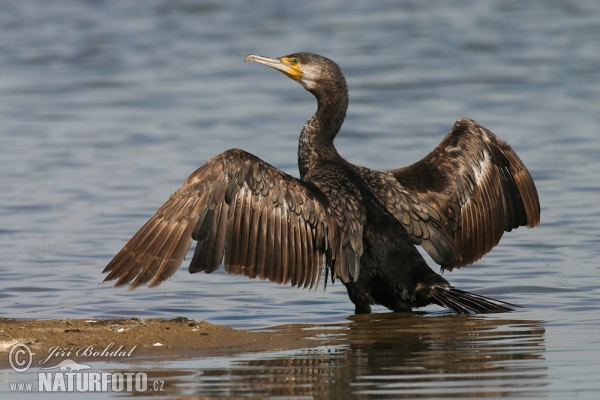
Cormorant fishing
how stirring
how saddening.
Come see real
flowers
of this painful world.
Morning-glory -
it, too,
turns from me.
Man's end -
a bamboo shoot,
or less.
Year-end sprucing,
carpenter
hanging his own shelf.
Summer grasses,
all that remains
of soldiers' dreams.
June rain,
hollyhocks turning
where sun should be.
-------------------------------------------------------------------
The "summer grasses" haiku is one that I featured in another translation in a previous post. Stryk does it with more economy and equal effect, I believe. It is all, perhaps, a matter of taste, but the more translations I read, the fuller the picture of the original poet, Basho, I seem to get. The verse about the cormorant fishing perhaps needs a gloss. Fisherman commonly used the cormorant to fish by tying a string around its neck so when the bird snared a fish it couldn't swallow and the "fisherman" would simply remove the fish and put the bird back in the water. Not quite fishing with hand grenades, but certainly in the same mode. What really captures the true Basho spirit here is that he is both stirred and saddened, he still sees the miracle of nature despite the appalling behavior of nature's "highest creation", man.

Cover Art by Guy Beining
This week's featured back issue is #160, from November 2007. Enjoy. Beginning next week, we'll going into the way back machine to sample issues from places long ago and faraway.
-------------------------------------------------------------------
in
cottonwood
bark's cleft
a lichen
buddha
John Martone
-------------------------------------------------------------------
#213
Only a wisp
Of cloud above,
But like a
Sacred Song
It pointed the way.Yosano Akiko
translated by Dennis Maloney
-------------------------------------------------------------------
Crows sitting on naked trees. Expecting snow.
Alan Catlin
-------------------------------------------------------------------
No appetite
I have no appetite for verse,
but for the velvet vesture
of lamb's ear savored.
between my lips, tonight,
your lobes and limbs
wooly sward and bole,
succulent mullein, growing
virgate among your leaves.Jeanne Lesinski
-------------------------------------------------------------------
two wings per pigeon
and this is where they gather
on a wire
in the city
Ah, what do I know
Shawn Bowman
-------------------------------------------------------------------
washing-------------------------------------------------------------------
dishes first
then shavingJohn Martone
Till next time,
Don


 Posts
Posts




.jpg)