Showing posts with label Issa. Show all posts

Wednesday, August 31, 2016

Dan Franch & Elmedin Kadric:
Wednesday Haiku, #230


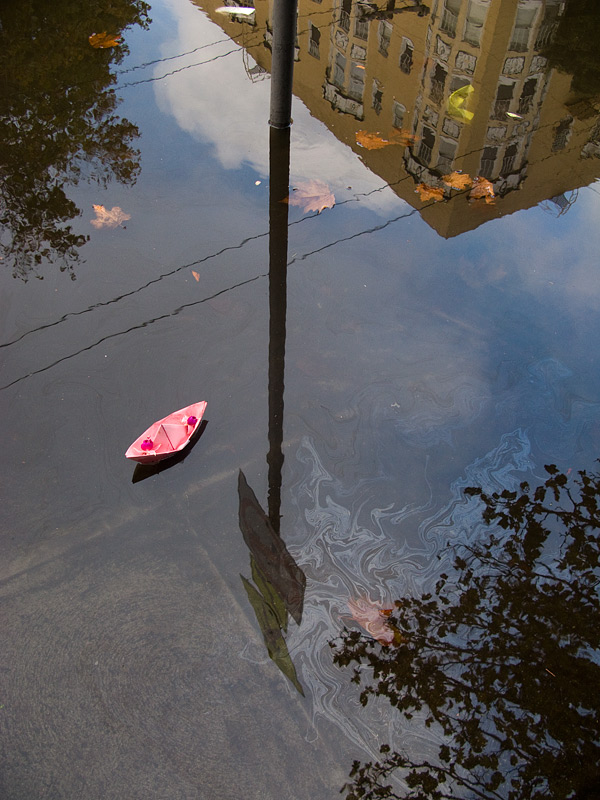
Two-faced moon,
I thought I
knew better

Dan Franch


 Photo by ardfile


sunset...
the same color
loneliness

Elmedin Kadric


it seems to wash
the summer mountains...
sunrise 
Issa
translated by David G. Lanoue


best,
Don
PS  Click to learn how to contribute to Wednesday Haiku 

Sunday, August 7, 2016

The crane screeches, the cicada's cry: Deep Mystery in the Haiku of Bashō

Photo by Castlelass


In loving memory of the Jane Reichhold, who, among her many accomplishments, is her English language translation of 

------------------------------------


     The crane screeches:
At its voice
     The bashō will surely tear

                         Bashō
                         Translated by R. H. Blyth


In my morning reading (Haiku, v. 4, R. H. Blyth), I ran across the above Bashō poem which I didn't remember but which struck me immediately. It put me in mind of the more famous Bashō poem:


Quietness--
Sinking into the rocks,
A cicada's cry

        Bashō
        Translated by Makota Ueda


Some translations go so far as to say piercing the rock(s), which heightens the mystery inherent in the poem. What struck me here is the relationship between these two pieces, the first a touch more literal, the second, more famous poem, perhaps closer to the mystery.


And what of the mystery? The less said, the more realized? Perhaps the poems are each transcendent moments or, in this case, two moments sharing a certain otherness?


Thinking on these things, I took a break for breakfast, and began reading a review of a book on, believe or not, camping. In the book, as noted by the reviewer, the author made a rather a limp joke referencing one of Leonard Cohen's most famous verses:


Ring the bells that still can ring 
Forget your perfect offering 
There is a crack in everything 
That's how the light gets in. 


Bad joke or not, as so often happens in my morning reading, the bell rang ... again and again and again.


Leonard Cohen's "Anthem."


my cracked teacup
like Buddha on display...
plum blossoms

             Issa
             trans. by David G. Lanoue


best, 
Don

PS Click to learn how to contribute to Wednesday Haiku. Here you will find Jane Reichhold's contribution.

Wednesday, June 22, 2016

Gloria Jaguden & Dennis Garvey: Wednesday Haiku, #229


oval moon
its woman's face
waiting

Gloria Jaguden


daylight moon
wearing a shroud
for just this instant

Dennis Garvey


which of you owns
that red moon
children?

Issa
translated by David G. Lanoue


best,
Don
PS  Click to learn how to contribute to Wednesday Haiku 

Wednesday, May 18, 2016

Patrick Sweeney & Chen-ou Liu: Wednesday Haiku, #228


Chess between adepts
persimmons on
a leafless tree

Patrick Sweeney


Photo by Brendan Adkins


the whiteness
of a cold moon ...
you, slanted eyes

Chen-ou Liu


Photo by Joe Stump


in cherry blossom shade
there are even those
who hate this world

Issa
translated by David G. Lanoue


best,
Don
PS  Click to learn how to contribute to Wednesday Haiku  

Wednesday, February 10, 2016

Bart Solarcyzk & Chen-ou Liu: Wednesday Haiku, #226

Photo by Walter A. Aue


going  back
    to say goodbye
                 tomorrow
     Bart Solarcyzk 


Photo by Vern


summer's end
my footprints in the sand
a little deeper

     Chen-ou Liu


 Photo by davebloggs007


tomorrow morning
a humdrum river beach again?
summer moon

Issa
trans. by David G. Lanoue


best,
Don

PS  Click to learn how to contribute to Wednesday Haiku 

Wednesday, January 20, 2016

Sondra J. Bynes & Kalyana Hapsari: Wednesday Haiku, #225

Photo by Philip Chapman-Bell


he didn't leave a message--watching cottonwood fluff fall up
                                   Sondra J. Byrnes


Photo by Laura Lewis


candle light dinner 
lipstick on her wine glass 
glistens 
      Kalyana Hapsari


Photo by Kristy Hom


cotton fluff scatters--
little thicket, little shrine
little ditch
Issa
trans. by David G. Lanoue


best,
Don

PS  Click to learn how to contribute to Wednesday Haiku  

Friday, December 11, 2015

James W. Hackett (I.M.): 4 Haiku


Recently, I've been re-reading the introduction to Cor van den Heuvel's The Haiku Anthology (3rd ed.) and, when it comes to English language haiku poets, it essentially begins with James W. Hackett and Nick Virgilio. Of course, there were others earlier, but these are two major poets at the beginning of what van den Heuvel speculates may someday be called 'the golden age' of English language haiku.  

This sent me back to a collection of his work, The Way of Haiku: an Anthology of Haiku Poems, Japan Publications, 1969. I read it a few years back and, as is customary when I read poetry books, I have a slip of paper inside that serves the dual function of bookmark and place where I note down the page of poems that are, for me, highlights.

The book is over 250 pages long, 3 haiku to a page, and my note sheet has lots and lots of poems marked. Often I will put a special mark - an asterick or check - next to a page for poems that moved we especially. So, I looked at these first and, of all things, 
a particular image/theme appeared and so here are 3 of the especially highlighted poems:

 Photo by Nebojsa Mladjenovic


Now that I have freed
  the butterfly from the web
    I feel uneasy.


The design that spins 
  the spider, allows him no rest
    until its done.


A long line of web
  loose at both ends, riding free
    on the summer breeze


Photo by Chris Sorge


Early on, Hackett received the imprimatur of haiku guru R. H. Blyth, who, in Hackett, saw the very real possibility for haiku in English. You will note that all the haiku are in the strict 5/7/5 form, with beginning caps and punctuation, as was the prevailing approach of the day.

And none seem worse for that. I could talk a bit about what attracted Hackett to this imagery (and me, as reader, to those images/themes in his work), but perhaps it best to leave the air of mystery.

After all, it is life, isn't it?

One other observation is that the poems are all focused exclusively on nature. "Now that I have freed" is a rare instance of the intrusion of the poet (or any other human) in Hackett's work. The last poem below does not have that intrusion, but in it, I feel, you can sense very real human emotion and, so, not surprisingly, for those of you who know we and my own approach, it is one of my favorites:


Left by the tide
   within a shallowing pool:
        a frantic minnow


Photo by Brad Smith


some stay behind
in the green leaves...
low tide crows
Issa
trans. by David G. Lanoue


best,
Don

PS  Click to learn how to contribute to Wednesday Haiku  

Wednesday, December 9, 2015

Daryl Nielsen & Elizabeth Crocket: Wednesday Haiku, #224

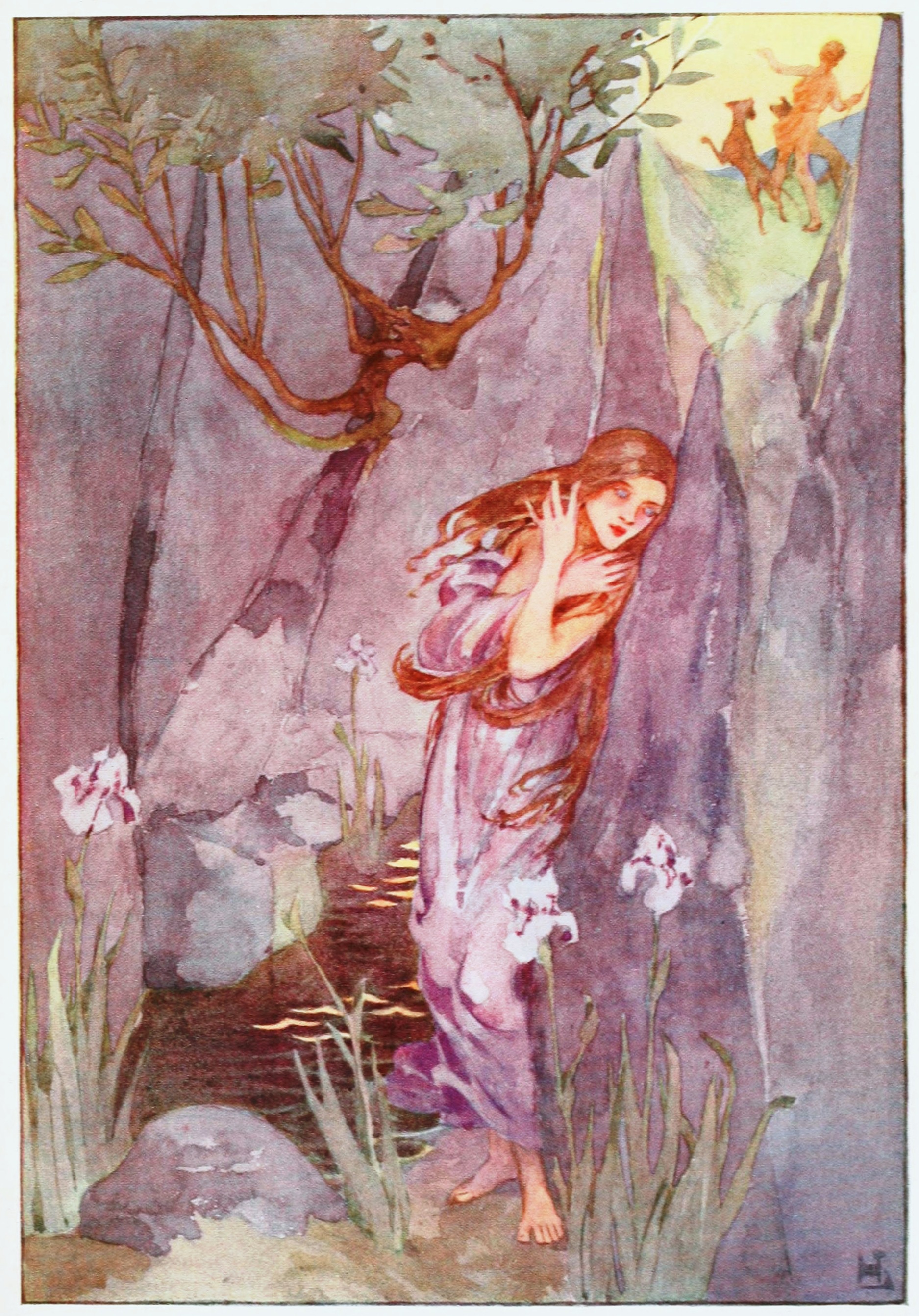
 Illustration by Helen Stratton


evening image                    
on the lake’s surface
boy that still is

        Daryl Nielsen


Photo by G. dallorto


their headstone
whispering out loud

the news they'd want to hear
        Elizabeth Crocket


the lake is slowly
lost in mist...
evening falls

Issa
trans. by David G. Lanoue


best,
Don

PS  Click to learn how to contribute to Wednesday Haiku 

Wednesday, November 11, 2015

Susan Diridoni & Vibeke Laier: Wednesday Haiku, #223

 Photo by Aedallou


sans pearls summer peaches
          Susan Diridoni


Photo by Mike McCaffrey


summer moon
how tenderly waves
touch paper boats

      Vibeke Laier


the katydid
in the paper bag...
still singing

Issa
trans. by David G. Lanoue


best,
Don

PS  Click to learn how to contribute to Wednesday Haiku 

Wednesday, October 21, 2015

Ramesh Anand & Elmedin Kadric: Wednesday Haiku, #222


glow of light
from the hilltop hut –
shooting star

Ramesh Anand


 Photo by Martin Burns

rain song
the busker
sings along

Elmedin Kadric


Orpheus Pines by Heather Wizell


wafting through trees
a beggar's flute
a nightingale's song

Issa
trans. by David G. Lanoue


Photo by Dave Hamster


best,
Don

PS  Click to learn how to contribute to Wednesday Haiku
 

Wednesday, September 23, 2015

Helen Buckingham & Laszlo Slomovits: Wednesday Haiku, #221

GIF image courtesy of NASA


Geminid night--          
another good one
dies

Helen Buckingham


Mephistoles from Gounod's Faust


opera —
even the bad guys
sing in tune

Laszlo Slomovits


Devil Priest by Matahei


a long night--
the devil in me
torments me

Issa
trans. by David G. Lanoue


best,
Don

PS  Click to learn how to contribute to Wednesday Haiku  

Wednesday, September 9, 2015

Alexis Rotella & Kanchan Chatterjee: Wednesday Haiku, #220

Photo by Troy Mason


The things
he doesn't say
slow-growing ivy

Alexis Rotella


Photo by Ivo Ivov


summer noon. . .
even the woodpecker's pecking
sounds heavy

Kanchan Chatterjee


Photo by Inderjit Nijjer


geese flying south--
the ducks at the gate
cheer them on

Issa
trans. by David G. Lanoue


best,
Don

PS  Click to learn how to contribute to Wednesday Haiku 

Wednesday, August 12, 2015

Rehn Kovacic & Matthew Moffett: Wednesday Haiku, #219

Image from Talshiarr


Picking up each seed
   the bird bows--
        backyard Buddha

Rehn Kovacic


Photo by Ross


beside themselves
beside the cracked-up pavement
daffodils

Matthew Moffett


Artwork by Hishida Shunso


still plum blossoms
my head, by itself
bows
Issa
trans. by David G. Lanoue


best,
Don

PS  Click to learn how to contribute to Wednesday Haiku

Wednesday, August 5, 2015

Ida Frelinger & Susan Diridoni: Wednesday Haiku, #218


Image by Tom Simpson via foter


one day at a time
a duckling skids
into the no-wake zone

     Ida Frelinger


Photo by azut via foter


sprouting oaks fugue a welcome

               Susan Diridoni 


Photo by Paul Hudson via foter


my money sprouted wings
and flew away...
the year ends

Issa
trans. by David G. Lanoue


best,
Don

PS  Click to learn how to contribute to Wednesday Haiku

Wednesday, July 1, 2015

Chen-ou Liu & Daryl Nielsen: Wednesday Haiku, #215

Photo by April Schultz


the river
swollen with spring ...
her stretchmarks

Chen-ou Liu


honeysuckle
through an open window
mother’s last breath

Daryl Nielsen


high noon--
the reed thrush sings
to a silent river

Issa
trans. by David G. Lanoue


best,
Don

PS  Click to learn how to contribute to Wednesday Haiku

Sunday, June 14, 2015

William Stafford: Where People Aren't


A book that I recently completed in my morning reading rotation is Things That Happen Where There Aren't Any People, a solid little William Stafford 38 page chapbook, put out by BOA Editions in 1980. 

Many of the poems in the book are about what the title suggests: things that happen without people. Stafford's deep interaction with nature comes out in any number of the poems included, such as the following:


Through the Junipers

   In the afternoon I wander away through
   the junipers. They scatter on low hills
   that open and close around me.
   If I go far enough, all sight or sound
   of people ends. I sit and look endless miles
   over waves of those hills.
   And then between sentences later when anyone
   asks me questions troubling to truth,
   my answers wander away and look back.
   There are these days, and there are these hills
   nobody thinks about, even in summer.
   And part of my life doesn’t have any home.


Stafford is the kind of poet who, on occasions such as this one, we seem to overhear talking to himself. He was a prolific poet, a serial writer if you will, and the more you read, the more you feel him working out the many different aspects of things he encounters. 

I could easily imagine him, on any given day, writing a very different last line for this poem. It is important to note, however, that this last line does not present empirical fact or even conjectural 'fact' - it presents feeling, how he felt after encountering nature without humans, and how he feels upon reentering the world of humans.

Reading this through some might think of Buddhism. Though this has some substance, I thought that Stafford, in his approach, represents a very Western (in this case, in both senses of the word) way of thinking, albeit a wilderness way of thinking. It reminded me of Somerset Maugham's character Larry Darrow from The Razor's Edge, who thinks that it is easy to be a monk on a mountain top, just try taking idealistic principles down into the world of people.

In case you forgot the post from 3 years ago (or weren't around these parts at that time), here's a scene with Bill Murray capturing the above sentiment from the excellent 1984 movie adaptation:


Because serendipity is the way of all things, I ran into the following haiku by Shiki in-between the next to last and last edit of this post and it seems, in its own way, to speak to the heart of the subject at hand:


      There is no trace
Of him who entered
      The summer grove
      Shiki
      trans. by R. W. Blyth


Photo by Tom Magliery

-------------------


baby sparrow--
even when people come
opening his mouth
Issa
trans. by David G. Lanoue


best,
Don

PS  Click to learn how to contribute to Wednesday Haiku