Well, folks, it's that time: this year I will be reading for the 2nd Annual Bashō Haiku Challenge beginning today and continuing through the entire month of October. With a couple of slight adjustments from last year (i.e. a different 1st prize), here are the instructions as outlined last year:
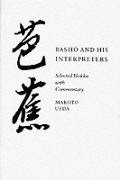
So, here's the deal: for the next four weeks, send along up to
5 haiku to lilliput review at gmail dot com (spelled out
to fend off pesky bots) and the best haiku wins a copy of
Bashō and His Interpreters: Selected Hokku with
Commentary, edited by Makoto Ueda. Minimally, I will
need your name and email to contact you with the
results. In the subject line of your email, please put
"2nd Annual Bashō Haiku Challenge" so I can easily
differentiate it from the scads of other things that come my
way. The final date for submissions will be October 31st and
the winner will be announced in either November 18th or
December 2nd postings. My definition of haiku is about as
liberal as you can get: I follow no one particular method,
school or theory and there is no seasonal requirement.
Your haiku can be 1, 2, or 3 lines (over 5 would be a bit
much, folks, but I will keep an open mind for
experimenters). The one restriction would be that it be
in the spirit of haiku (I've always liked the definition of
English haiku as lasting the length of one breath, in and
out and pause, but that's just me - and, oh yeah, I'm the
judge, but, again, it's the spirit of the thing that counts)
and that the haiku be previously unpublished in either
paper or electronic form (ok, that's two requirements).
In addition, the winning poet will receive a 15 issue
subscription to Lilliput Review (or have their current
subscription extended by 15 issues), plus two copies of
the 2nd Annual chapbook, to be published sometime in
2010. Other poets whose work is selected for inclusion
will receive 2 copies of the chapbook plus a 6 issue
subscription.
That's it. This is an electronic submission contest only; it is my way of giving back to the online community that has been so vibrant and encouraging since I started actively blogging in July 2007.
Some of you may remember the genesis of this contest, some may have come along since then. In brief, I was contacted last year by Tomoe Sumi of Kodansha America Press, who had been following an ongoing series of posts and discussions about the work Matsuo Bashô. At that time, she offered a reviewer's copy of their fine new volume, Bashō: The Complete Haiku, translated by Jane Reichhold, to throw into the discussion mix. Since I'd already purchased it for myself, I politely declined and she offered to send it anyway, suggesting I give it away. And so the contest was born.
To continue in the tradition of a volume of Bashō as first prize, I've decided this year to purchase and give away the selected work, with critical commentary, as listed above. Again, I own a personal copy; it is a fine selection of Bashō, accompanied with criticism from a wide variety of sources, historical context, and scholarly discussion. For the novice, it may be read as a selected poems. For the more experienced or simply curious, it is a rich rewarding journey into the essence of haiku in general and Bashō in particular. It is a high quality, pricey trade paperback that will make a fine addition to anyone's Eastern poetry collection. Makoto Ueda is one of the finest authorities on the work of Bashō and his 1970 biography (link is to google books and is a perfect illustration of what can go horribly wrong there) is considered essential reading for those delving deep into the work of the haiku master. You can get a glimpse into Bashō and His Interpreters at the link above to google books, where there is nice little preview.
Spread the word and let the games begin!
**********************************************

This week's featured issue is #160, from November 2007. If you are so inclined, you may literally (after a virtual fashion) flip through the entire issue here. Enjoy.
#213
Only a wisp
Of cloud above,
But like a
Sacred Song
It pointed the wayYosano Akiko
translated by Dennis Maloney
Autumn wind,
nudging me down the mountain,
quivers a grass seed
that clings to my skirt.Suzanne Freeman
rail cars
stacked with wood
slowly pass the living-
i whisper to them
kaddish
Donna Fleischer
And a little seasonal thought, from the master:
wildflowers--
all we say or speak about
is autumn windIssa
translated by David G. Lanoue
best,
Don


 Posts