Showing posts with label Yosano Akiko. Show all posts

Friday, September 30, 2011

Beano Gee and the Mystery Poetry Art

Artwork by Beano Gee

Well, here's a Friday conundrum for ya. An artist buddy of mine told me he found a piece he had done awhile back that was based on a poem, only it had been so long he completely forgot what poem it was. So, he came to me, me being the at work poetry guy. I puzzled and searched and guessed and struggled and came up with zilch.

A few days later, his addled brain pan spit back up the obscure bit of info, which wasn't all that obscure once he remembered it. That got me to thinking - I wonder if anybody else would know?

So, poetry mavens, here's the challenge: what poem is this piece of art based on?

To spice the pot (and get your own addled brain pan sizzling), I'll throw in a 15 issue subscription (or an extension to your current subscription) to Lilliput Review for anyone who can guess the poem or the first line (a bit tricky, that part, and something of a hint) AND the poet, or a 6 issue subscription for anyone who simply guesses the poet.

Reply either in the comments section below or directly to me via email (lilliput review AT gmail DOT org).

--------------------------------

Recently, Curtis Dunlap (30 haiku by Curtis - just hit "next") over at Blogging Along Tobacco road did a nice introduction to haiku and senryu that is most definitely worth checking out. Though I don't agree with everything he says - put two haiku poets in a waiting room and they will find something to disagree about except their sly attentiveness to that ceiling fly - give it a look see. It is very worthwhile.

--------------------------------

Anyone who follows this blog with regularity knows how very enthralled I am with the work of John Martone, one of the finest poets writing the short poem today. Here is a recent book by John, microscope field, in all its 96 page glory. It is full of wonder. A tip o' the hat to Scott Watson for pointing me toward it.


--------------------------------

Finally, today's archival selection comes from Lilliput Review #178 and it is a beauty. Enjoy.


Hearing a flute song
The monk's hand pauses
Copying the sutra.
Furrowed brows, you are
Too young for such a look
Yosano Akiko
translated by Dennis Maloney


wafting through trees
a beggar's flute
a nightingale

Issa
translated by David G. Lanoue


best,
Don


Send a single haiku for the Wednesday Haiku feature. Here's how.

Go to the LitRock web site for a list of all 120 songs

Friday, August 6, 2010

On the Scented Breeze: Yosano Akiko


"Modest Proposal Chapbook" #21 is just out. It is a selection of the work of Japanese poet Yosano Akiko, entitled On the Scented Breeze, translated by Dennis Maloney and Hide Oshiro. For those unfamiliar with this marvelous poet, here is info from Dennis:


Yosano Akiko (1878-1942) is admired as the greatest woman poet and tanka poet of modern Japan. Akiko infused her poems with an erotic and imaginative passion at a time when traditional poetry had grown lifeless and conventional.

In addition to Midaregami or Tangled Hair, from which this selection of poems is taken, Akiko published over 75 books including over 20 of original poetry, as well as novels, essays, fairy tales, children’s stories, an autobiography, and translations. She was a leader and strong supporter of the women’s rights movement in Japan.

Yosano Akiko transformed tanka poetry, instilling life in what had become a relatively stilted, tired form. Many well known translators have rendered her work, including Kenneth Rexroth, Sanford Goldstein, and Sam Hamill. On the Scented Breeze is a modest selection of 29 of some of her most moving, powerful tanka, translated in a clear precise lyrical manner that heightens this power. Here is a selection of 5 poems from this excellent collection:


Did we part
yesterday
or a thousand years ago?
Even now I feel
Your hand on my shoulder.


Goodbye my love
For a night at Fuzan spring
I was your wife.
Now until the end of the world
I demand that you forget me.


Spring so short,
In what can we
Find immortality?
I let his hands fondle
My vigorous breasts.


Poet, sing of this night
Alive with lights and
The wine served.
Our beauty pales
next to the peony.


God of fate, echo of my life.
This last world of mine
Please listen to
The notes of my koto
Played with an ax.


As with all "Modest Proposal Chapbooks," On a Scented Breeze is a $3.00, including shipping. If you'd like a copy, details to send along payment may be found here.


-------------------------------------------------------------------


This week's Lilliput archive poems, a pair, come from issue #141, January 2005, and are seemingly two sides of that same old coin:


bright red tulips
almost touch his name
spring rain
Joyce Austin Gilbert


May morning ...
sunlight fitting itself
around each blade of grass
Dorothy McLaughlin


blades of grass--
swallows start arriving
so pretty
Issa
translated by David G. Lanoue


best,
Don

Wednesday, September 30, 2009

2nd Annual Bashō Haiku Challenge


Well, folks, it's that time: this year I will be reading for the 2nd Annual Bashō Haiku Challenge beginning today and continuing through the entire month of October. With a couple of slight adjustments from last year (i.e. a different 1st prize), here are the instructions as outlined last year:

So, here's the deal: for the next four weeks, send along up to
5 haiku to lilliput review at gmail dot com (spelled out
to fend off pesky bots) and the best haiku wins a copy of
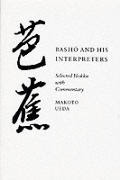
Bashō and His Interpreters: Selected Hokku with
Commentary, edited by Makoto Ueda. Minimally, I will
need your name and email
to contact you with the
results. In the subject line of your email, please put
"2nd Annual Bashō Haiku Challenge" so I can easily
differentiate it from the scads of other things that come my
way. The final date for submissions will be October 31st and
the winner will be announced in either November 18th or
December 2nd postings. My definition of haiku is about as
liberal as you can get: I follow no one particular method,
school or theory and there is no seasonal requirement.
Your haiku can be 1, 2, or 3 lines (over 5 would be a bit
much, folks, but I will keep an open mind for
experimenters). The one restriction would be that it be
in the spirit of haiku (I've always liked the definition of
English haiku as lasting the length of one breath, in and
out and pause, but that's just me - and, oh yeah, I'm the
judge, but, again, it's the spirit of the thing that counts)
and that the haiku be previously unpublished in either
paper or electronic form (ok, that's two requirements).

In addition, the winning poet will receive a 15 issue
subscription to Lilliput Review (or have their current
subscription extended by 15 issues), plus two copies of
the 2nd Annual chapbook, to be published sometime in
2010. Other poets whose work is selected for inclusion
will receive 2 copies of the chapbook plus a 6 issue
subscription.

That's it. This is an electronic submission contest only; it is my way of giving back to the online community that has been so vibrant and encouraging since I started actively blogging in July 2007.

Some of you may remember the genesis of this contest, some may have come along since then. In brief, I was contacted last year by Tomoe Sumi of Kodansha America Press, who had been following an ongoing series of posts and discussions about the work Matsuo Bashô. At that time, she offered a reviewer's copy of their fine new volume, Bashō: The Complete Haiku, translated by Jane Reichhold, to throw into the discussion mix. Since I'd already purchased it for myself, I politely declined and she offered to send it anyway, suggesting I give it away. And so the contest was born.

To continue in the tradition of a volume of Bashō as first prize, I've decided this year to purchase and give away the selected work, with critical commentary, as listed above. Again, I own a personal copy; it is a fine selection of Bashō, accompanied with criticism from a wide variety of sources, historical context, and scholarly discussion. For the novice, it may be read as a selected poems. For the more experienced or simply curious, it is a rich rewarding journey into the essence of haiku in general and Bashō in particular. It is a high quality, pricey trade paperback that will make a fine addition to anyone's Eastern poetry collection. Makoto Ueda is one of the finest authorities on the work of Bashō and his 1970 biography (link is to google books and is a perfect illustration of what can go horribly wrong there) is considered essential reading for those delving deep into the work of the haiku master. You can get a glimpse into Bashō and His Interpreters at the link above to google books, where there is nice little preview.

Spread the word and let the games begin!


**********************************************


This week's featured issue is #160, from November 2007. If you are so inclined, you may literally (after a virtual fashion) flip through the entire issue here. Enjoy.


#213
Only a wisp
Of cloud above,
But like a
Sacred Song
It pointed the way
Yosano Akiko
translated by Dennis Maloney


Autumn wind,
nudging me down the mountain,
quivers a grass seed
that clings to my skirt.
Suzanne Freeman


rail cars
stacked with wood
slowly pass the living-
i whisper to them
kaddish
Donna Fleischer


And a little seasonal thought, from the master:


wildflowers--
all we say or speak about
is autumn wind
Issa
translated by David G. Lanoue


best,
Don

Wednesday, August 19, 2009

René Daumal: Memorables


Longhouse Publishers & Booksellers has been putting out some of the finest publications of poetry, particularly in the short form, for many years. Their little accordion booklet series (4¼ x 11, folded 3 times) has always been a source of wonder and great delight for me. One of their latest publications is a new translation by Louise Landes Levi of René Daumal's 1939 work Memorables.

Memorables is, as translated, a prose poem of 18 individual verses of intermittent length. Each of the individual verses stand on their own, yet the entire work is very much a piece, with a powerful cumulative effect. Each verse opens with the injunction to remember:

Remember your first insult ...

Remember the evenings of terror ...

Remember your accomplices and deceits ...

Remember the day when you split open the web ...

Remember the beautiful mirage of concepts ...

Remember you have to pay for everything ...


At first, it can almost seem as though the speaker is gently reminding her/himself to remember certain incidents, certain pivotal moments. As the poem builds, however, it feels to me that the speaker is using direct address and that the tone is not so gentle.

Of course, perhaps, it is both simultaneously.

Sometimes the instances remembered seem literal, at others metaphoric to the point of being surreal. In any case, each seems to a be a piece of a larger whole, resulting in a fragmented yet lyrical of the collective unconscious.

Remember: your mother and your father, and your first lie, the
indiscrete odor of which crawls in your memory.

Remember magics, fish and tenacious dreams - you wanted to
see, you stopped up your two eyes in order to see, without knowing
how to open the other.

Ultimately the poem is the mystery of existence; the details are real, with the aforementioned cumulative effect just beyond understanding, no matter how focused one's awareness. It is a beautiful, at times frightening piece, finely translated and beautifully produced. I suspect each reader will be moved by different particular verses. These two touch something deep within, a remembrance of a shared dream, true for all, just as ephemeral, yet as real as the setting sun, as the rising moon.

Remember that you have to pay for everything, remember your
happiness but when your heart was run over, it was too late to
pay in advance.

But remember that love is of no one, that in your heart of
flesh is no one, that the sun is no one, blush seeing the
swamp in your heart.


In a recent post at the excellent Longhouse Birdhouse blog, here is the booklet in its entirety. They describe the Daumal booklet thus:

Three color foldout booklet of one long poem Memorables translated by Louise Landes Levi tucked into sky blue papers with signed and unsigned wrap around band. Unsigned $8.95 / signed $12.95.


The signature, of course, is that of the translator as Daumal died back in 1944. Why buy the booklet when you can read it in its entirety at the website? Why, indeed. Well, it seems to me the Arnolds know the answer to that question and the answer is the reason they published it electronically. Holding it now in my hands, I know the answer.

Hold it in your own and you will, too.


***************************************


For those who might be interested, I recently posted "Why Anne Sexton Matters" over at the Eleventh Stack blog. I've spent the better part of this summer rereading the complete poems of Anne Sexton for the first time in 20 years and am even more moved, amazed, and saddened than I was first time round.

Finally, here's a selection from an issue so recent it hasn't made it into the Back Issue Archive. Issue #167 was published in March 2009. Enjoy.


#134
I recall myself
As I was in the spring
Of my twentieth year
A peony-pale outside
But crimson inside.
Yosano Akiko
translated by Dennis Maloney


this
stream
bed's

my
spine
too
John Martone


Mountain River

In the mountains run
--the hieroglyphics of trout
Read them if you will; they will
--nonetheless draw you down into their water.
Jeffrey Skeate


Chrysanthemums slow
to bloom I find
no joy in autumn.
The west wind heartless
Blowing my gray hair.
Dennis Maloney


the emaciated chrysanthemum
totters
into bloom
Issa
translated by David G. Lanoue


best,
Don

Wednesday, December 10, 2008

R. H. Blyth on Shiki: Part 1


R. H. Blyth is the author, commentator, and translator of two separate sets of seminal publications on haiku: the 4 volume Haiku (V. 1 Eastern Culture, V. 2 Spring, V. 3 Summer and Autumn, V. 4 Autumn and Winter) and the 2 volume A History of Haiku. Blyth was one of the first to bring haiku to the West and is fairly conservative and traditional in his approach. His translations are sparse, the way I like them. Sometimes he elicits the hidden gem within: the principle of less is more comes to mind. At other times the results are flat, as if the very essence of the piece was simply untranslatable. His views betray a distinct bias (whose don't, eh?). His affinity for Zen has been cited as part of that bias but, in my estimation, we could do worse for a guide to both Japanese culture in general and haiku in particular.

The sets themselves are both lessons in all things haiku and a pleasure to peruse.

I have a soft spot for Blyth's great affection for western writers such as Wordsworth, Whitman, and Lawrence and his uncanny ability to slip them into the discussion in just the right spots. In some ways its hard to imagine comparing these relatively long-winded (in a good way) writers to the miniaturist art of haiku, though Lawrence's affinity early on with the Imagists certainly is a direct connection. But this is where Blyth excels. It is the essence he is after and the essence of these writers has a direct transcendent, almost transcendental, connection to the spirit of the East. Emerson, also, is never far from Blyth's ruminations. Typically, he may be translating a particular poem such as the following:


---A sliding door,
In the distance,
---At midnight.
Hōsai


And then throw in the offhand remark for the Western reader: "Emily Dickinson also felt the meaning of the shutting of a door, Stevenson too." That's it, just enough to make sure you are paying attention to the full resonant import of the tiny little gems he selects.

When it comes to Shiki, Blyth makes neither apologies or excuses. In A History of Haiku, Vol. 2, Blyth has three full chapters on Shiki: "Shiki: The Critic," "Shiki: On Furu-ike Ya," and "Shiki: The Haiku Poet." The second chapter is Shiki's critical appraisal of Basho's frog poem, which I'll be taking a look at sometime in the future. Today, I'd like to consider Blyth's take on Shiki the poet and present some of his translations. Here is his opening salvo:

Shiki, like all Japanese perhaps, is far better at creation than criticism. The Japanese have never produced a Coleridge, Hazlitt, or Lamb, but Wordsworth and Keats and Clare and Tennyson have their counterparts in Japan. Shiki has variety, if not depth. Though he is not emotional, he is not sentimental. There may be an excessive objectivity, but this means no pretense, no hypocrisy. As with Buson, whom he admired very much, he gives us pure poetry, which never fails to satisfy us and though it may not gain in depth with re-reading, we do not tire of him.

There is a razor sharp precision here, coupled with subtlies of distinction that I just marvel at. To put it succinctly, he nails it, big-time. He at once manages to show that Shiki's strength is simultaneously his weakness and who among us can deny that thought when applied to our own life's work? No depth a strength: you betcha! And let me tell you why, says Blyth.

This is beautiful, incisive criticism, reflecting a deep engagement with the work. I love the fact that he anchors this for the Western reader in artists more familiar to her/him. Blyth has such love of the romantics and their relation to Eastern ways reveals itself to his readers, complementing each tradition in a way that lifts them both up.

And, yes, I also love the fact that he mentions John Clare.

Before getting to some of the translations, here's a bit of insight, along with important background information on Shiki from his chapter on Shiki the critic:


Shiki, 1867-1902, is considered to be the restorer of haiku, which had been falling off since the time of Buson. Bashō walked his Way of Haiku; Buson his Way of Art; Issa, though he did not speak of it, his Way of Humanity. What had Shiki? He had no Way of any kind unless perhaps a Way of Beauty, like Keats, but ill-health and beauty do not go well together, and by the end of his short life he had got some humanity, but no religion, no pantheism, mysticism, or Zen.


One final critical note from Blyth is ironic in that he has already stated Shiki's importance in restoring haiku as an artistic medium in Japanese culture:


The effect of Shiki was to stimulate, but in over-praising Buson and under-praising Bashō he helped the continuous and never-ceasing tendency of haiku to become more artifical, rootless and, trivial.


Ouch. This may be a blow to Shiki, but notice the back hand is even more devastating: haiku, the medium on which Blyth wrote 6 groundbreaking books, is not immune to his intensely critical eye, as it should be.

All of this has helped me out immensely with my feelings toward all the Shiki poems I've been reading and remarking on over the last few weeks. In his chapter on Shiki the poet, Blyth translates 71 haiku, casually remarking that these are different than the 390 haiku he translated in his 4 volume masterwork. I've been reading those, but am having a hard time tracking them all down as the index to the paperback editions don't seem to correlate with the hardcovers (I have a mix of both) and so I have to go through page by page. Eventually, I'll sort it all out, but for now I've gone through these 71 and have marked 12 as grabbing me immediately. Here they are:


---A snow landscape
still hanging up in spring -
---the dust on it!


---The plan to steal melons
Forgotten too -
---Cooling in the evening.


Blyth's comment on this I love: " This is good because of its truthfulness, and consequently its truth to life; morality, like love, as Sydney Smith said, depends on the temperature."


---Oh, ears defiled
By sermons
---The hototogisu! (cuckoo)


--
---A boat finished,
The Rose of Sharon blooming,
---A fishing village.


---All the hawker's cries
Became silent,
---Noon cicadas crying.


---Fluttering and dancing,
They are drawn into the vortex,
---The dancing leaves.


---Water birds,
And reeds withering,
---In the setting sun.


And Blyth's critical comment on this: "Such verses as these may be called almost too objective, too lacking in humanity. They are nature devoid of what even nature itself looks forward to, and appears in mankind."


---The beginning of autumn
The shell of the cicada
---Patters down.


---The evening bell tolls:
The sound of ripe persimmons
---Thudding in the temple garden.


Again, with Blyth's comment: "The sound of the bell is large, and that of all falling fruits slight, but Shiki's love of religion was small and his love of persmimmons great. They are therefore equal as spiritual sounds, representing as they do the transcendental and the material, the ideal and the real in human life."


---Passing autumn:
He comes to collect the money
---For tolling the bell.


---I going,
You remaining,-
---Two autumns.


---When the snail
Raises its face too,
---It looks like me.


Some of these haiku I've featured before but Blyth's translations make me see them in a new light, sometimes because of a particular word, or perhaps a better distillation of the ones chosen. I've read many translations of the first ("A snow landscape") but this is the first time it grabbed me beyond the image itself. Particular words that make these poems for me are "defiled," "vortex," "patters," and "thudding." The condensation of the famed haiku (and one of my favs) on two friends parting ("I going") to a mere 6 words is a marvel of condensation and poetry; those six words positively explode off the page for me with the pure power of deep-felt sorrow.

I would single out also two other poems for special attention, two I hadn't encountered before in all those other collections. I'm not sure if it's intentional, either by Shiki or Blyth, but the fact that autumn might be seen as a personification in "Passing autumn" I find incredibly resonant. It raises the level of an everyday human experience to that of the cyclical struggle of life and death, making it like a 3 line allegory or 3 line morality play. Even if this is not intentional (for Blyth at least I can't see how it couldn't be), the echoes of autumn as a symbol in Eastern work cannot be denied. For whom is the bell tolling, indeed?

Finally, the last poem ("When the snail") is truly transcendent for me and if you had handed it to me blind and said pick one of the 4 master haikuists as composer, I would not have hesitated to pick Issa. This work is sublime, yet it found its way into none of the other collections I've reported on in previous posts.

I'm looking forward, indeed, to those other 390 translations of Shiki in the 4 volume Blyth. Despite the pointed criticism, he has won me over to this master poet, not simply intellectually, but in a heartfelt, emotional way. Shiki was notoriously difficult to get to know, by all counts irascible and nasty at times. His illness certainly goes a long way to explaining why he was so hard to know, literally as well as via his work.

Thanks to Blyth, I feel I know him now and like him, indeed, very much. Not only that, but I know why.


--------------------------------------------------------------------------


Normally, on Thursday I append some Lilliput poems from the archive for your perusal. I have to skip that this week as I've expended a great deal of energy on Shiki and, unfortunately, my paying gig beckons. Well, something to look forward to next week, eh?

So as not close on a negative note, here's a poem from one of the two brand new issues of Lilliput, #165, Dennis Maloney's fine translation of my favorite tanka poet, Yosano Akiko:


#244

I won't transform
My feeling into words
Or a poem but pour them
From heart to heart
This day, this moment.
Yosano Akiko
translated by Dennis Maloney


All the best,
Don

Thursday, August 28, 2008

Basho's Journey Continues & Dancing with Mr. B.


A couple of quick notes and then it's onto the continuing saga of Basho's journey. I was really happy to find out that the Voices and Visions series is currently available via the Annenberg Media site. The good news is that all 13 programs are streamable on line for free with a free signup. The bad news is the series and individual titles are pricey: $39.95 each, $389 for the series. That being said, however, they are available on DVD for the first time and this series is about as good as it gets in its treatment of classic American poets. I have used excerpts from these programs in a poetry appreciation class (the Robert Frost video is particularly fine) I've conducted in the past and plan to use them in the future. If I can come up with the dough, I'll definitely be investing.

I ran across another posting of a Brautigan poem on a Live Journal site that was too good not to share:

Star Holes
I sit here
on the perfect end
of a star,

watching light
pour itself into
me.

The light pours
itself through
a small hole
in the sky.

I'm not very happy,
but I can see
how things are
faraway.
Richard Brautigan

I may be doing a blog only haiku challenge in the future, with print publication of the winner in a future issue of Lilliput Review and also a neat prize for the winner. More on that in a future post but, for now, I will say that all of this is Basho-related.

Over the past week I've been immersing myself in a variety of Basho translations. At work I'm reading Basho's Haiku: Selected Poems by Matsuo Basho translated by David Landis Barnhill, which I'll be getting to in a future post. At home I've just finished up On Love and Barley translated by Lucien Styrk and have been dipping into a number of volumes by the classic haiku commentator, R. H. Blyth, concerning Basho. Blyth is amazing, his knowledge of haiku all-encompassing, and he always manages to off-handedly put in a word about Wordsworth or Lawrence or Whitman, so much so that I have to admit I actually like a critic. Hmn, I've been a bit faint of late, perhaps I need to take my temperature.

It took me quite sometime to get with the flow of Stryk's Basho but once I did there was much to appreciate there. Of the 250 plus poems here, I marked off 15 as being particularly noteworthy. The virtue of Stryk's translation also exhibits its flaw: brevity. These are stripped down to the barest bones. Most are under 10 words, some less than five. When the translations work, they are like the Eastern style of brushwork art; a stroke here, a bird, a few there, an entire mountain range. The brevity suggests boundless possibility and the reader fills in the details. When they fall flat, there is simply nothing, in a most unzen-like way. The ultimate success of the work, I believe, is that some of those that fall flat for me may work for someone else and vice versa. Ultimately, it is Basho who shines through and I suspect the less-is-more approach might have appealed to his monk-like sensibility. He certainly knew how to pack a rucksack with the minimal amount of things!

Here's a few highlights that grabbed me:


-------------------------------------------------------------------


If I'd the knack
I'd sing like
cherry flakes falling.


Skylark on moor -
sweet song
of non-attachment.


Cormorant fishing
how stirring
how saddening.


Come see real
flowers
of this painful world.


Morning-glory -
it, too,
turns from me.


Man's end -
a bamboo shoot,
or less.


Year-end sprucing,
carpenter
hanging his own shelf.


Summer grasses,
all that remains
of soldiers' dreams.


June rain,
hollyhocks turning
where sun should be.


-------------------------------------------------------------------


The "summer grasses" haiku is one that I featured in another translation in a previous post. Stryk does it with more economy and equal effect, I believe. It is all, perhaps, a matter of taste, but the more translations I read, the fuller the picture of the original poet, Basho, I seem to get. The verse about the cormorant fishing perhaps needs a gloss. Fisherman commonly used the cormorant to fish by tying a string around its neck so when the bird snared a fish it couldn't swallow and the "fisherman" would simply remove the fish and put the bird back in the water. Not quite fishing with hand grenades, but certainly in the same mode. What really captures the true Basho spirit here is that he is both stirred and saddened, he still sees the miracle of nature despite the appalling behavior of nature's "highest creation", man.


Cover Art by Guy Beining


This week's featured back issue is #160, from November 2007. Enjoy. Beginning next week, we'll going into the way back machine to sample issues from places long ago and faraway.


-------------------------------------------------------------------


in
cottonwood
bark's cleft

a lichen
buddha
John Martone


-------------------------------------------------------------------


#213
Only a wisp
Of cloud above,
But like a
Sacred Song
It pointed the way.
Yosano Akiko
translated by Dennis Maloney


-------------------------------------------------------------------


Crows sitting on naked trees. Expecting snow.
Alan Catlin


-------------------------------------------------------------------


No appetite
I have no appetite for verse,
but for the velvet vesture
of lamb's ear savored.
between my lips, tonight,
your lobes and limbs
wooly sward and bole,
succulent mullein, growing
virgate among your leaves.
Jeanne Lesinski


-------------------------------------------------------------------


two wings per pigeon
and this is where they gather
on a wire
in the city
Ah, what do I know
Shawn Bowman


-------------------------------------------------------------------


washing
dishes first
then shaving
John Martone


-------------------------------------------------------------------

Till next time,

Don

Thursday, August 21, 2008

Basho and the Lightness of Death


This past week, I've completed reading The Essential Basho, translated by Sam Hamill. The four travel journals were interesting, as mentioned in the section quoted in last week's post. I was happy to move on to the selection of haiku, which takes up approximately half the book, three haiku per page.

I've begun to warm up to Basho's poems which focus on a poetic principle he called "lightness." Here is David Landis Barnhill, whose Basho's Haiku I'm currently reading, on the concept of "lightness":


The concept of sabi can be intertwined with many aspects of the Japanese, Buddhism, and poetry. There is a principle of lightness that can be found within these aspects. Lightness can be described as the beauty of things plain and ordinary against the bright and glorified beauty. It is seeing the beauty in the simplicity of things, rather than the elaborate. Ueda describes the principle of lightness as, “a dialectic transcendence of sabi” (Matsuo Basho 34), then goes on to relate lightness to sabi by saying, “Sabi urges man to detach himself from worldly involvements; “lightness” makes it possible for him, after attaining that detachment, to return to the mundane world” (Matsuo Basho 34). He makes a great point in showing how the two ideas work off of each other. It is sabi that the person is trying to sense, what they are clearing there mind for. It takes mental concentration to detach oneself from the everyday reality of the layperson. Once that detachment is achieved, there must be a point when it is allowed to dissipate so that one can return to the ordinary world. And it is this principle of lightness that brings the person back, by having them focus on the plain, simple, and ordinary for all of its beauty.

Here are a selection of the 28 haiku I marked for further review:


-----------------------------------------------------------

Like the buck's antler's,
we point in slightly different
directions, my friend


You weren't home when I came-
even the plum blossoms were
in another yard


In windblown spring rain,
budding, like a straw raincoat,
a river willow


Grass for a pillow,
the traveler knows best
how
to see cherry blossoms


Father and mother,
long gone, suddenly return
in the pheasant's cry.


At the ancient pond
a frog plunges into
the sound of water


Nothing in the cry
of cicadas suggest they
are about to die


Wrapping dumplings in
bamboo leaves, with one finger,

she tidies her hair.


The morning glories
ignore our drinking party
and burst into bloom


-----------------------------------------------------------


I'm not sure that the poems that appeal to me are the ones for which Basho is most appreciated, though his most famous haiku ("At the ancient pond") is included in this selection, primarily because I thought it was one of the best versions I've read. One of the comments at the first Basho post noted that Hamill wasn't a favorite translator and he does seem to have taken some liberties, ironically ones that I feel make Basho more accessible to someone like me who is certainly no expert. In the "buck's antler's" haiku I particularly like that, though pointed in slightly different directions, these friends ultimately will always end up in the same place. "plum blossoms" somehow seems to be ironic, funny and heartbreaking all at once: try doing that with 14 words sometime! "strawcoat" is quite literal because Basho was always on the road and, one would imagine, frequently taking advantage of all available "strawcoats." There also seems to be a joy here at the return of his "strawcoat" in spring which he no doubt sorely missed in winter. Of course the traveler "knows best" how to see cherry blossoms: lying under the tree. Beside the principle of lightness, Basho seems to leave much room in each haiku for the individual reader to participate in its writing, in a sense. "Father and mother" is a pure Proustian moment and I love it because it has the emotion so characteristic of Issa and not often on such overt display with Basho. "cicadas" may seem obvious, though the point can never be emphasized enough. Still, it called to mind for me a review I was reading this week of a book about human psychology and how our species is the only one which understands its coming death. Perhaps that review tainted my reading but one can't help feeling that he is not only saying that cicadas don't know death and he is commenting on the human condition. How simply beautiful is "Wrapping dumplings ...", pure essence. If one of the Imagist school had written this, they would be immortal. Finally, morning glories are my favorite flower and I've been known to quaff a pint or two, so I personally can attest to the truism of this little gem.


Cover art by Wayne Hogan

This week's featured back issue of Lilliput Review is #159, from November 2007. Enjoy.


-----------------------------------------------------

#64
You are dreaming
of the bush warbler
I said to him defiantly
But just in case I lifted
The green curtain and peeked out.
Yosano Akiko
translated by Dennis Maloney


Translation
Wearing down like a rock
in the years of a river
a poem
Donny Smith


#12
Poet, sing of this night
Alive with lights and
The wine we served.
Our beauty pales
Compared with the peony.
Yosano Akiko
translated by Dennis Maloney


Mown Hay
Just to the southwest they're
cutting hay in the closing light.
I wonder how my life could come to this.
Jeffrey Skeate


It was like stardust in an old hand undertook me
coming through from where my soul began.
Janet Baker


----------------------------------------------------


There are now over 60 issues in the Back Issue Archive and 138 suggestions in the Near Perfect Books of Poetry list.

I've got to stop all this friggin' counting.

till next time,
Don

Thursday, August 14, 2008

Talking, Writing, Teaching, Spewing, Loving: Another Week of Poetry


Cover art by Wayne Hogan


Though off from "work" this week, I've been busy with things Lilliput related, which include getting issues #'s 163 and 164 out in the mail to subscribers. Also on my plate, has been wrapping up an interview for Poet Hound, which covers a wide range of questions about the history of the mag, its focus, and how I go about doing what I do. Since Lillie will be celebrating its 20th anniversary in 2009, it was a good thing for me to sit, think about the journey, and what's ahead. The interview should be appearing at PH sometime around the end of the month. I'll keep you posted.

Dovetailing nicely with that project, I was also asked to write an article for
Café Review, for their 20th anniversary issue, about how I select poems for Lillie. I'm working against a deadline, so that has kept me considerably occupied. The article is scheduled for January, but the deadline looms large. More on that in the future.

Two other fall projects that are gobbling up time like twin black holes are two sessions concerning poetry I'm working on. The first is an Osher lifelong learning one-shot class on poetry appreciation and this is the second year I've been asked to conduct it. The second is a new poetry discussion group I've put together with a fellow staffer at the library entitled "3 Poems By ... ." The idea is to have a poetry discussion group similar to typical book discussion groups, only focusing on 3 select poems by a given poet for an hour long session instead of an entire book of poems. The first session will be on Emily Dickinson, with future sessions on e. e. cummings, Sharon Olds, Mary Oliver, and others. We also will be doing one session entitled "3 Poems About," the subject being time, handled by 3 different poets. Both of these projects will be in the first two weeks of October and the clock is ticking.

When the Near Perfect Books of Poetry list hit the 100 milestone, Ron Silliman picked it up for his blog and this page got mighty busy, mighty fast.

As noted in previous posts, Acres of Books has lost its battle against closing (though gallantly championed by Ray Bradbury) to the Long Beach, CA, city fathers. Now, unbelievably, they have turned a jaundiced eye to the Long Beach Main Library and once again Mr. Bradbury has risen to the occasion. Maybe the mayor of Long Beach, the honorable Bob Foster, needs to hear from you.

Since I'm expelling angst, I might as well make a confession: I hate baseball poetry. Let me be clear: I love baseball, it's baseball poetry I hate. I've tried. I can't help it. It's just one of those things. But Jonathan Holden's poem, How To Play Night Baseball, from a recent posting at The Writer's Almanac, has put the lie to any type of definitive statement I was reaching for. This one's a beaut.

One final note before turning to this week's featured work from the Lillie archives; Jill Dybka at the Poetry Hut Blog has pointed to a nifty list, put together by Amy King, of Movies with Poetry. Check it out and if you can think of any that were missed, just add it in the comments section. I did.

Over the last couple of week's, I've been skipping around a bit in the archive and this week is no exception. The following selection is from issue #157, from August 2007, a year ago this month.


gentle,
the wish of not to wish
Sean Perkins

--------------------------------------------


just squeeze into
----hollow sycamore
---------& close my eyes
John Martone


--------------------------------------------


#374
Lying with my lover,
From the bed I see
Through the curtain
Across the Milky Way the parting
Of the Weaver and the Oxherder stars!
Yosano Akiko
translated by Dennis Maloney


--------------------------------------------


Be Still
This shall be the unspeakable:
Long after you've grown old
You will be the breath
Of a lion,
A basket of blue tears,
Landscape of dry reeds.
Your life shall float
Past the warm,
Slow river, skirting banks
Of black mud and straw
Jeffrey Gerhardstein


--------------------------------------------


"nowhere & nothing" from the tao of pooh
time
patience
drift

one
flower/poem
after
another
Marcia Arrieta


--------------------------------------------


Till next time,
Don

PS The Wayne Hogan cover above is supposed to be grey. Every now and then the scanner craps out. It is now.

Thursday, May 22, 2008

Dickinson, Yosano Akiko, and Basho


Cover art by Harland Ristau


I'm currently working on a couple of projects concerning Emily Dickinson which I'll probably be discussing in future postings. For the moment, for those who didn't see/hear it, I'd like to refer you to The Writer's Almanac for yesterday's rendition of "I shall keep singing!", which, like much of the best of her work, seems so simplistic on the surface but resonates like all get-out.

Over the past year and into the foreseeable future, I have and will be continuing to publish Dennis Maloney's translations of the work of my favorite tanka poet, Yosano Akiko. At least four new poems are forthcoming in the next two issues of Lilliput. In the meantime, here are a couple of older translations by Glenn Hughes and Yozan T. Iwasaki:


There are numberless steps
Up to my heart.
He climbed perhaps two or three.


Like my heart,
Which is waiting for you,
This bouquet of flowers will wither
Before tonight has passed.


The white iris
And the purple iris
Grow side by side in the pond,
Yet never open their hearts
To each other.


I've been perusing Basho and His Interpreters by Makoto Ueda, one of the Near Perfect Books of Poems list; the list has now grown to 28 items, with lots of folks taking advantage of the two free issues offer. In addition to being an all new translation of Basho's work, the poems are accompanied by extensive notes and commentaries which are very helpful in bridging the historical and cultural gaps for Westerners. Here are a few:


night . . . silently
in the moonlight, a worm
digs into a chestnut


in the seasonal rain
the crane's legs
have become shorter


with morning glories
a man eats breakfast
- that is what I am


Finally, before getting to this week's archive issue of Lillie, I'd like to mention that their is an excellent article/interview on/with Mary Oliver, in the Block Island Times. When asked to name her favorite poets, she said "Whitman, Whitman, Whitman!" I knew there was a reason I liked her: Whitman was my choice on the Near Perfect Books of Poems list.

This week's archive issue is #90, from July 1997, with a great cover by the late, very much missed Harland Ristau. Here's a couple of little gems that opened that issue:


The Wrong Path

One more mile again
another dew thunders falling
from the leaf's edge
Laura Bast-Russo


the way
is not
the map
John Viera


from Reroutings III

ID ____ RID ____ RIDE
Richard Kostelanetz


And, to close out, by the queen of the small press:


I Don't Want To Move

pillow that smells like skin
your fingers ----- light on
water in a Monet ----- that
will change before the
paint drys
Lyn Lifshin


best,
Don


Note: If you would like to receive the two current issues of Lilliput Review free, just make a suggestion at the Near Perfect Books page.


Thursday, March 6, 2008

Japanese Love Poems & New Issues


The contributor copies of the new issues of Lilliput Review went out in the mail this past Monday and regular subscriber copies will begin hitting the mails over the next two weeks. It usually takes about a full month to get out the entire run, what with letters to be written, poems to be read and all the attendant details in getting scores of envelopes out each week.


#161 is graced with the photographs of Keddy Ann Outlaw, dedicated to the memory of her brother, Wade Stanton Outlaw. Among others, poems appear by John Martone, W. T. Ranney, Peggy Heinrich, Donny Smith, Charlie Mehrhoff, George Swede and translations of the Japanese tanka great, Yosano Akiko, by Dennis Maloney, 25 poems in all. 25 poems for a buck: you do the math.


#162 is a broadside issue by David Chorlton, who has been appearing in Lillie since its inception, way back in 1989. David is a consummate artist; this issue, entitled Venetian Sequence, showcases his beautifully lyrical poetry and his own artwork, as seen above. Here's a poetic taste:


Paganini

His audience applauds,
convinced he is the devil
who never sleeps.
After the performance
he sails to the dead.
Their breath steams out of frozen marble
when he plays. They whisper
each one to the next, that the time has come
to grow back their flesh
and complete abandoned vices.


Cover by Edward O'Durr Supranowicz


Spotlighted this week is LR #148, published in February 2006. The issue opens with 5 poems by a variety of poets with the common thread of our place in nature: they are deceptively simple. It is a fine coming together of work by 5 grounded poets; it was a privilege to publish. Issa would be proud.


Stopping as a crow
alights in a snowed pine copse
-the poem composed
Rebecca Lily


yesterday's snow---
the place it melts
to
Gary Hotham


this spring
the birds are nesting
where his garden was
Joyce Austin Gilbert


Monet
in his private garden
and vice versa
Pete Lee


Suddenly

spring
like

and
so

are
we
Bob Arnold


Besides these 5, there are 24 more poems in #148, many like-minded, all worth a look. As with regular issues, back issues from #1 through #160 are available for a buck apiece or a SASE (self-addressed stamped envelope). If the price is still too dear (and who's to say) more free samples may be found in the past posts of this blog or in the back issue archive at the Lilliput homepage.

Finally, there is that matter of Unending Night, as pictured at the top of this post. Unending Night is a selection of Japanese love poems drawn from the classic Japanese tanka anthology, The Hyakunin Isshu or 100 Poems by 100 Poets. The Hyakunin Isshu was compiled in the thirteenth century by Fujiwara no Teika and is the most popular of the classic poetry anthologies of Japan.

This selection from 100 Poems ... is translated by Dennis Maloney and Hide Oshiro and is #18 in the Modest Proposal Chapbook series published by Lilliput Review. The chapbook features the poetry of 18 different classic Japanese poets and provides a unique lens through which to view this much loved anthology. The finishing touches are being put on Unending Night even as I type (i.e. it's being printed) and will be available by the end of the week. Price, as always for chapbooks, is $3.00, postpaid.

best till next week,
Don

Monday, December 10, 2007

Gary Hotham and Yosano Akiko (& more)

Cover art by Wayne Hogan


This morning I've received notice that one of Gary Hotham's poems from Missed Appointment, #17 in the "Modest Proposal Chapbook" series, has been reprinted in the Mainichi Daily News of Tokyo. If you click on the Mainichi link, not only will you see Gary's insightful poem but also 14 other fine haikus, including Francis Masat's excellent "dusk --" and a gem by this site's patron, Issa, translated by Isamu Hashimoto. Congrats, Gary.

This week also saw the anniversary of the birth of Yosano Akiko. Yosano almost singlehandedly revitalized the tanka form for modern readers. She is one of the premiere poets of that form and to this day remains my personal favorite. I'm happy to say it has been one of my greatest thrills as an editor to be publishing Dennis Maloney's new translations of Yosano Akiko in recent Lillies, with more to come in forthcoming issues. Here are a few examples from recent numbers:


#26

Unable to touch
The hot tide of blood
Beneath my tender skin.
Do you feel lonely
Teacher of the way?
(from Lilliput Review #153)


#14

You came from Saga, near water
Love god of a single night.
The poem you composed
Within the silk bed,
Please keep it secret.
(from Lilliput Review #155)


#372

Listen lord!
Love is the voice of admiration
For violets
in the purple evening.
(from Lilliput Review #157)


Dennis, by the way, is the editor and publisher of one of the finest American small presses in business today, White Pine Press. White Pine has published and continues to publish some of the very best classic and modern Eastern and contemporary world poetry, including recent reissues of work by Sonia Sanchez and James Wright.

On the reading shelf right now are Mary Oliver's House of Light, Roddy Doyle's The Woman Who Walked into Doors, and an advanced reading copy of Manil Suri's new novel, The Age of Shiva. Doyle will be appearing here in Pittsburgh at the Drue Heinz Lectures series next month, which many folks are looking forward to. Reading these two novels at once, I've been struck not only by the obvious differences compared to America, but by the similarities, particularly on how all three cultures treat women. The rituals and rites of passage may differ; the results are the same, all adding up to tragic inequality that one could never have dreamt dragging on into the 21st century. On my daily walk to work, I am reminded of this by a piece of incisive graffiti: "No War But Class War."

So it goes, as the much missed sage would say.

After much resistance, I've been reading Mary Oliver's work on and off over the last year. She is much maligned; one particularly unjust criticism is that she writes the same poem over and over again. It is hard to believe that this criticism was actually leveled by a fellow "poet." It seems to completely misunderstand the vocation that is poetry. I wonder what Dickinson, Willie Dixon, Issa, or Picasso might say to this, all of whom might have the same criticism leveled at them.

This week's sample of Lilliput poems comes from issue #133. Enjoy.


endless
the arrival

you are
going from

~ John Phillips


October Leaves

bleed veined beauty
pure enough
to suffocate art

while we look on
with loosened hair.

~ Larsen Bowker


Shiki wrote eighteen
thousand Haiku: How many leaves
has a willow tree?

~ Robert Chute


Everybody knows that
autumn is a ghost,
haunting us with memories
of things that never happened.

~ Albert Huffstickler


My flesh heart needs teeth
and all of Buddha's koans
will not jar them loose.

~ Mary Rooney


Finally, in particular for those new to Lillie, there are samples from three past issues up in the new archive page on the (also new) website. Check it out.

Best until next time, Don.