Showing posts with label David Lanoue. Show all posts

Friday, August 12, 2011

Haiku North America Conference, Seattle 2011: a Few Thoughts

Artwork by Ruth Yarrow


Above you will see a fine drawing (plus conference badge) by the wonderful Ruth Yarrow which exemplifies in my mind the generous spirit of the participants at the 2011 Haiku North America Conference in Seattle.  Thanks, Ruth, for a fine likeness.

Being in Seattle for a week is the reason I've been keeping a low profile on the blog and elsewhere; I had done a few posts ahead, but was nowhere as together as my fellow haiku blogging panelists Melissa Allen, Gene Myers, and Fay Ayogi, at least two of whom were posting live from the conference (while I and my 10 thumbs were wrestling with a small HP notebook).


Photo by Johnny Baranski


And a little closer view of the panel on haiku blogging:


Photo by Sarah Myers


In addition to the haiku blogging panel, I participated on a panel called "Developing Haiku Book Manuscripts" with some serious heavyweights in small press haiku publishing: Jim Kacian, Ce Rosenow, and Charlie Trumbull.


Photo by Johnny Baranski

The perspective I added to both panels was the POV of a micropress publisher.  As a one person operation, everything, including blogging and manuscript development, is seen through the other end of the telescope.  I'm not sure how helpful that was for the audiences at both sessions but I can say I learned from my fellow panelists.

There was a nice balance between the practical and what might be termed the academic.  Even on the later end of things, Richard Gilbert in the conference's most scholarly presentation ("Social Consciousness and the Poet's Stance in 21st Century" - the 1st William J. Higginson Memorial Lecture) was so well grounded in the history and tenets of haiku, as well as the sensibility of the Jack Kerouac School of Disembodied Poetics at Naropa where he studied, that one never got lost in the morass of ephemera.   He was engaging, knowledgeable, and obviously an all round good guy.

There were so many excellent panels and presentations that there were the usual conference schedule conflicts (an embarrassment of goodness) and I wasn't able to attend some I would have liked to.  Highlights that I was able to catch included Jim Kacian on the history of the one-line haiku ("Monophilia"), Cor van den Heuvel's powerful reading from his new book, A Boy's Seasons: Haibun Memoirs,  Carlos "The King" Colon on concrete haiku and poetry, and Eve Luckring's phantasmagorical video renku (with a tip of the hat to Sergei Eisenstein and the avant garde).  Day 3 was packed with great presentations: the year's memorial reading for those who died by Marjorie Buettner was memorable, and Daivd Lanoue's "Frogs and Poets" on Issa was my favorite of the conference, balancing as it did whimsy and scholarship in just the right proportion. The final day also saw Paul Miller give a provocative talk on Gendai (modern) Haiku in the West and the delightful "Old Pond Haiku Comics" by Jessica Tremblay (whose weekly postings I will be following with great interest) was just the perfect way to cap things.

I was sorry to miss Charles Trumbull's "History of American Haiku" and Penny Harter's session on haibun, the later because of a conflict and the former because we had to be up at 3 am for the return flight.  Between the two panels I was on and the various sessions I attended, I also gave two brief readings (one open and one for poets with new haiku books) and helped judge a kukai contest among participants along with Carmen Sterba.

Lots to think about, lots to absorb, and lots to just plain enjoy.  In off time, I traipsed about Seattle with my mate and friends, hitting the bookstores, restaurants, museums and bars and having an overall great time.  I'd like to particularly thank Michael Dylan Welch, Tanya McDonald, and Tracy Koretsky for their kindness and organizational acumen, along with Susan Diridoni, Gene Myers, Melissa Allen and Cherie Hunter Day for variously pleasant conversations, lunch, and camaraderie.

Finally, for those of you who didn't get to delight in this particular piece of cheese (on Facebook), well, here you go:


-------------------------------


This week's poem, from the Lilliput archive comes from#169, July 2009, is more than a little bit of wonder.  Enjoy.


     All of This, and Being Too
Flowering now of now, splayed flat
by winds of specificity,

what comes forth in this blossomed
gust is not regret, not sorrow.

What comes forth when the battered
leaves of nakedness curl downward,

flowering now of now, is you,
is your steady, petalled comingness.
        Diane O'Leary


with one gust
it becomes the perfect
willow
Issa
translated by David G. Lanoue


best,
Don


Send a single haiku for the Wednesday Haiku feature.  Here's how.

Go to the LitRock web site for a list of all 113 songs


Friday, August 13, 2010

Issa by Robert Hass


In last Sunday's post, I mentioned that I'd spent some time with Robert Hass's The Essential Haiku. Most of the translations are by Hass himself but, as he mentions in a note, when he couldn't better a translation by R. H. Blyth, Sam Hamill, Lucien Stryk, Makoto Ueda, or Jorie Graham, he included them. I thought over a couple of posts to highlight some of what Hass has done in choosing work by 3 of the 4 great masters for this volume, the poets being Issa, Buson, and Bashō. Previously, I featured 27 poems by Issa as rendered by Hass. Since I've revisited the translations nearly a year and a half later, I thought I'd see if any others struck me this go round.

And of course there were, 7 more to be exact.


.......Zealous flea,
you're about to be a Buddha
.......by my hand.


I love this one. Here is this pious monk, Issa, sending off a flea to its next destination for fulfilling so well its current destiny. Is it rationalization, is it serious, or is it humorous?  Well, no, it's poetry, and it made me laugh, which probably says more about me than the ku. This reminded me of an interview Bill Moyers did, probably 20 years ago, with the Dalai Lama. It was outdoors at some sort of conference, a hot summer day, they were sitting under a tree and a single, persistent fly kept lighting on the Dalai Lama, on his arm, on his face, on his head. The fly was so persistent that finally Moyers could ignore it no longer and said, "I notice this fly keeps landing on you and yet you remain perfectly still. Is it because all life is sacred." And this was his answer:


.......The holes in the wall
play the flute
.......this evening.


Issa is so poor that his hut is full of holes and yet what does he make of it but music.


........From the end of the nose
of the Buddha on the moor
........hang icicles.


When I first read this one I didn't like it much. But when I thought more about it, how the vapor from breathe, too, can form icicles, I realized there was more here than I originally assumed.


.......face of the spring moon-
about twelve years old
.......I'd say.


Here is another where the poet, with a touch of Zen, catches the reader off guard.   How deep might one dig for the truism herein.  When reading this I think of the adage, it is the moon and not the finger pointing at it.


.......Fleas in my hut,
it's my fault
.......you look so skinny.


Like with the hut with holes, we see here that Issa is so impoverished he feels obliged to apologize to his friends, the fleas, because he is so skinny himself he can't feed them very well.

....

.......Her row veering off,
the peasant woman plants
.......toward her crying child.


Issa, the orphan, was always appreciative of attentive parents and longed for that attention himself. Here he observes what others might overlook.


.......The moon tonight-
I even miss
.......her grumbling


Possibly for his wife, who died before him, his sadness overwhelms his thoughts, and this reader.  The melancholy humor is typical of Issa in its resonance.


.......The world of dew
is the world of dew.
.......And yet, and yet ...


The most famous of these 7, this poem in 13 monosyllabic words encompasses the entire world and the summation of all of knowledge, be it religious, philosophical, scientific or spiritual. Here is all we know, and all we don't know, about our life on this tiny spinning ball. He did this with a couple of the 20,000 plus poems he wrote - I'm thinking about the one with the insect on the branch singing as it is carried downstream  and the one about walking on hell's roof gazing at flowers - huge philosophical statements about life summed up in a few slight words.

It's amazing to me that this time round, from over 100 poems by Issa translated by Hass, I picked between 35 to 40 and, of those, 27 were the same as I'd picked before.


-------------------------------------------------------------


This week's feature poem from the Lilliput archive is by British poet David Lindley and was originally published in issue #139 in October 2004.  Things being what they are, anytime a poet composes a haiku with a frog, a comparison is inevitable.  This one, however, gives a different angle to man's place in nature and, for that matter, Mr. Frog's, too.


My hand trailing in
the water.  The frog and I
surprise each other.
David Lindley


old pond--
please, you go first
frog jumping
Issa
translated by David G. Lanoue


Here is David Lanoue's note to this Issa poem:


This haiku has the prescript, "Looking at the ruins of Bashô's hut." The opening phrase, "old pond" (furu ike ya), is a playful reference to Bashô's famous haiku: furu ike ya kawazu tobikomu mizu no oto:

old pond--
the frog jumps in
with a splash

Shinji Ogawa adds, "I would like to point out the humor Issa put into the haiku. The old pond is not any pond but the pond of the great haiku master Bashô. Therefore, there must be the descendants of Bashô's frog [in the pond]. The ordinary frogs, perhaps Issa's, must pay respect to the frogs of high birth. When it comes to this type of humor, Issa towers above the rest."


best,
Don

Wednesday, October 21, 2009

Random Notes: James Wright, Kerouac, Jane Campion's Keats


In preparation for a session of the 3 Poems By ... discussion group, I've been reading all things James Wright. Could I have a better job, getting to research one my favorite poets in preparation for a work project? And the things I've learned.

I mostly detest reading about poetry. That's not a hard admission, though it is a bit of a damning one. In any case, I am beginning to realize how wrongheaded that is. Here is a quote I ran across in a Paris Review interview with Wright (a .pdf) from 1972:


"Tolstoy was asked in a letter by a pacifist group if he could give them a definition of religion and, if he could do that, to explain to them the relation between religion, that is, what a person believes, and morality, that is, the way he acts in accord with some notion of how he ought to act. Tolstoy worried about this letter, and as I recall it, he said: 'I can only go back to myself. I look around myself and I see every year that, no matter what people do to themselves and to one another, the spring constantly renews itself. This is a physical fact, not a metaphysical theory. I look at every spring and I respond to it very strongly. But I also notice that every year the spring is the same new spring and every year I am one year older. I have to ask the question: What is the relation between my brief and tragic life and this force in the universe that perpetually renews itself? I further believe that every human being asks this question. He cannot avoid asking it-it is forced upon him. And his answer to that question is his religion. If he says the relation between me and this thing is nothing, then his religion is nihilism. As for morality, what ought I to do? I wish I knew.' That was a great letter."


The understatement of that last line, though it doesn't quite have the sheer power of "I have wasted my life", packs a considerable wallop. Interestingly, the quote was in part in reply to a question asking Wright's opinion of the poet John Berryman, whom he greatly admired.

Though one might be tempted to write it off to the interviewer's observation that a jug of wine, which needed to be refilled, sat between them during the interview, really it is the poet's natural inclination to inform her/his topic obliquely, metaphorically, if you will. James Wright considered himself a teacher first and one mustn't argue with a writer's opinion of himself. Perhaps he was a teacher first, but his instincts are purely lyrical.

I highly recommend this interview to anyone with the least attraction to his work. PC, it ain't, but insightful it is.


*********************


Today is the anniversary of the death of Jack Kerouac, variously attributed to alcohol, ulcers, or the swallowing of a piece of tin from a tuna top; a subtle combination of all three probably did the deed. At least that was my understanding. Gerald Nicosia succinctly summarizes: Jack Kerouac died on October 21, 1969 “of hemorrhaging esophageal varices, the classic drunkard’s death."

As is the case when remembering him, I like to pull his Book of Haikus off the shelf and randomly open it. Typically, the facing pages contain a total of 6 to 8 poems and I always find at least one that grabs me.


Bluejay drinking at my
---saucer of milk
throwing his head back


Missing a kick
---at the icebox door
it closed anyway


Lonesome blubbers
---grinding out the decades
with wet lips


Ah, the birds
---at dawn,
my mother and father


A current pimple
---In the mind's
Old man


Here's a online selection of his haiku for those craving more. Jack's work in the form is better than I ever imagined it might be. The relationship between the direct pointing of haiku/zen philosophy and first thought, best thought, is as natural as might be.


****************************************


The new Jane Campion movie on John Keats, is getting high grades from folks I talk to. Ron Silliman has a fine tuned take this week over at his blog. Here's the trailer:


**********************************


As of this writing, entries for the 2nd Annual Bashô Haiku Challenge (scroll down here for prize update) have already handily surpassed last year in number. Keep 'em coming, folks: there is still 10 full days before the deadline.


**********************************


From this week's featured issue, Lilliput #156, a sequence of poems from the middle section. Hope you enjoy them.


far
from the hurricane's path
farther from myself
Robbie Gamble


upturned shells
cup the receding tide...
still not over you
Jeffrey Stillman


Love Song #22
Your absence
lengthens like a shadow
in the afternoon sun
Martha J. Eshelman


a seagull
atop each post
their different looks
Peggy Heinrich


And a final note from Issa:


even for winter's withering
an indifferent face...
sea gull
Issa
translated by David Lanoue


best,
Don

Friday, October 16, 2009

Renée Alberts: an Interview


Here's a little something for Friday: an interview with Pittsburgh poet Renée Alberts by Jan Beatty on her weekly show, Prosody.

Renée is an amazing woman and poet. Her interests are myriad, her attention to detail as fine as it gets. She has a photographer's eye, a journalist's sense of story, and a poet's soul. She is a friend of mine and has been an inspiration to me in my own work; when she preaches, it is by example, and it is a sermon well worth sitting through. She has great courage and great humor.

Listen to this interview. Carefully. Then listen again. Listen to the words. She is besotted by language yet always maintains a measured control. Her compassion is as large as her humor and her vision matches both.

She is a poet to pay attention to. She is paying attention to you.

Here is the opening poem from her chapbook, No Water, which you may hear her read at the link above.


Palm Sunday
Our yard this morning is full of wings
that close and spread to map
their lungs' pulse
as they drink,
veiny stained glass, red
as a hand held up
to the sun.

Unstaked,
tomatoes go to vine.
Cabbage whites suck nectar
from their blossoms—lotuses
adrift on the chaos of
morning glory vines spiraling
hosta spires.

The cat stalks a monarch
feeding on zinnia.
She folds its wings
between her paws; this
is how we pray here, love—
with claws.
Renée Alberts


Like many a young poet, the world is her's.

I can't wait to watch her change it.


the winter fly
I spare, the cat
snatches
Issa
translated by David Lanoue


best,
Don

Thursday, October 15, 2009

Albert Huffstickler's Soul Gallery


An early chapbook by Albert Huffstickler, entitled Soul Gallery, has appeared on Scribd, so I thought I would share it with you all since so many folks love Huff's work. Soul Gallery was originally published by Bard Press back in 1987. The first poem, "Unshed Tears," is pure Huff, reflective of many of the fine works which he would write in succeeding years.

Here is one of my favorite poems of Huff's which was published in Lilliput Review, #91 and has made an appearance or two in this blog over the years. It is seasonal and this is the season, so I once again cannot resist the beauty of its shared wisdom:


And you too shall
pass, the autumn
tells me, shaking
its leaves
in my face.
Albert Huffstickler


**********************************************


In the recent Bashô Challenge update, I mentioned that Jim Kacian of red moon press was going to generously donate 5 poetry volumes to serve as additional prizes for the five runner-up poems in the Challenge. The volumes have arrived and here they are:


Ksana by john martone
john is one of the, if not the, preeminent master of haiku in America today. This volume collects scads of the small self-produced booklets of work that recipients cherish. Simply, a masterpiece.


white lies: The Red Moon Anthology of English Language Haiku, 2008, edited by Jim Kacian and the Red Moon Editorial Staff.
Divided into 3 major sections - haiku/senryu, linked forms, and essays - this annual volume features some the finest purveyors of haiku writing in English today. Included are Fay Aoyagi, Roberta Beary (last year's Bashô Challenge winner), Tom Clausen, LeRoy Gorman, Ruth Holzer, paul m., ed markowski, Tom Painting, John Stevenson, George Swede, James Tipton, Cor van den Heuvel, and many more. Not to be missed.


A New Resonance, 6: Emerging Voices in English-Language Haiku, edited by Jim Kacian and Dee Evetts
These future voices are, of course, actually the voices of now. Regular readers of Lilliput will recognize many of these names, including Andrea Grillo, Jeff Stillman, and Richard Straw.


A Future Waterfall: 100 Haiku from the Japanese by Ban'ya Natsuishi
The second revised edition by the award winning poet. Included are 5 essays plus one interview. This is unique work by a innovative purveyor of haiku: "Sucking in the blue sky / a cicada hole / disappears"


A String Untouched: Dag Hammarskjöld's Life in Haiku and Photographs by Kai Falkman
This is selection of 50 haiku with photographs by Dag Hammarskjöld, translated with exegesis and biographical details by Kai Falkman. Hammarskjöld was one of the preeminent diplomats of the 20th century and the only person to be awarded the Nobel Peace Prize after his death, whose book "Markings" was a worldwide bestseller. A fascinating and unique approach to the life and work.


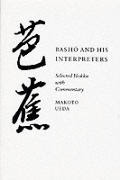
These 5 books will be given away in addition to the 1st prize volume, Bashō and His Interpreters: Selected Hokku with Commentary, edited by Makoto Ueda. For additional information, please see the 2nd Annual Bashô Haiku Challenge.


*****************************************


This week's featured issue from the Lilliput Review archive is #157, from August 2007. Here are the 4 poems from the opening 2 pages. Enjoy.


gentle,
the wish of not to wish
Sean Perkins


half
a snail-
shell

full
of earth
John Martone


July 23, Sunday

the butterfly
a Tiger Swallowtail
pale yellow
with black stripes
scorched down her wings
nestles in between
the petals of all
the six-stalked
scarlet day-
lilies blossoming
in the garden
Robert Schuler


just squeeze into
----hollow sycamore
--------& close my eyes
John Martone


And, of course, last word to the master:


garden butterfly--
the child crawls, it flies
crawls, it flies...
Issa
translated by David G. Lanoue


best,
Don

Sunday, October 11, 2009

Small Flowers Crack Concrete: Issa's Sunday Service, #24


d.a.levy (foreground)


It's hard for me personally to believe that 24 weeks into this little music project and this is the first appearance of the sensational Sonic Youth but there you are. They will be back. What you get with this song, "Small Flowers Crack Concrete," is a true blend of poetry and rock, recitation and cosmic noodling, that fans of this band frankly can't get enough of.

I'm not sure how anyone who has a problem with strong language could have found their way here but, if that is the case, you are duly notified that "Small Flowers Crack Concrete" has some outstanding examples.

At the center of this song is Cleveland poet, d.a.levy, mystic, prophet, and cosmic cowboy with Beat sensibilities, an idealist who burnt as fast, hard, and, relatively, as brilliantly as Morrison, Hendrix, James Dean and many another counterculture figures of the Era of Change. I've written about levy before, back at the old Beneath Cherry Blossoms blog (beware of pop-ups). A piece on a book plus dvd on levy, d.a.levy & the mimeograph revolution, which I wrote for The Small Press Review and was reprinted by the outlaw poetry and free jazz network, may be read here (the review follows a brief intro by Ken Petrochuk).

Hope you enjoy this week's Litrock selection at Issa's Sunday Service.


**************************************************


This week's feature poem comes from Lilliput Review #35, which was an "All Women Issue." This poem by, the fine poet Belinda Subraman (who runs a great series of interview/podcasts with poets), snuck in even though it broke the ten line limit rule.


Eve La Nuit
she was a sculptress
who felt eaten by men
gobbled up in their world
beaten
licked
her most famous piece
was an abstract view
some think of a bird
hungry
with a gaping mouth
or else a cock split open
or perhaps a serpent
who could tell an apple
from a woman
Belinda Subraman


dewdrops scatter--
done with this crappy
world
Issa
translated by David G. Lanoue


best,
Don

Wednesday, October 7, 2009

Kenneth Rexroth: Songs of Love, Moon & Wind, and a Bashô Haiku Challenge Update


Night Without End

Night without end. I cannot sleep.
The full moon blazes overhead.
Far off in the night I hear someone call.
Hopelessly, I answer, "Yes."
Anonymous (Six Dynasties)


Songs of Love, Moon & Wind: Poems from the Chinese is the companion volume to Kenneth Rexroth's Written on the Sky: Poems from the Japanese, which I discussed in a previous posting. Utilizing Scribd, New Directions has provided some sample poems from the collections, a nice touch, which I've linked to via the titles.

As companion volumes, they make a fine set in their physically attractive and appealing designs, and as an introduction to the overall body of Rexroth's Japanese and Chinese translations. The same flaws with the previous volume stand; no bibliographic history of where these poems previously appeared is provided, so those owning volumes such as and 100 Poems from the Chinese and 100 More Poems from the Chinese have no idea if these selections come from these, or for that matter, any other volumes by Rexroth.

Again, all that being said, this is another fine selection of work, although personally my preference is with the Japanese selection Written on the Sky. This, however, probably reflects my overall attraction to Japanese poetry.

The following two poems chronicle a closeness to nature; in addition, an affinity with the first two of the Buddha's Four Noble Truths makes that closeness readily apparent, something this volume illustrates again and again. First, Master Tu Fu:


Loneliness
A hawk hovers in the air.
Two white gulls float on the stream.
Soaring with the wind, it is easy
To drop and seize
Birds who foolishly drift with the current.
Where the dew sparkles in the grass,
The spider's web waits for its prey.
The processes of nature resemble the business of men.
I stand alone with ten thousand sorrows.
Tu Fu


How easy it is to seize birds that foolishly drift in the current! And the business of men seen as the extension of the preying hawk and lurking spider. Ten thousand sorrows, indeed.

As was frequently the custom in Chinese poetry, poems were set to the tunes of well-known songs. Here is a song that one day we all must sing:


To the Tune "The Fair Maid of Yu"
Once when young I lay and listened
To the rain falling on the roof
Of a brothel. The candlelight
Gleamed on silk and silky flesh.
Later I heard it on the
Cabin roof of a small boat
On the Great River, under
Low clouds where wild geese cried out
On the Autumn storm. Now I
Hear it again on the monastery
Roof. My hair has turned white.
Joy--sorrow--parting--meeting--
Are all as though they had
Never been. Only the rain
Is the same, falling in streams
On the tiles, all through the night.
Chiang Chien


Today, this is a song of life sorrow familiar to admirers of Jack Kerouac, Albert Huffstickler, the Romantics in general, and so many of the great poets. This astute, resonating collection by one of the master translators and major poets of 20th century, Kenneth Rexroth, fits neatly in the palm of your hand or the back pocket of your jeans. Take into the woods. Read it. Breath it. Live it.

Then leave it for the next seeker.


*******************************************************


Jim Kacian of red moon press has written to me and generously offered to sweeten the pot for the 2nd Annual Bashô Haiku Challenge. Jim is going to provide 5 books from red moon's exemplary catalogue to be given away to participants. So, with his approval, I've decided to give a book to each of the first five runners-up to the first prize winner. To recap, here's the full dope:


1. Until October 31st, send up to five haiku via email to:
lilliput review at gmail dot com (spelled out to fend off
pesky bots). I will need a minimum of your name and
email.

2. Accepted works will be published in the 2nd Annual Bashô Haiku Challenge Chapbook to be published some
time in 2010.

3. The winner of the challenge will receive a copy of
Bashō and His Interpreters: Selected Hokku with Commentary, edited by Makoto Ueda, a 15 issue
subscription to Lilliput Review and two contributor
copies of the chapbook.

4. 5 runners-up to the winning haiku will receive a
book from red moon press, a 6 issue subscription to
LR, and two copies of the chapbook.

5. Everyone else whose work is published will receive
a 6 issue subscription and two copies of the chapbook.


So, that's the update. Again, the deadline is October 31st. Send work along and good luck.


**************************************************


Cover by Wayne Hogan


Poems highlighted this week come from issue #159, November 2007, something of a menagerie, human and otherwise. Enjoy.


At the Marsh in Wartime
With its too-big head
the kingfisher in federal blue

dives and dives into the much
and brings up a fingerling every time.
Jennifer Wallace


concave
nut-shard
next to

convex
mushroom

thank you
brother
squirrel
John Martone


Split the Lark--and you'll find the Music--
--Bulb after Bulb, in Silver rolled--
Scantily dealt to the Summer Morning
--Saved for your Ear when Lutes be old.

Loose the Flood--you shall find it patent--
--Gush after Gush, reserved for you--
Scarlet Experiment! Sceptic Thomas!
--Now, do you doubt that your Bird was true?
Emily Dickinson


And one from 159, to introduce Master Issa:


bored
i found a new haiku
on my tongue
John Grochalski


ripples on water--
mingling with the larks
a fishing boat
Issa
translated by David G. Lanoue


best,
Don


Sunday, October 4, 2009

Paperback Writer: Issa's Sunday Service, #23


This week folks everywhere will remember John Lennon on his birthday, October 9th. For this edition of Issa's Sunday Service, The Beatles' song "Paperback Writer" is featured.

Why "Paperback Writer" you might ask? Isn't that a Macca tune? Indeed, it is. However, as the story goes, John helped him finish it up and there are a couple of touches, which seem at once distinctly John and definitely litrock material. Here is, for the time, the brilliant first verse:


Dear Sir or Madam, will you read my book?
It took me years to write, will you take a look?
It's based on a novel by a man named Lear
And I need a job, so I want to be a paperback writer,
Paperback writer.


If Lennon only contributed one word to the song, chances are that word was "Lear," after one of his famed influences in all-things verse, Edward Lear. John's propensity for punning and word play, which we already saw in a previous ISS selection, find a direct antecedent in Lear and making him the author of "a dirty story by a dirty man" was certainly right up John's street. In addition the background vocal by John and George singing the children's tune
"Frere Jacques" is more than likely a John touch and perhaps one of the most brilliant throwaway bits ever. I probably heard this song 100's of times before I realized what was going on about 20 years ago and now I can barely hear anything else when I listen to it.

John, of course, was the literary one, the Beatle who published a book under his own name, In His Own Write, which was heavily influenced by Lear, Lewis Carroll, James Joyce, and Bob Dylan. I always thought the song was, on some level, a little tweak of John by Paul, but the written record says otherwise, so I'll stand down on that one. In any case, the irony swings both ways, so to speak.


**********************************

This week's poem is aptly titled "Sermon" from Lilliput Review #34, June 1992, and is followed by a poem of Master Issa, from a few years before that. The Lillie poem is a "Brobdingnag Feature Poem" (an occasional poem over 10 lines that finds its way into the mag) by another master, Albert Huffstickler. Enjoy.


Sermon
All the old, grizzled men
sleeping it off in alleys.
Cold. Cold.
There should be a way
for ancient wine-soaked joints
not to be cold.
There should be a warm room
where they can sit together
immersed in their communal stink.
nodding away the hours

This is our disgrace
(and I don't ever forget it):
that there is no room
in the richest nation in history
for our fractured ancients to sit
nodding away the hours
warming their wine-soaked joints
immersed in their communal stink.
Albert Huffstickler


traveling geese--
the human heart, too
soars
Issa
translated by David G. Lanoue


best,
Don

Wednesday, September 30, 2009

2nd Annual Bashō Haiku Challenge


Well, folks, it's that time: this year I will be reading for the 2nd Annual Bashō Haiku Challenge beginning today and continuing through the entire month of October. With a couple of slight adjustments from last year (i.e. a different 1st prize), here are the instructions as outlined last year:

So, here's the deal: for the next four weeks, send along up to
5 haiku to lilliput review at gmail dot com (spelled out
to fend off pesky bots) and the best haiku wins a copy of
Bashō and His Interpreters: Selected Hokku with
Commentary, edited by Makoto Ueda. Minimally, I will
need your name and email
to contact you with the
results. In the subject line of your email, please put
"2nd Annual Bashō Haiku Challenge" so I can easily
differentiate it from the scads of other things that come my
way. The final date for submissions will be October 31st and
the winner will be announced in either November 18th or
December 2nd postings. My definition of haiku is about as
liberal as you can get: I follow no one particular method,
school or theory and there is no seasonal requirement.
Your haiku can be 1, 2, or 3 lines (over 5 would be a bit
much, folks, but I will keep an open mind for
experimenters). The one restriction would be that it be
in the spirit of haiku (I've always liked the definition of
English haiku as lasting the length of one breath, in and
out and pause, but that's just me - and, oh yeah, I'm the
judge, but, again, it's the spirit of the thing that counts)
and that the haiku be previously unpublished in either
paper or electronic form (ok, that's two requirements).

In addition, the winning poet will receive a 15 issue
subscription to Lilliput Review (or have their current
subscription extended by 15 issues), plus two copies of
the 2nd Annual chapbook, to be published sometime in
2010. Other poets whose work is selected for inclusion
will receive 2 copies of the chapbook plus a 6 issue
subscription.

That's it. This is an electronic submission contest only; it is my way of giving back to the online community that has been so vibrant and encouraging since I started actively blogging in July 2007.

Some of you may remember the genesis of this contest, some may have come along since then. In brief, I was contacted last year by Tomoe Sumi of Kodansha America Press, who had been following an ongoing series of posts and discussions about the work Matsuo Bashô. At that time, she offered a reviewer's copy of their fine new volume, Bashō: The Complete Haiku, translated by Jane Reichhold, to throw into the discussion mix. Since I'd already purchased it for myself, I politely declined and she offered to send it anyway, suggesting I give it away. And so the contest was born.

To continue in the tradition of a volume of Bashō as first prize, I've decided this year to purchase and give away the selected work, with critical commentary, as listed above. Again, I own a personal copy; it is a fine selection of Bashō, accompanied with criticism from a wide variety of sources, historical context, and scholarly discussion. For the novice, it may be read as a selected poems. For the more experienced or simply curious, it is a rich rewarding journey into the essence of haiku in general and Bashō in particular. It is a high quality, pricey trade paperback that will make a fine addition to anyone's Eastern poetry collection. Makoto Ueda is one of the finest authorities on the work of Bashō and his 1970 biography (link is to google books and is a perfect illustration of what can go horribly wrong there) is considered essential reading for those delving deep into the work of the haiku master. You can get a glimpse into Bashō and His Interpreters at the link above to google books, where there is nice little preview.

Spread the word and let the games begin!


**********************************************


This week's featured issue is #160, from November 2007. If you are so inclined, you may literally (after a virtual fashion) flip through the entire issue here. Enjoy.


#213
Only a wisp
Of cloud above,
But like a
Sacred Song
It pointed the way
Yosano Akiko
translated by Dennis Maloney


Autumn wind,
nudging me down the mountain,
quivers a grass seed
that clings to my skirt.
Suzanne Freeman


rail cars
stacked with wood
slowly pass the living-
i whisper to them
kaddish
Donna Fleischer


And a little seasonal thought, from the master:


wildflowers--
all we say or speak about
is autumn wind
Issa
translated by David G. Lanoue


best,
Don

Sunday, September 27, 2009

Issa's Sunday Service, #22: "There She Goes, My Beautiful World"


Last week, it was mourning the death of a great poet/rocker, Jim Carroll. It's fitting then that this week we celebrate the birth of another great rocker/poet, Nick Cave. This is Cave's (& the Bad Seeds) second appearance on Issa's Sunday Service and, though I promised myself to keep the repeats to a minimum, at least to start out, my extremely biased opinions are showing.


There She Goes, My Beautiful World
The wintergreen, the juniper
The cornflower and the chicory
All the words you said to me
Still vibrating in the air
The elm, the ash and the linden tree
The dark and deep, enchanted sea
The trembling moon and the stars unfurled
There she goes, my beautiful world

There she goes, my beautiful world
There she goes again

John Wilmot penned his poetry
riddled with the pox
Nabokov wrote on index cards,
at a lectern, in his socks
St. John of the Cross did his best stuff
imprisoned in a box
And Johnny Thunders was half alive
when he wrote Chinese Rocks

Well, me, I'm lying here, with nothing in my ears
Me, I'm lying here, with nothing in my ears
Me, I'm lying here, for what seems years
I'm just lying on my bed with nothing in my head

Send that stuff on down to me

There she goes, my beautiful world
There she goes again

Karl Marx squeezed his carbuncles
while writing Das Kapital
And Gaugin, he buggered off, man,
and went all tropical
While Philip Larkin stuck it out
in a library in Hull
And Dylan Thomas died drunk in
St. Vincent's hospital

I will kneel at your feet
I will lie at your door
I will rock you to sleep
I will roll on the floor
And I'll ask for nothing
Nothing in this life
I'll ask for nothing
Give me ever-lasting life

I just want to move the world
I just want to move

There she goes, my beautiful world
There she goes again

So if you got a trumpet, get on your feet,
brother, and blow it
If you've got a field, that don't yield,
well get up and hoe it
I look at you and you look at me and
deep in our hearts know it
That you weren't much of a muse,
but then I weren't much of a poet

I will be your slave
I will peel you grapes
Up on your pedestal
With your ivory and apes
With your book of ideas
With your alchemy
O Come on
Send that stuff on down to me

Send that stuff on down to me
Send it all around the world
Cause here she comes, my beautiful girl

There she goes, my beautiful world
There she goes again


Anybody who name checks Wilmot (and he's not referring to the talented and generous Eddie Anderson of Jack Benny fame), St. John of the Cross, and Philip Larkin, beside numerous others, is an instant inductee into the LitRock Hall of Fame as far as I'm concerned. Here's a video of the song performed during the Abattoir Blues tour.


This week's poem is from Lilliput Review #31, April 1992, to commemorate the passing of blues composer, arranger, consciousness objector, and bass player extraordinaire Willie Dixon, arguably the prime mover of urban blues. Unbelievably, these are just a few of the songs he wrote: Back Door Man, Bring It On Home, Diddy Wah Diddy, Down in the Bottom, Evil, Hoochie Coochie Man, I Ain't Superstitious, I Can't Quit You Baby, I Just Want to Make Love to You, Little Red Rooster, Mellow Down Easy, Pain in My Heart, Seventh Son, The Same Thing, Tollin' Bells, Wang Dang Doodle, You Can't Judge a Book By Its Cover (which has already made an appearance on Issa's Sunday Service), and You Shook Me.


The Death of Willie Dixon
Late January, a handful of
leaves on a single tree -
the wind.
K. Shabee


a corrupt world
in its latter days...
but cherry blossoms!
Issa
translated by David G. Lanoue


best,
Don

Tuesday, September 22, 2009

Nick Cave: Giving the World Another Spin


It's Nick Cave's birthday today and here is a post I wrote over @ Eleventh Stack, the blog from my daytime job, to celebrate the occasion. It has some interesting videos posted and linked to.

Enjoy.

Oh, what the hey, here's one of my favorites, performed live, that didn't make it into the Eleventh Stack post:


singing insects, too
make music
in this world
Issa
translated by David G. Lanoue


best,
Don

Sunday, September 20, 2009

Jim Carroll on Reading Raymond Chandler: Issa's Sunday Service, #21


Sadly, today's edition of Issa's Sunday Service caps off a week of tribute posts for Jim Carroll. Happily, we still have his work, as long as we're alive, to turn to for solace, instruction, and enjoyment. This week's LitRock song is by the Jim Carroll Band: "Three Sisters:"

But she just wants to lay in bed all night
Reading Raymond Chandler.


I've been thinking about another of the song's featured on the blog this week, "It's Too Late." I remember Jim and the band appearing live on one of the nationally syndicated late night television shows, possibly Saturday Night Live, and performing it. He performed an alternative version of these opening lines:


It's too late
To fall in love with Sharon Tate
But it's too soon
To ask me for the words I want carved on my tomb


It's probably hard to imagine today that the reference to Sharon Tate, one the victims slaughtered by the Manson family, was powerful and shocking, but, indeed, it was, particularly in a "pop" song, one being performed before millions of people on television. Here is the alternate opening as I remember it:


It's too late
To fall in love with Sharon Tate
But it's too soon
To trace the path of the bullet in the brain of Reverend Moon


I say "as I remember it" because I can't find any reference to it anywhere. There are some live performance videos of the song from a show called Fridays, but it doesn't have the alternate reading. I wonder if anybody out there remembers that performance because those alternate lines about Reverend Moon dealt in poetic prophecy, not realized, and were every bit as shocking, if not more so, in the context of the place and time than the Tate lines.

This week's featured poem is from Lilliput Review #29, February 1992. As elegy's go, it's a fit way to close:


last will and testament
make a wind chime
from my bones,

hang it
where the poets speak.

let me be a part
of the conversation,
life.
Charlie Mehrhoff


Sumiyoshi's lamps
die out again...
autumn wind
Issa
translated by David G. Lanoue


best,
Don

PS: out 21 weeks of LitRock songs @ LitRock From Issa's Sunday Service.

Thursday, September 17, 2009

Jim Carroll 5


Here is one of three poems printed and distributed at the funeral for Jim Carroll:


Poem
Alright
Buddha gets
A backstage pass

But his friends have to pay
Jim Carroll


As some of you may have guessed, I'm having a bit of a hard time with the passing of Jim Carroll. I only met him once, briefly, and he was very kind to a book store clerk helping to set up an offsite signing. The reading itself was full of humor, pathos, and an unflinching look into the great maw of Being.

It is a comfort to know that his words and music live on.


Fires
Burn in my heart.
No smoke rises.
No one knows.
Kenneth Rexroth from The Morning Star


my province--
even the smoke
an ancient thing
Issa
translated by David G. Lanoue


best,
Don

Sunday, September 13, 2009

Issa's Sunday Service, #20: Romeo & Juliet


Wilt thou be gone? it is not yet near day:
It was the nightingale, and not the lark,
That pierced the fearful hollow of thine ear;
Nightly she sings on yon pomegranate-tree:


There are classics and then there are classics. It seems, however, for every generation there is its own unique Romeo and Juliet. Punk was happening and headbands and sweatsuits and big hair was just around the corner when Dire Straits ran a counter, at least for a while, interesting path. It doesn't really get more RockLit than this; song above and video following.


This week's featured poem comes from Lilliput Review #28, February 1992. Enjoy.


Ars Poetica
Forging a poem is
Like nothing so much as
Building a butterfly
Of bronze.
Patricia Higginbotham


will I grow old
like that?
autumn butterfly
Issa
translated by David G. Lanoue


best,
Don

For 20 weeks of rock songs that are literature infused, see the home of "LitRock from Issa's Sunday Service."

Wednesday, September 9, 2009

The Other Anne Sexton: It Is A Spring Afternoon


I've spent the summer very slowly reading through the complete poems of Anne Sexton for the 3 Poems By discussion group, which will be meeting this Thursday at my other job. I recently posted about this over at a different blog and, in that post, I talked about one of her lesser known poems, "Young," and how it highlighted an aspect of Sexton that one doesn't often hear about. I continue to slowly read through her work, a poem or two at most per day, because frankly it is all I can absorb.

Last week I ran across this poem, again emphasizing an aspect of Sexton not often discussed:


It Is A Spring Afternoon
Everything here is yellow and green.
Listen to its throat, its earthskin,
the bone dry voices of the peepers
as they throb like advertisements.
The small animals of the woods
are carrying their deathmasks
into a narrow winter cave.
The scarecrow has plucked out
his two eyes like diamonds
and walked into the village.
The general and the postman
have taken off their packs.
This has all happened before
but nothing here is obsolete.
Everything here is possible.

Because of this
perhaps a young girl has laid down
her winter clothes and has casually
placed herself upon a tree limb
that hangs over a pool in the river.
She has been poured out onto the limb,
low above the houses of the fishes
as they swim in and out of her reflection
and up and down the stairs of her legs.
Her body carries clouds all the way home.
She is overlooking her watery face
in the river where blind men
come to bathe at midday.

Because of this
the ground, that winter nightmare,
has cured its sores and burst
with green birds and vitamins.
Because of this
the trees turn in their trenches
and hold up little rain cups
by their slender fingers.
Because of this
a woman stands by her stove
singing and cooking flowers.
Everything here is yellow and green.

Surely spring will allow
a girl without a stitch on
to turn softly in her sunlight
and not be afraid of her bed.
She has already counted seven
blossoms in her green green mirror.
Two rivers combine beneath her.
The face of the child wrinkles
in the water and is gone forever.
The woman is all that can be seen
in her animal loveliness.
Her cherished and obstinate skin
lies deeply under the watery tree.
Everything is altogether possible
and the blind men can also see.
Anne Sexton


I see this poem as a companion piece to "Young," portraying a time in a young woman's life when she is on the cusp between adolescence and adulthood. Though both these poems have slightly portentous undercurrents, both also emphasize a youthful promise the idea of which Sexton obviously cherished.

The loss for her of this innocence and for us of Sexton herself is almost too much to bear.


*****************************************************


This week's featured back issue is #164, from July 2008. And the war drags on ...


turned back & got lost.
John Martone


The Numbers of the Dead
which appear in the headlines
to be perfectly round
like the planets

aren't really round.
They only appear that way
when seen from a great distance.

Up close they bulge.
They are gouged, pocked, frigid,
infinitely lonely numbers

divisible only by themselves and one.
Paul Hostovsky


war$pin
war$oil
war$hip
war$ink
war$end
war$aid
war$hit
war$hot
war$how
war$own
war$old
war$pun
LeRoy Gorman


Muddy ditch water,
& dimples beneath
waterspider's feet–

---------tenuous, this life.
Hosho McCreesh


in the footprints
of the warrior...
poppies
Issa
translated by David G. Lanoue


best,
Don